

Accordion and bal musette: retro ambience and dancing
L'accordion and bal musetteliving symbols of the popular Paris and in FranceThey tell a beautiful story of tradition, immigration and music. It's thanks to the union of Auvergnats and Italians that this unique style emerged around the bagpipe and theaccordionand then transformed them to create an incomparable festive atmosphere. To get to the heart of this heritage, there's no better way than to discover the bals et guinguettes the country.
Accordion – An Introduction to the Instrument and Its Traditions
L'accordion is a wind musical instrument from the free reed instrumentswhich has had a profound impact on popular and traditional music throughout the world. Its operation is based on a bellows which the musician activates to make metal reeds vibrate. voice boxes. This vibration produces a characteristic sound that can be soft and melancholy, or lively and catchy, depending on the style played.
Invented at the beginning of the XIXᵉ century, the instrument quickly became popular in Europe thanks to its portability and its ability to accompany both folk songs and dances. In France, it has become a mainstay of the bal musetteIt replaced the cabrette auvergnate in Paris and became the central element of the waltz-musette, javaand tango-musette.
The accordion exists in several variants:
-
Diatonic accordion simpler, used in folk music.
-
Chromatic accordion The piano keys are equipped with buttons or piano keys, allowing great virtuosity and harmonic richness.
-
Bandoneon A typical variant of Argentine tango.
L'accordion musetteis distinguished by its musette registerThis versatile instrument is now used in a wide variety of genres, such as the brass, brass, brass, brass, brass, brass, brass, brass, brass, brass, brass, brass, brass, brass, brass, brass, brass, brass, brass, brass and so on. Today, this versatile instrument is used in a wide variety of genres, including jazzthe world musicand even theelectro.
Its charm lies as much in its ability to make people dance as in the emotional depth of its melodies, making it one of the most recognizable and beloved instruments in the world's musical heritage.
Diatonic accordion: the traditional instrument with an authentic sound
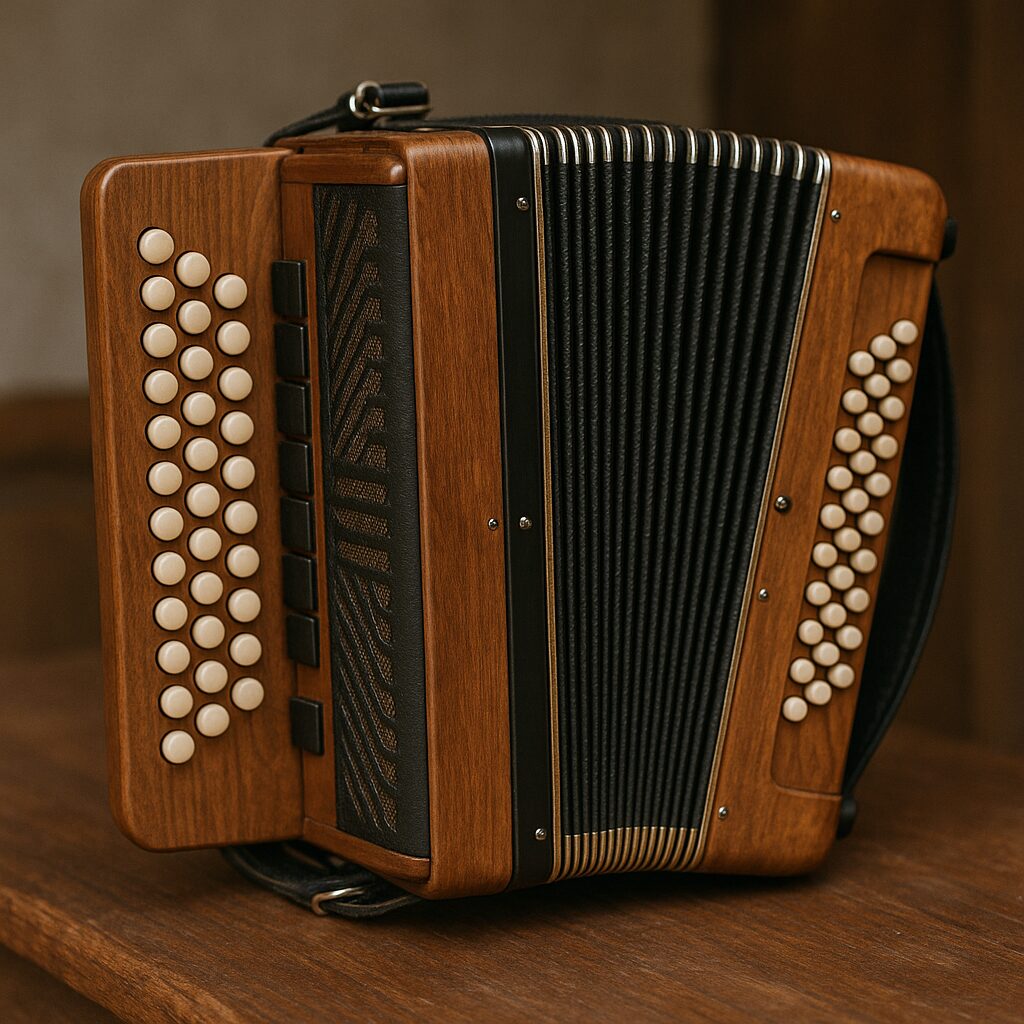
L'diatonic accordion is a wind instrument from the free reeds, prized for its warm tone and ease of use. Unlike the instrument chromaticThe bellows are equipped with rows of buttons that produce a different note depending on whether the bellows are pushed or pulled. This bisonore system, inherited from the first models of the XIXᵉ century, gives thediatonic accordion a unique, rhythmic playing style.
Very popular in folk and traditional music, it accompanies a variety of genres, such as bourrée auvergnatethe musetteor Celtic and Breton tunes. Lightweight and compact, this instrument is ideal for nomadic players and for livening up folk dances.
Today, it appeals to beginners and professionals alike, thanks to its ease of handling and authentic sound. L'diatonic accordion continues to evolve, with modern models offering richer sounds and top-of-the-range finishes to satisfy the most demanding accordionists.
Chromatic accordion: the instrument of musical virtuosity
L'chromatic accordion is a free reed instrument distinguished by its versatility and richness of sound. Unlike the diatonicIt can play all the notes of the chromatic scale, offering great melodic and harmonic freedom.
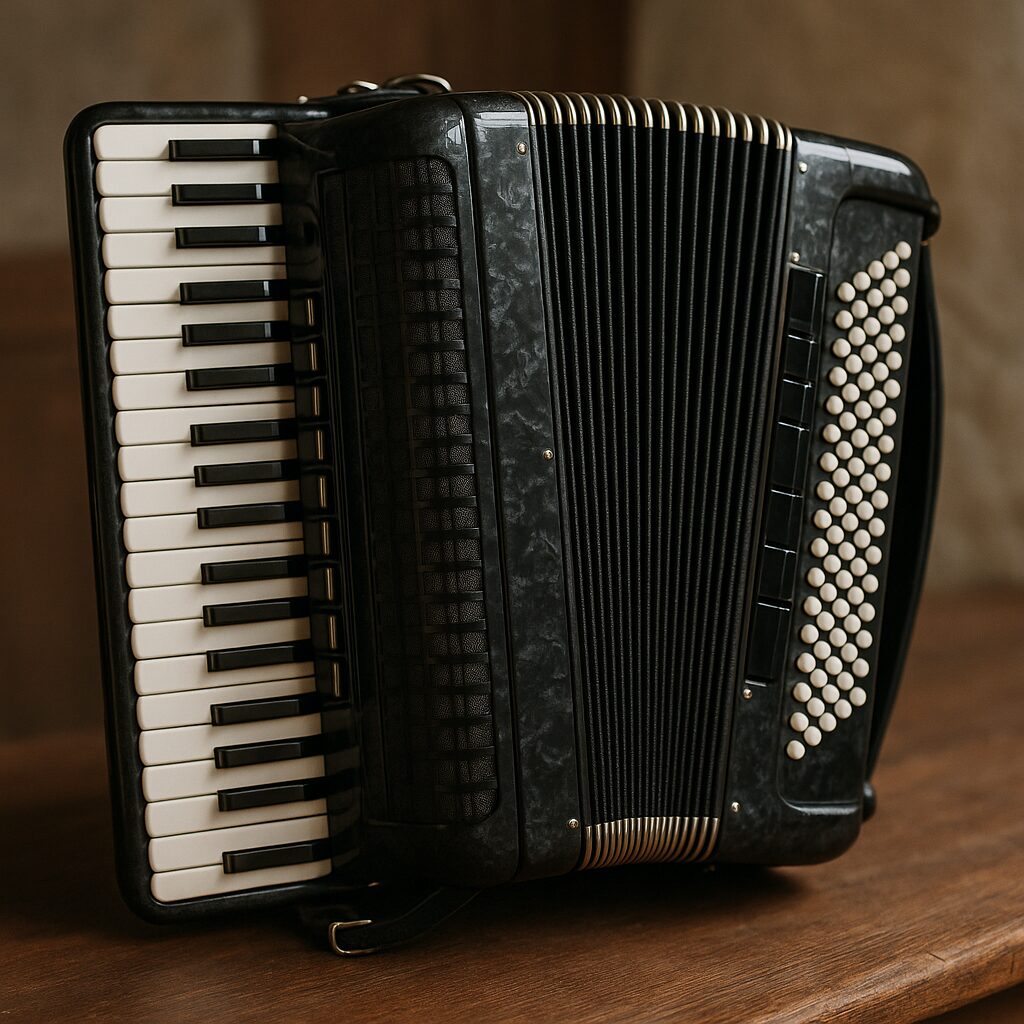
Recognizable by its button keyboards or piano keyboard, l'chromatic accordion is used both in the bal musette as well as in a variety of styles such as jazz, classical and world music. This type of accordion appeals to musicians for its ability to interpret complex works and produce expressive nuances.
Models with piano keyboard are particularly popular in Western Europe, while those with buttons are common in Eastern Europe and Russia. With its varied registersthe chromatic allows you to explore timbres ranging from delicate murmurs to powerful, percussive sounds.
Today, it is the preferred instrument of many professional accordionists, who appreciate its polyphony and its infinite potential for improvisation and composition.
Bandoneon accordion: the soul of Argentine tango
L'accordion bandoneon is a wind instrument from the free reedssimilar to the accordion, but with a deeper, more melancholy timbre. Invented in Germany in the XIXᵉ century by Heinrich Band, it quickly found its place in Argentina, where it became the soul of the tango.
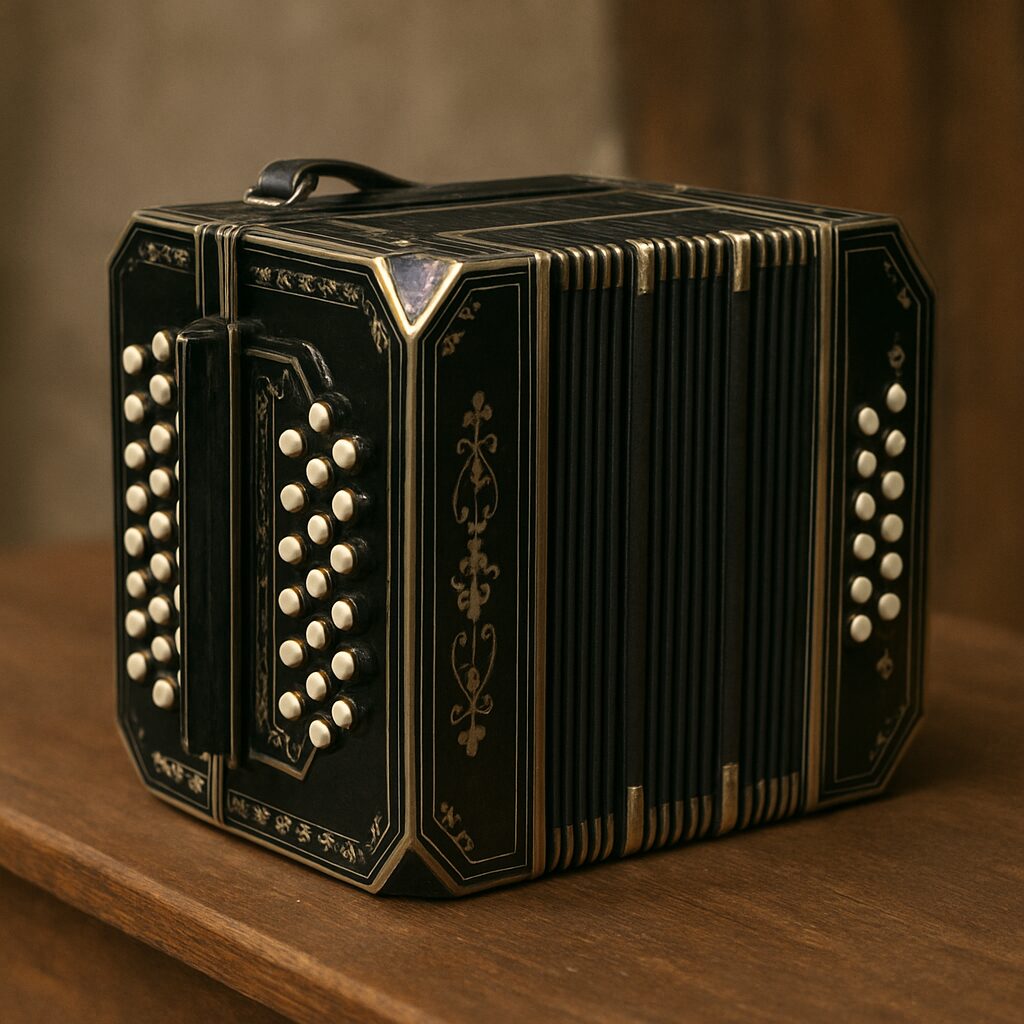
Unlike thechromatic accordionThe bandoneon has a bisonoric structure: one key produces two different sounds, depending on whether the bellows are pushed or pulled. This makes playing more complex, but offers a unique expressiveness, ideal for the passionate melodies of tango.
Visit bandoneon is made up of asymmetrically arranged buttons, requiring great technical skill. Artists such as Astor Piazzolla revolutionized its use by integrating it into the nuevo tangoa blend of tradition and modernity.
Today, theaccordion bandoneon also appeals to jazz, classical and world music musicians. With its rich timbre and capacity for emotion, it remains a symbol of South American musical heritage and a fascinating cousin of the European accordion.

Bal musette, the origins of ballroom dancing and tea dances
Musette and cabrette: the start of an adventure
Visit bal musette has its roots in the country balls held by the Auvergnats, particularly in the Bastille district of Paris. Here, they danced the bourrée to the sound of the musette - a rustic bagpipe - as popularized by Antoine Bouscatel between 1890 and 1930 . These traditional balls gave rise to a form of popular celebration centered on live music and dance, helping to shape Parisian cultural identity.
The arrival of the Italian accordion
At the end of the XIXᵉ century, Italian immigrants introduced thediatonic accordion in Paris. Its sound, different from that of the cabrette, immediately appealed to musette musicians, who adopted it and integrated it into their dance repertoire, notably the waltz musette . This fusion has given rise to a hybrid musical style, combining Auvergne tradition and Italian heritage.
The golden age of accordion and bal musette
Mythical places: balls and guinguettes
At the beginning of the XXᵉ century, bals musette were on the increase: cafés, bars and guinguettes on the banks of the Marne became party venues. Establishments such as Balajo, Red Ball or the Small balcony attract a varied crowd. It is mainly used for waltz-musettethe javathe tango-musette and the paso-musetteuntil the decline of the 60s.
Flagship dances
-
**Waltz-musette **: tight dance with small steps, often nicknamed "la toupie".
-
**Java **: fast and sensual
-
**Tango-musette and paso-musette **: borrowings from Latin dances adapted to the musette style
These dances, adapted to small spaces, reflect the warm, friendly spirit of popular balls.
The emblematic figures of the musette
Pioneers of the musette accordion
-
Antoine Bouscatel (cabrette, XIXᵉ century)
-
Émile Vacher and Charles Péguri the founders of the style, popular at balls
Legendary artists
-
Tony Murena (swing-jazz musette) with "Indifférence" (1942), a masterpiece of the genre.
-
Yvette Hornera key figure in the 1950s, with an international career that began in 1937 and sold over 30 million records.
-
André Verchuren, Jo Privatand Aimable Pluchart continue the legacy of bal musette into the 70s
The decline and rebirth of the bal musette
Decline from the 60s to the 80s
The popularity of rockthe emergence of discotheques, television and urban transformation led to the decline of the bal musette in the 1960s. These events gradually marginalized theaccordion and bal musettedescending into popular nostalgia.
Renaissance in the XXIᵉ century
Since the 80s, a revival has been taking place: guinguettes on the banks of the Marne, small dances and dedicated festivals such as Le Grand Soufflet in Rennes have included musette programming.. Bands like Le Balluche de la Saugrenue merge tradition and modernity, reviving the original festive spirit. L'accordion and bal musette are regaining their place, especially among the younger generation and enthusiasts.
The musette accordion: a special instrument
Technical features
The musical instrument belongs to the family of musical instruments. free reeds. The musette sound is obtained by slightly detuning two rows of reeds (musette registers), producing a rich, moving vibration.
Italian manufacturers such as Cavagnolo, Fratelli Crosio or Scandalli are known for their accordions adapted to the .
Contemporary presence
Today, the accordion emanates in a variety of genres: gypsy jazz, world music, contemporary music, electro. For example, the Amélie's waltz (Yann Tiersen, 2001) integrates the traditional waltz musette in a hit soundtrack. Artists such as Richard Galliano and Marcel Azzola contributed to the instrument's recognition in the world of art music.
-
Guinguettes on the Marne and Seine rivers festivals and regular balls
-
Specialized festivals Le Grand Soufflet, Fête de l'accordéon à Luzy, Wazemmes l'accordéon
-
Schools and workshops conservatories in Île-de-France, associations for the transmission of tradition
-
Parisian bars one-off events with accordion and bal musetteguaranteed atmosphere
Bal musette 2025 calendar
July to September 2025
| Date | Dept. | City/Location | Event / Orchestra | Schedule / Price |
|---|---|---|---|---|
| July 20 | 31 | Montesquieu-Lauragais | Tea dance - Benoît Renaille | 4pm / Free |
| July 20 | 82 | Garganvillar | Thé dansant - Didier Laurent | 2:30 pm / Free |
| July 20 | 32 | Francescas | Tea dance - Jacky Dumartin | 2:30 pm / Free |
| July 24 | 81 | Fauch | Tea dance - Florence Olivier | 2:30 pm / Free |
| July 27 | 47 | La Salvetat-du-Dropt | Tea dance - Los Amigos | 2:30 pm / Free |
| July 31 | 31 | Rieux-Volvestre (Bowling) | Tea dance - Sandrine Étincelle | 2pm / Free |
| June 1 | 40 | Saint-Lon-les-Mines | Super bal musette - Tropicana | 3pm-7pm / €8 |
| August 17 | 79 | Fenioux | Bal musette - Manu Blanchet | 14h30 / 10 € |
| 21 sept | 40 | Pod | Bal musette - Super Musett' | 15h / 7 € |
| August 24 | 47 | Saint-Eutrope-de-Born | Bal musette - Bernard Rual | 2:30 pm / (Free?) |
| 21 sept | 17 | Cercoux | Musette ball (several dates) - RCM Séniors |
October - December 2025
| Date | Dept. | City / Location | Event / Orchestra | Schedule / Price |
|---|---|---|---|---|
| October 19 | 47 | Lauzun | Tea dance - Comité des Fêtes | 2:30 pm / Free |
| October 19 | 79 | Gorron (Mayenne) | Thé dansant - Orch. Dominique Floquet | day / Free |
| October 19 | 17 | Cercoux (Charente-Maritime) | Musette ball - RCM Seniors | 2:30 pm / Variable admission |
| October 14 | 46 | Cahors | «Moments Enchan’thé» | 3pm / Free |
| October 11 | 17 | Charente-Maritime | Bal musette - Duo Karyan | 8:30 pm / (Info €) |
| October 26 | 46 | Catus | Traditional ball - Duo Vidal, Lo Garric | 9pm / (Info €) |
| October 26 | 82 | Labarthe-sur-Lèze | Tea dances | autumn/winter series |
| November 21 | 17 | Cercoux | Musette ball - RCM Seniors | 2:30 pm / Variable admission |
| November 23 | 47 | Lauzun | Tea dance - Club Les Hirondelles | 2pm / Free |
| November 30 | 47 | Trentels | Tea dance - Nelly Music | 2:30 pm / Free |
| November 30 | 64 | Saint-Loubès | Monthly tea dance | winter series |
| December 14 | 17 | Cercoux | Musette ball - RCM Seniors | 2:30 pm / Variable admission |
| December 14 | 86 | La Roche-Posay | Tea dance - Club Amitié | 1:30 pm / Free |
To find out more, visit fest.frand balsmusetteducoin.e-monsite.com
Listen to free accordion music: immerse yourself in the world of musette
You dream of listen to free accordion music to rediscover the atmosphere of the bals musette and guinguettes? Numerous online and offline solutions provide access to a rich selection of works byaccordion musettejazz, tango or folk music without spending a cent.
Visit specialized online radios offer continuous playlists with classics from Yvette Horner, André Verchuren or Jo Privatas well as contemporary creations. Platforms such as YouTube, Spotify (free version) and Deezer also offer compilations bychromatic accordion and diatonic accessible to all.
For an authentic experience, consider open-air concerts and festivals offering free musical entertainment, particularly in the guinguettes du pays. These events showcase the warmth and conviviality of this emblematic instrument.
Online or live, there are a thousand ways to enjoy the sound of themusical instrument and discover a rich and exciting musical heritage.
Radio accordion: the voice of musette and tradition
Visit radio accordion is an essential medium for fans of themusical instrument and traditional music. These stations continuously broadcast tunes from waltz musetteof javaof tango musette and many iconic songs performed by legends such as André Verchuren, Yvette Horner or Jo Privat.
Accessible online or via FM, a radio accordion allows listeners to rediscover bal musette classics, while spotlighting contemporary artists who are renewing the genre. These radios are particularly popular with bal musette enthusiasts. guinguettes and popular dances, offering a warm, festive atmosphere at all hours.
Some platforms also offer themed programs, interviews with accordionists and broadcasts of festivals dedicated to this instrument. Listening to a radio accordionWith this new album, listeners plunge into the authentic world of French popular music, while enjoying a rich and varied selection.
Whether you want to dance, learn or simply relax, the radio accordion is the ideal companion for lovers of musical heritage.
André Verchuren: undisputed master of the musette accordion
André Verchuren is an emblematic figure of themusical instrumentrecognized for his exceptional talent and his major role in popularizing the genre in France. Born in 1920, this musical prodigy learned to play the accordion at the age of 4, inheriting a family tradition. He soon established himself as a virtuoso, winning numerous competitions in his teens.
His style, both technical and deeply rooted in the tradition of bal musetteHe appealed to a wide audience. It helped democratize popular dances such as the waltz musettethe javathe tango musette and the paso dobleAndré Verchuren was one of the most successful accordionists of his generation. In the 50s and 60s, André Verchuren became one of the most famous accordionists, recording over 10,000 songs and selling millions of records. His repertoire includes such classic hits as Les Fiancés d'Auvergne and La Saint-Hubert.
In addition to his immense success, Verchuren made history by modernizing the musette style while respecting its popular roots. He played at thousands of balls and guinguettes, embodying the festive, convivial spirit of the era. His influence lives on today among contemporary accordionists, who draw inspiration from his virtuosity and infectious energy.
With André Verchuren, l'accordion musette has found a passionate ambassador, capable of getting entire generations up on their feet and making this instrument part of France's musical heritage.
Accordion case: the essential accessory for protecting and transporting your instrument
Visit folding door is an essential accessory for all musicians wishing to preserve the quality and longevity of their instrument. Designed as a rigid or semi-rigid caseit effectively protects themusical instrument against shock, moisture and dust during transport and storage.
Available in several models, the folding door is available in versions adapted to the instruments diatonic, chromaticand even bandoneons. Most modern models are equipped with :
-
from reinforced hulls in ABS, wood or composite,
-
a high-density foam interior padding to absorb vibrations,
-
and ergonomic handles or adjustable straps for easy transport.
Some top-of-the-range models offer integrated castors for effortless movement, ideal for professional musicians who often travel between concerts and rehearsals.
For use on stage or in the studio, there are also folding door supports to keep the instrument in a stable position during use. These adjustable stands ensure optimum ergonomics and reduce musician fatigue.
Investing in a folding door is essential to protect your instrument from the hazards of transport and prolong its life. Whether you're an amateur or a professional accordionist, this accessory will bring you comfort and safety on a daily basis.
Frequently Asked Questions (FAQ)
1. What exactly is a bal musette?
Visit bal musette is a popular ball where people dance to a musette repertoire (waltz, java, paso, tango...) to the sound of theaccordion and other instruments (guitar, double bass, drums).
2. What's the difference between musette and musette accordion?
Visit musette is originally the Auvergne bagpipe, while theaccordion musette is the instrument tuned specifically to imitate its timbre via detuned registers.
3. Who are the big names in musette accordion?
Antoine Bouscatel, Émile Vacher, Tony Murena, Yvette Horner, André Verchuren, Jo Privat, Aimable Pluchart, and Marcel Azzola were among the most influential. .
4. What dances can be performed at a bal musette?
We dance the waltz musette (tight dance), the javathe tango musettethe paso musetteand sometimes the polka or the mazurka .
5. Where can you attend a bal musette today?
In the guinguettes suburbs (Marne, Seine), specialized festivals, and in some Parisian bars offering traditional evening events.
6. How to learn the musette accordion
From conservatories (Île-de-France), private schools and associations offer courses inaccordion musetteoften organized in cycles starting at age 7.
7. Does the bal musette still exist in Île-de-France?
Yes, especially at the festivals, guinguettes and themed events that spring up regularly.
8. What tracks should you listen to to discover this style?
"Indifférence" (Tony Murena), "La Valse d'Amélie" (Yann Tiersen), and compositions from Yvette Horner, André Verchuren, Juliette Gréco with Serge Gainsbourg ("Accordion").
Conclusion
L'accordion and bal musette are much more than a musical genre: they embody a festive traditionconvivial and deeply popular. From their beginnings in Auvergne to the Parisian bals, their influence endures thanks to the passion of artists and audiences alike. Today, these balls are enjoying a renaissance in the guinguettesThis is an invitation to live an authentic experience, rooted in a rich and vibrant collective memory.
