Savoyard fondue: recipes and best addresses in Savoie
Article summaryAI Overview
Savoyard fondue is a traditional Alpine dish made with melted cheeses such as Beaufort, Comté and Emmental, mixed with white wine. Originally from Savoie , It embodies a convivial culinary experience, often associated with mountain tourism, chalets and winter holidays. This emblematic dish is as much a part of French gastronomy as it is of cultural discovery of the Alps.
Introduction
Visit Savoyard fondue is much more than just a recipe: it's an immersion in the Alpine art of living. Every year, this emblematic dish attracts thousands of visitors who come to discover the authentic flavours of the Alps. the country exploring the region's gastronomic and cultural riches via this guide 👉 https://cparici.com/fr/visiter-la-france-guide-des-regions-et-sites-touristiques .
In this article, we take an in-depth look at this cheese specialty, from its origins to its role in Savoie tourism. Today, this traditional dish is an essential part of any mountain holiday, combining conviviality, tradition and sensory discovery.
As the official Savoie Mont Blanc website points out:
“Savoyard fondue is a symbol of sharing and conviviality in the mountains.”https://www.savoie-mont-blanc.com
So, to understand this emblematic dish is also to understand a culture, a territory and a unique experience.
Savoyard fondue: the best addresses by area in Savoie
Exploring Savoie through Savoyard fondue is a gourmet and authentic way to discover the region. Each area of the département has its own emblematic addresses where you can enjoy a Savoyard fondue in a unique setting, between lake and mountain.
Chambéry: historic heart and authentic addresses
Historic capital of the Savoie Chambéry
Among the well-known addresses:
Le Corsaire
La Table de Lans
These establishments offer a generous Savoyard fondue, often made with carefully selected local cheeses.
According to the official website Savoie Mont Blanc Tourism
“Chambéry is an ideal starting point for discovering Savoyard gastronomy.”
Aix-les-Bains and Lac du Bourget: Savoyard fondue with a lake view
Located on the banks of the Lac du Bourget Aix-les-Bains
Addresses not to be missed :
Le Chalet du Port
Skiff Pub Restaurant
Enjoying a Savoyard fondue overlooking the lake is a rare experience, combining gastronomy and scenery.
As the France.fr
“Lac du Bourget is one of the most emblematic natural jewels in the Alps.”
Albertville and the valleys: authenticity and terroir
In the’Albertville
Typical addresses :
Le Bistrot Gourmand
La Table de Rose
These places feature authentic Savoyard fondue, often made with local farm produce.
Savoyard resorts: Savoyard fondue at altitude
Savoie's ski resorts are the perfect place to enjoy a Savoyard fondue in an Alpine atmosphere.
Major destinations include :
Restaurants to try :
La Fromagerie
Le Chalet de la Marine
In these places, Savoyard fondue becomes an immersive experience, often enjoyed after a day's skiing.
According to France Montagnes
“Gastronomy is at the heart of the resort experience.”
Why these addresses make all the difference
Choosing the right place to enjoy a Savoyard fondue depends on several criteria:
cheese quality
setting (lake, mountains, historic center)
respect for tradition
friendly atmosphere
These addresses allow you to enjoy the fondue experience in Savoie to the full, combining culinary pleasure with sightseeing.
What is Savoyard fondue?
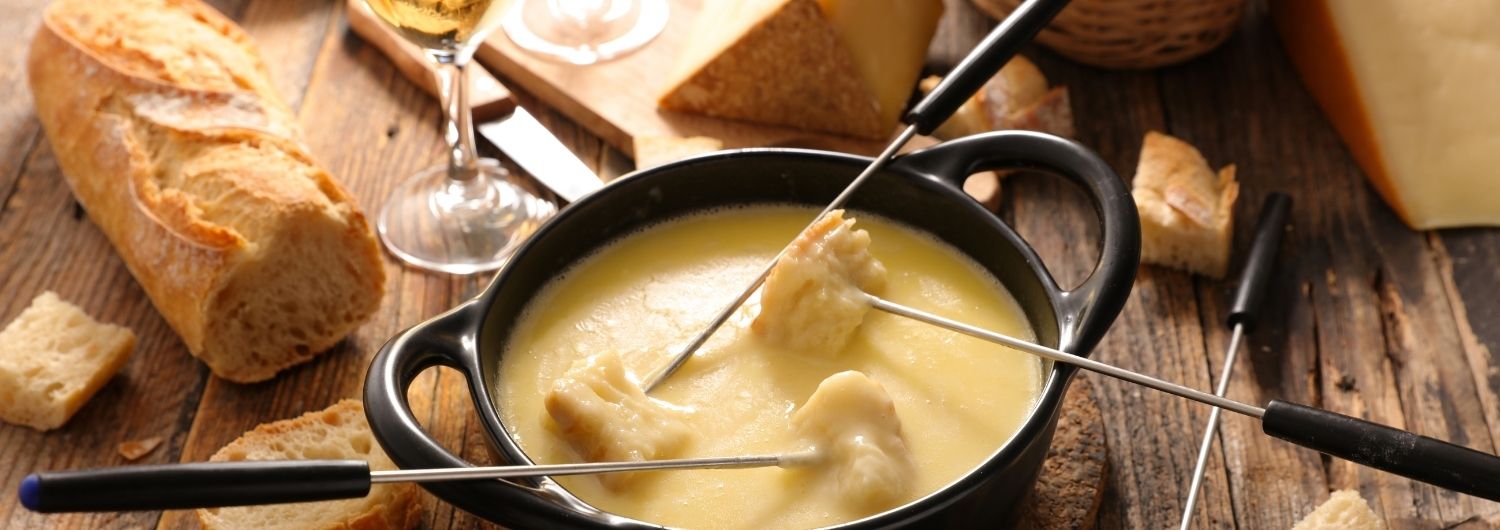
Savoyard fondue is a traditional dish of Alpine cuisine , This warm preparation, served in a caquelon, has become an important symbol of mountain gastronomy over the years. This warm preparation, served in a caquelon, has over the years become a strong symbol of mountain gastronomy.
A simple definition of Savoyard fondue
Fondue savoyarde is a culinary preparation based on several typical Savoy cheeses, melted together to create a smooth, homogenous texture. According to Larousse
“a dish consisting of food immersed in a hot preparation”.
In this case, it's a cheese speciality where the mixture of cheeses and white wine creates a warm sauce in which guests dip bread with long forks.
History and origins in Savoie
Fondue originated in the rural regions of the French Alps, particularly in Savoie
According to France.fr
“Savoyard fondue became popular in the 19th century as a convivial mountain dish.”
With the development of Alpine tourism in the 20th century, particularly in resorts such as Chamonix Courchevel
Why Savoy fondue is a regional symbol
Today, Savoyard fondue embodies several strong values:
Conviviality sharing around the same tableTradition a recipe handed down from generation to generationTerritory reflecting local products
This cheese speciality is also associated with a unique sensory experience: the warmth of the dish, the atmosphere of the chalets, the snowy landscape. It represents a true immersion in Alpine culture.
As the Michelin Guide
“Savoyard fondue is a culinary experience that goes beyond simple tasting.”
Ingredients for Savoyard fondue (optimized version)
Savoyard fondue is based on a precise balance between cheeses , white wine and accompaniments. Each ingredient plays an essential role in the texture and taste of this emblematic Savoy dish. Understanding these components is key to the success of this authentic and tasty specialty.
The must-have cheeses
Traditional fondue uses a blend of three main cheeses from the Alpine region:
the beaufort , renowned for its finesse and fruity taste
the county , which adds character
l'Emmental , softer and more melting
You can also add’abundance , a typical cheese from Haute-Savoie
According to National Institute of Origin and Quality
“Protected designation of origin cheeses guarantee quality and know-how linked to the terroir.”
The result is a creamy texture and well-balanced taste, the hallmarks of a true Savoyard fondue.
The role of Savoyard white wine
White wine is indispensable in fondue. It binds the cheeses and adds a light acidity that balances the richness of the dish.
The most commonly used wines come from Savoie
Apremont
Roussette
Chignin
As the Interprofession des Vins de Savoie
“Savoy wines, fresh and light, are perfectly suited to cheese dishes.”
The choice of wine has a direct influence on the success of a Savoyard fondue, particularly in terms of texture and aroma.
Essential support
There's more to a fondue than cheese. The accompaniments play a key role in the experience:
bread ideally stale for better baking propertiesdelicatessen cured ham, sausage, Bündnerfleischpotatoes an alternative to bread
These elements make it possible to vary the pleasures while preserving the convivial spirit of the dish.
In some regions, vegetables or gherkins are also added to add freshness and balance the richness of this specialty.
Traditional Savoyard fondue recipe (optimized version)
Savoyard fondue is a seemingly simple preparation, but one that requires precision and respect for the steps involved in order to achieve a perfectly homogenous texture. Making a Savoyard fondue according to the rules of the art allows you to rediscover the authentic flavors of the mountains of Savoy. Savoie
Perfect quantities per person
To succeed in this specialty, it's essential to respect the proportions. On average, we recommend :
200 to 250 g of cheese per person 10 cl white wine per person 1 garlic clove
a little cornstarch to bind
According to Academy of Taste
“The right balance between cheese and wine is the key to a successful fondue.”
These quantities guarantee a Savoyard fondue that is neither too liquid nor too thick, perfect for a traditional Savoyard fondue.
Detailed preparation steps
Here are the essential steps for preparing a traditional Savoyard fondue:
Rub fondue pot with garlic to scentPour in the white wine and heat gentlyGradually add the grated cheeses Stir in the shape of an eight to avoid lumpsAdd a dash of cornstarch if necessary
Cooking should be gentle so as not to alter the texture of the Savoyard fondue.
As the Marmiton
“A fondue must never boil, or it will become grainy.”
Tips for a successful Savoyard fondue
Even if the recipe seems simple, certain mistakes are common. Here are the essential tips:
use quality cheeses
do not overheat the mixture
stir constantly
serve immediately
This successful cheese speciality must be smooth, shiny and stringy , A taste worthy of a Savoyard mountain fondue.
Summary table of proportions
Element
Quantity per person
Cheese
200-250 g
White wine
10 cl
Bread
150 g
Cooking time
15-20 min
Immersive experience: Savoyard fondue in Savoie (optimized version)
Enjoying a fondue in Savoie is much more than just a culinary experience. It's a true sensory and cultural experience, rooted in Alpine landscapes and local traditions. This immersive experience makes Savoy fondue an essential part of gastronomic tourism in the mountains.
The best places to eat a Savoyard fondue
Savoie is full of authentic places to enjoy a fondue in exceptional surroundings. Among the most famous destinations:
Chamonix Courchevel Annecy
According to Savoie Mont Blanc Tourism
“Savoyard gastronomy is a gateway to the region's identity.”
These places offer a unique experience around this specialty, combining flavors and landscapes.
Typical Savoyard atmosphere
Eating fondue in Savoie also means enjoying a warm atmosphere:
wooden chalets
chimney fire
mountain scenery
view of snow-capped peaks
This atmosphere contributes greatly to the pleasure of this specialty, creating a convivial and authentic moment.
As the Michelin Guide
“The setting plays an essential role in the culinary experience in the mountains.”
Case study: a fondue evening in the mountains
Let's take the example of a trip to Megève
After a day on the slopes, visitors gather in a high-altitude chalet. A fondue is served in a traditional caquelon, accompanied by local white wine and regional charcuterie.
The experience is based on several elements:
sharing a dish
interaction between guests
discover local products
According to a Auvergne-Rhône-Alpes Regional Tourism Committee
“Over 70% of tourists associate their mountain holiday with a typical gastronomic experience.”
Fondue thus becomes a key part of the trip, and experiencing this cheese speciality at altitude remains an unforgettable experience.
Food and wine pairings for Savoyard fondue
Choosing the right accompaniments is essential to sublimate this dish. Food and wine pairings help to balance the richness of this cheese dish and bring out all its flavors. A well-paired Savoyard fondue becomes a true gastronomic experience.
Which wine to drink with fondue
The choice of wine is crucial to the success of this cheese specialty. Traditionally, dry white wines from Savoie
The most recommended options:
Apremont
Roussette de Savoie
Chignin-Bergeron
These wines have a natural acidity that offsets the fatness of the cheese in this dish.
According to Comité Interprofessionnel des Vins de Savoie
“Savoyard white wines are perfectly suited to dishes rich in cheese.”
The wine used in the preparation can also be served at the table to accompany the Savoyard fondue, ensuring aromatic continuity.
After a fondue, nothing beats a glass of Chartreuse! In moderation, of course!
Alternative drinks to Savoyard fondue
Although white wine remains the classic choice, other beverages can accompany a Savoyard fondue:
hot tea aids digestionstill water : neutralizes the palateinfusions soft alternatives
In some traditions, tea is the preferred accompaniment to Savoyard fondue, notably for its digestive effects.
Le site Santé Publique France
“Good hydration aids digestion of rich meals.”
Mistakes to avoid in agreements
Certain choices can detract from the Savoyard fondue experience:
avoid overly tannic red wines
limit sugary drinks
don't mix too many flavours
This cheese specialty requires simple, well-balanced pairings to preserve all its authenticity.
Savoyard fondue variations
This traditional cheese speciality is the best known, but today there are many variations that allow this dish to be adapted to modern tastes, dietary constraints and desires. Exploring these variations allows you to rediscover Savoyard fondue from different angles, while retaining its convivial spirit.
Alcohol-free Savoyard fondue
It's perfectly possible to prepare this dish without white wine. In this version, the wine is replaced by :
vegetable broth
milk
or a mixture of water + lemon
This alternative keeps the texture close to that of a classic Savoyard fondue, while eliminating the alcohol.
According to Marmiton
“It's possible to adapt traditional recipes without altering the taste pleasure.”
The alcohol-free Savoyard fondue is particularly popular for family meals.
Light Savoyard fondue
This cheese specialty is often perceived as a rich dish. However, certain adaptations can make it easier to digest:
reduce the amount of cheese
use lower-fat cheeses
add vegetables
This revisited version of the Savoyard fondue retains its flavours while being more balanced.
According to Santé Publique France
“Adapting recipes makes it easier to balance your diet.”
Savoyard fondue revisited
Some chefs are now offering modern versions of the Savoyard fondue, incorporating new ingredients:
spices
mushrooms
truffle
different cheeses
In cities like Chambéry Annecy
These creations allow you to renew the experience while respecting the spirit of the Savoyard fondue.
Why these variants are so appealing
The different versions of this dish meet several needs:
diet adaptation
desire for novelty
accessibility for all
They show that Savoy fondue can evolve without losing its identity.
Nutritional values and health tips
This cheese speciality is a rich, high-energy dish, often associated with winter meals in the mountains. Understanding its nutritional value will help you to enjoy it more fully, while adopting a balanced diet. A well-mastered Savoyard fondue is a perfect addition to a varied diet.
Calorie content of Savoyard fondue
Fondue is mainly composed of cheese, which makes it a caloric dish. On average :
600 to 800 kcal per person rich in lipids and in proteins
major source of calcium
According to ANSES
“Dairy products are essential for calcium intake, but should be consumed in moderation.”
This cheese speciality is therefore a dish to be enjoyed occasionally, especially in a festive context.
Digesting a Savoyard fondue
Digestion of this dish can sometimes be difficult due to its richness. Here are a few tips to help you tolerate it better:
opt for a dry white wine
avoid drinking cold water with meals
eat slowly
serve with hot tea
These practices aid digestion and enhance the overall Savoy fondue experience.
Le site Ameli
“Adopting good eating habits promotes optimal digestion.”
Tips for a balanced meal
Even if this dish is rich, it is possible to balance the meal:
add a green salad as a starter
limit portions
avoid heavy desserts
opt for light accompaniments
This cheese speciality is well integrated into a structured meal, allowing you to enjoy the pleasure without excess.
Simplified nutritional table
Nutrient
Average contribution
Calories
600-800 kcal
Protein
High
Lipids
High
Calcium
Very high
Frequently asked questions about Savoyard fondue (optimized version)
This FAQ brings together the most frequently asked questions about fondue, based on Google searches. It will help you better understand this specialty and optimize your experience of this Savoyard dish.
Which cheeses to use for a Savoyard fondue?
The traditional recipe generally consists of three cheeses:
This blend produces a melt-in-the-mouth texture and a well-balanced taste. The quality of the cheeses is essential to the success of this dish.
How much cheese per person?
For a Savoyard fondue, we recommend you bring :
200 to 250 g of cheese per person
This quantity guarantees a generous meal without excess.
Can we make a wine-free version?
Yes, this specialty can be made without alcohol. You can replace the wine with :
This version preserves the spirit of the dish while adapting to everyone.
Which bread to choose?
The ideal bread is :
slightly stale
firm-rind
country-style bread
It holds the cheese firmly in place and prevents it from falling apart.
What to drink with this Savoyard dish?
Preference is given to :
white wine Savoie
hot tea
water
These beverages balance out the richness of the dish.
Can I prepare in advance?
It is not advisable to prepare this dish in advance, as it may lose its texture. It's best to cook it just before serving.
Why is the mixture too liquid?
This may be due to :
too much wine
a lack of cheese
too high a temperature
Respecting proportions is essential.
What's the best season?
This dish is particularly popular in winter, especially in the mountains, but is eaten all year round.


 Français
  English
 Deutsch
