

Granville: complete guide to visiting Monaco du Nord
Summary: Granville is a seaside resort in Normandy, France. La Manche, renowned for its port, beaches, maritime heritage and its link with Christian Dior. Granville's charm lies in its fortified upper town, its Chausey islands and its proximity to Mont-Saint-Michel. An ideal Normandy destination, Granville combines history, nature and the art of seaside living.
Granville is one of France's most emblematic maritime pearls. Normandy. Located in the department of Handle, Granville dominates the sea from its rocky promontory, offering an exceptional panorama of the bay. Often dubbed the “Monaco of the North”, the town attracts thousands of visitors every year to discover its beaches, lively port and historic center. If you're exploring the most beautiful destinations the country, You can consult this complete guide to the regions and places of interest at https://cparici.com/fr/visiter-la-france-guide-des-regions-et-sites-touristiques. Granville is an unmissable stopover on any stay in France. Normandy.
Where is Granville?
Granville's geographical location
Granville is located on the west coast of Normandy, opposite the Channel Islands. Situated on a rocky cape, Granville enjoys a strategic position that has shaped its maritime history. Approximately 50 kilometers from Mont-Saint-Michel, The town is perfectly situated for exploring the bay.
A major maritime crossroads
Historically, Granville developed thanks to fishing and maritime trade. Even today, the town is France's leading shellfish port, particularly for scallops. This economic activity gives the town a strong identity, blending tradition and modernity.
Simple definition of Granville
From a simple point of view, Granville is a Normandy seaside resort known for its maritime heritage, active port, beaches and fortified historic center. This definition sums up the essence of the city, but doesn't capture all its cultural and historical richness.
Granville's beaches and landscapes
Le Plat Gousset
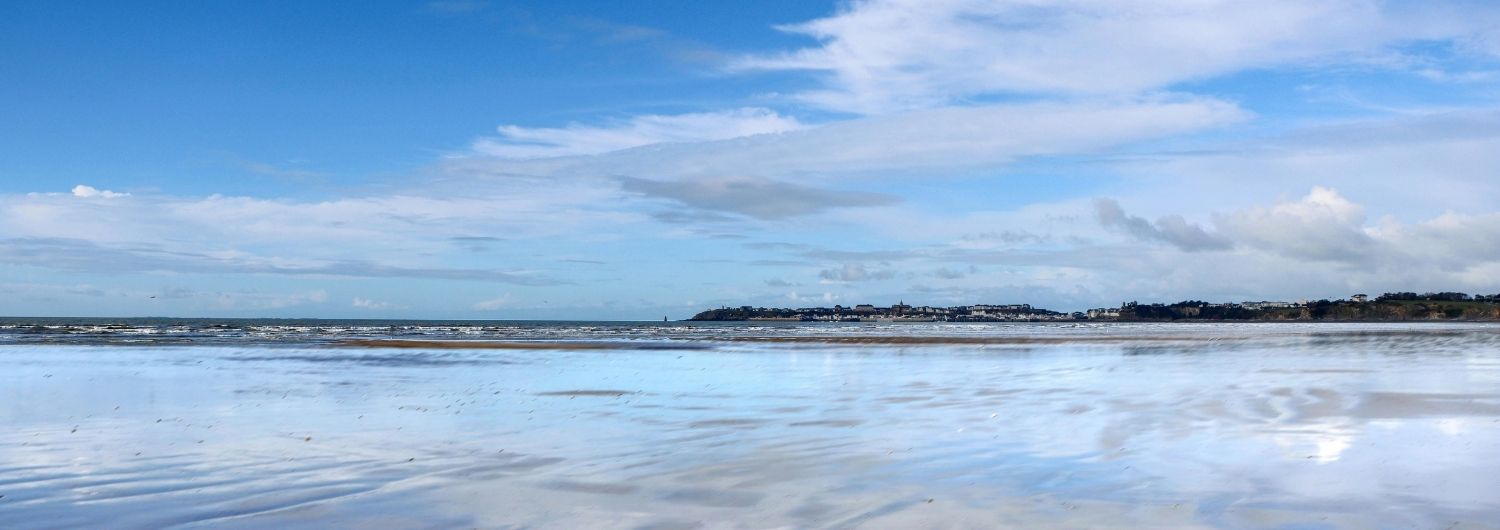
A veritable postcard of the Normandy coastline, Plat Gousset beach is the nerve center of local seaside life. Situated at the foot of Haute Ville, it forms a wide crescent of sand framed by elegant villas and a panoramic promenade. This landscaped seafront offers an unobstructed view of the horizon and, on a clear day, of the archipelago of the Chausey Islands.
In summer, the atmosphere is lively and family-friendly, with supervised swimming, children's clubs, café terraces and seasonal events. At low tide, the foreshore is wide open, revealing a changing landscape characteristic of the bay. At high tide, the sea licks the dykes, providing a more spectacular backdrop. This permanent alternation illustrates the power of Normandy's tides, among the largest in Europe.
The Plat Gousset is not just a place to swim, it's also a great place to take a stroll. The light changes with the hours, from the silvery tones of morning to the golden hues of sunset. This special atmosphere contributes to the reputation of the seaside resort, attracting visitors and locals alike.
Cliffs and panoramas
The surrounding coastline is distinguished by its granite cliffs and coastal paths offering remarkable views of the Bay of Mont-Saint-Michel. These heights are ideal for hiking and contemplation. The paths, part of the GR 223 (sentier des Douaniers), follow the relief and allow you to observe the immensity of the sea from different angles.
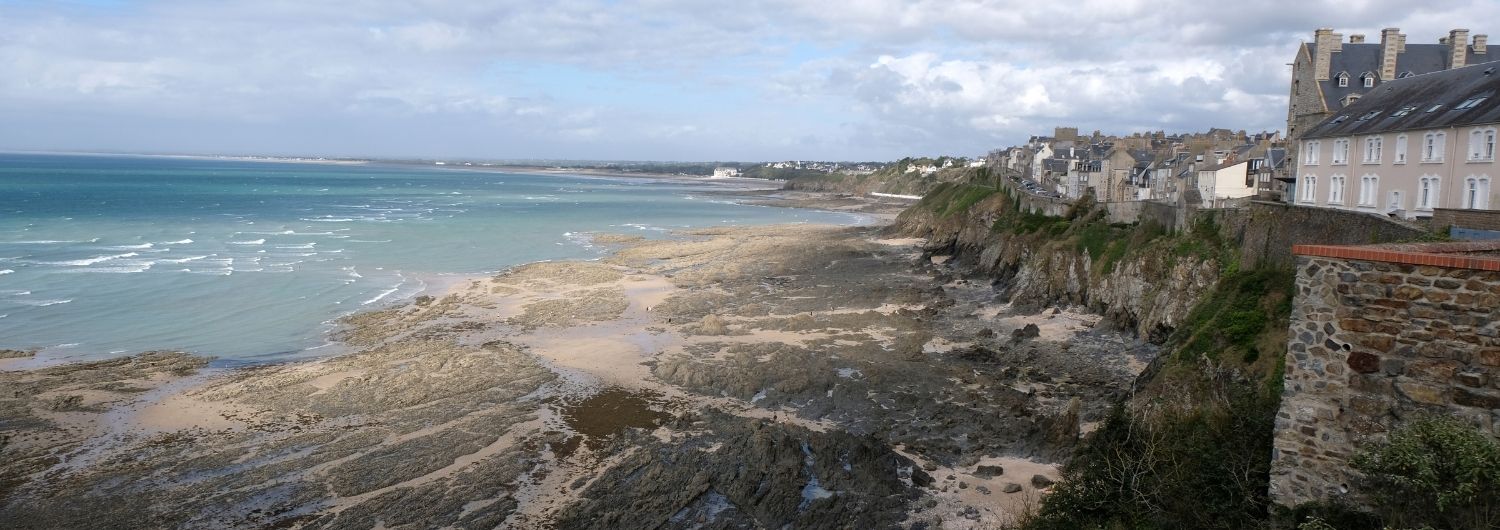
From these natural promontories, the spectacle of the tides takes on its full dimension. At low tide, the sea retreats for several kilometers, revealing sandbanks and oyster beds. At high tide, the landscape changes rapidly, creating an impression of continuous movement. This natural dynamic contributes to the area's visual identity.
The cliffs also offer a unique perspective on the architecture of the Haute Ville and the port below. This contrast between raw nature and built heritage reinforces the singular character of the site. For lovers of photography and seascapes, these panoramas are among the most impressive on the west coast of Normandy.
The port and maritime identity
Visit Port of Granville is the economic and historical heart of the city. Its activity is largely based on fishing, particularly for scallops. Every year, several thousand tons of this shellfish are landed, making this port one of France's most important shellfish centers.
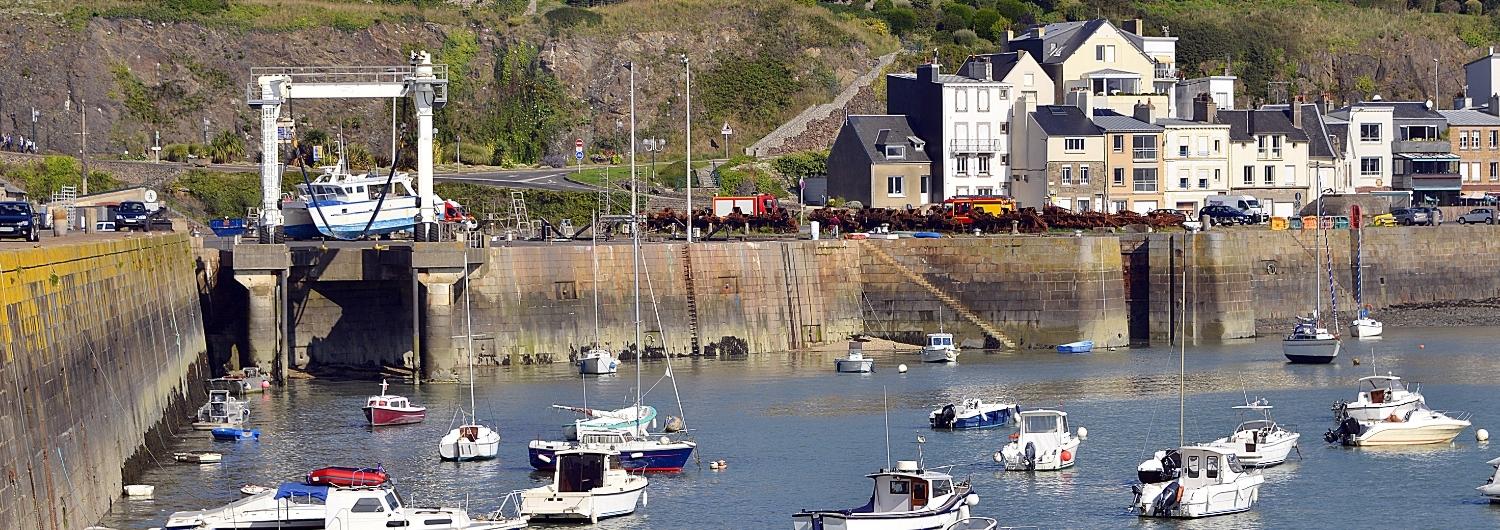
Traditional fishing remains an essential pillar of the local economy. Trawlers and inshore fishing boats liven up the quays at dawn, perpetuating an ancient maritime tradition. This activity still shapes daily life and contributes to the region's gastronomic reputation.
But port activity is not limited to fishing. The yachting basin is home to numerous sailboats and touring boats, while regular connections to the Channel Islands are available. This diversity of uses illustrates the port's ability to combine tradition and modernity.
The docks have also become living spaces, lined with restaurants specializing in seafood. Visitors can watch the arrival of the boats while sampling local specialties, reinforcing the direct link between sea and plate.
The Chausey Islands, an accessible paradise
Offshore lies the archipelago of the Chausey Islands, accessible by boat in less than an hour. This group of granite islets offers a landscape of rare purity. At high tide, only a few islands emerge; at low tide, more than 300 appear, forming one of Europe's largest archipelagos in terms of the number of uncovered islets.
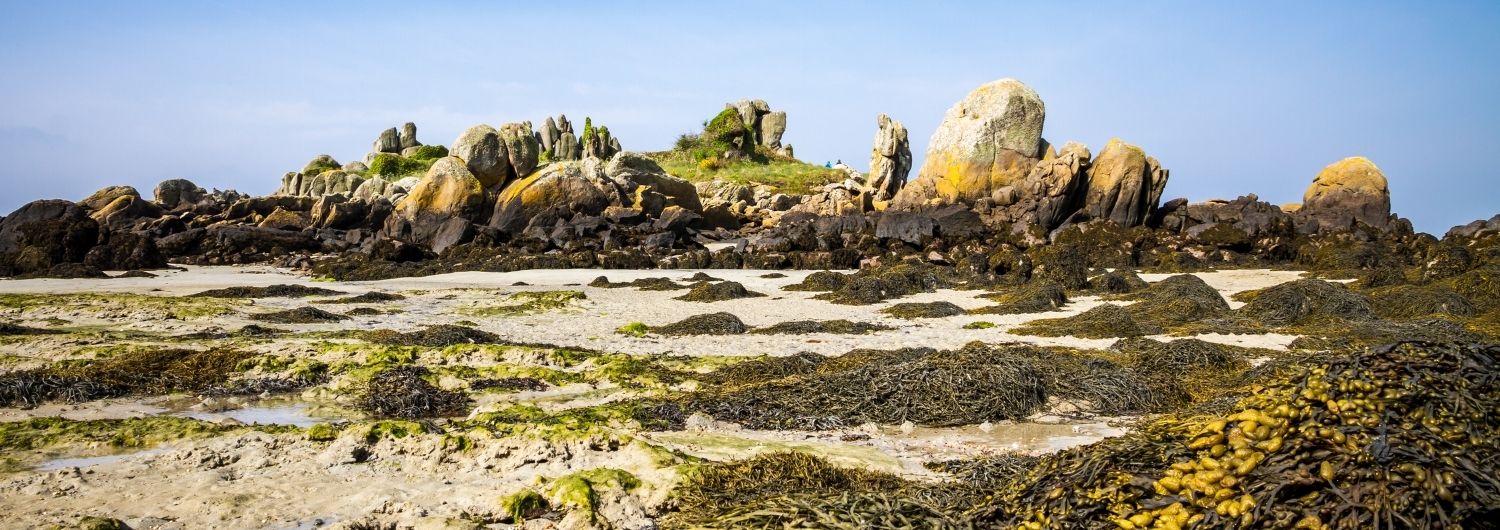
Chausey seduces with its translucent waters, white sandy beaches and peaceful atmosphere. The almost total absence of motorized traffic reinforces the sense of disconnection. Visitors come here to hike, fish or simply enjoy the peace and quiet.
The proximity of this archipelago is a major asset for the destination. It allows you to combine urban discovery and nature escapades in a single day. The contrast between the bustle of the port and the serenity of the islands contributes to the richness of the landscape and the enduring appeal of the Normandy coastline.
Combining family beaches, wild cliffs, intense maritime activity and unspoiled archipelago, the region offers a remarkable diversity of panoramas. This complementarity between sea, heritage and nature explains why the region remains one of the most popular stopovers on the French west coast.
Granville's history and heritage
Medieval origins
The history of this maritime city really took shape in the 15th century, at a time marked by the end of the Hundred Years' War. The site, perched on a rocky promontory overlooking the sea, was of obvious strategic interest. The English, who occupied part of Normandy, decided to establish a fortified town to control maritime movements in the bay.
The ramparts, still visible today, bear witness to these troubled times. Built of local granite, they encircle the Upper Town and form an impressive defensive perimeter. This urban organization, typical of medieval fortified towns, can be seen in the layout of the narrow streets, the tightly-packed old houses and the cobbled passageways.
After the French reconquest in the mid-15th century, the town consolidated its strategic role. Its port grew steadily, favoring maritime trade and deep-sea fishing. This dual identity - military and maritime - had a lasting influence on the character of the area.
Today, a stroll along the fortifications reveals the strategic importance of this former stronghold. From the heights, the view stretches out over the sea and the bay, a reminder of the extent to which the town's geographical position has influenced its destiny. The town's medieval heritage is one of the pillars of its tourist appeal.
Granville and Christian Dior
In the 20th century, the town gained international renown thanks to the birth of Christian Dior. The famous couturier was born in 1905 in an elegant villa overlooking the sea. This home, surrounded by flower-filled gardens, left a deep imprint on his imagination.
Now transformed into a Christian Dior Museum, villa Les Rhumbs attracts visitors from all over the world. The collections on display trace the evolution of haute couture and highlight the influence of the Normandy landscape on the designer's creations.
Gardens play a central role in this inspiration. The changing colors of the sky, marine hues and floral compositions nourished his aesthetic universe. Dior regularly evoked the importance of his childhood spent by the sea, considering this natural setting to be the foundation of his artistic sensibility.
This link between natural heritage and artistic creation gives the seaside resort a strong cultural dimension. The legacy left by the couturier contributes to the resort's international renown.
Religious and architectural heritage
The town's architectural heritage is also distinguished by its emblematic buildings. The church of Notre-Dame du Cap Lihou has dominated the Haute Ville for several centuries. Its architecture blends Gothic elements with successive alterations, illustrating the stylistic evolution of Norman religious buildings.
From its forecourt, the panorama of the bay is spectacular. This view underscores the close relationship between the city and the sea. Sailors setting out on long voyages would come here to pray before setting sail, making the building an integral part of local maritime history.
Another strong symbol: the Cap Lihou lighthouse. Commissioned in the 19th century, it guides ships and secures the entrance to the port. Its slender silhouette embodies the region's maritime vocation.
Together, these elements - medieval ramparts, Belle Époque villas, religious buildings and port infrastructures - make up a coherent and diverse heritage. Each era has left its mark, creating an urban landscape that blends military history, maritime tradition and seaside elegance.
This wealth of heritage explains the attachment of its inhabitants to their town and the growing interest of visitors in its history. Between its medieval heritage and its cultural influence, the city's past continues to shape its contemporary identity.
Key figures for Granville
Here is a summary table showing important data concerning Granville :
| Indicator | Data |
|---|---|
| Population of Granville | Approximately 13,000 inhabitants |
| Distance to Mont-Saint-Michel | ~50 km |
| Shellfish harbor | 1st in France |
| Average altitude | 45 meters |
| Annual tourist numbers | Several hundred thousand |
These figures show that the city is both a human-sized town and a major tourist destination.
Case study: Granville carnival
The carnival of Granville is one of France's oldest carnivals, and a UNESCO World Heritage Site. Every year, the city welcomes tens of thousands of participants during this festive event.
Economic impact
During Carnival, Granville has seen a significant increase in hotel and commercial activity. The event illustrates how the city can leverage its festive heritage to boost the local economy.
Why visit Granville?
Visit Granville, is to discover a destination that combines maritime heritage, Normandy beaches and artistic culture. Unlike other seaside resorts, the town retains a rare authenticity.
Strategic proximity
Thanks to its proximity to Mont-Saint-Michel, Granville allows you to combine several emblematic visits during a stay in Normandy.
How to: organize your stay in Granville
How to get to Granville
Granville can be reached by train from Paris in around 3h30. By car, Granville is linked to the main routes through Normandy.
Where to stay in Granville?
Granville offers hotels, B&Bs and vacation rentals to suit all budgets.
What to do in 2 days in Granville
In two days, Granville allows you to visit the upper town, the Dior museum, the beaches and organize an excursion to Chausey.
Granville and the maritime economy
The economy of Granville historically based on fishing. Today, the town is diversifying its activities with tourism and yachting.
According to regional data, the maritime sector represents an essential part of the town's activity, consolidating its strategic role on the Normandy coast.
Granville faces up to environmental challenges
Like any coastal town, Granville has to cope with erosion and climate change. The city's municipal authorities are implementing policies to protect the coastline.
Frequently asked questions about Granville
Where is Granville in France?
Granville is located in Normandy, in the Manche département, opposite the Bay of Mont-Saint-Michel.
Why is Granville called Monaco du Nord?
Granville is nicknamed for its promontory location and elegant villas.
What's not to miss in Granville?
À Granville, You have to see the upper town, the Dior museum and the beaches.
How do I get to the Chausey Islands from Granville?
A shuttle service runs from the town to Chausey.
When is the best time to visit Granville?
Granville is pleasant from spring to summer, especially during Carnival.
Is Granville family-friendly?
Yes, the town offers safe beaches and child-friendly activities.
Conclusion
Granville embodies the perfect balance between history, sea and culture. Whether for its heritage, its active port or its seascapes, the coastal community fully deserves its reputation as the jewel of Normandy. When you visit the town, you'll discover an authentic, dynamic city deeply attached to its maritime identity.
If you'd like to find out more about the local history, take a look at the Wikipedia page dedicated to this Normandy seaside resort: https://fr.wikipedia.org/wiki/Granville.


