
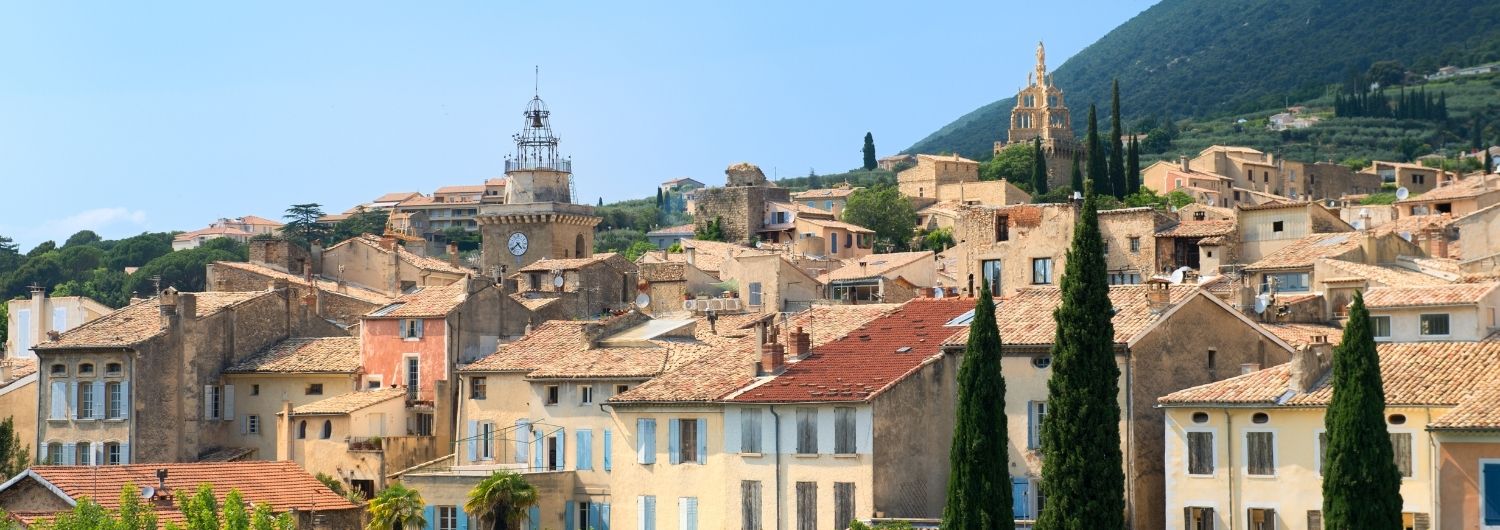
The Baronnies Provençales: nature, heritage and escapades
Visit Baronnies Provençales are a paradise for lovers of varied landscapes, silence and unspoilt nature. Located between the Auvergne-Rhône-Alpes and Provence-Alpes-Côte d'AzurThis unique region combines Mediterranean and Alpine influences. In this article, I invite you to discover the Baronnies Provençales in all their glory: geography, biodiversity, heritage, activities and practical advice on how to make the most of this timeless destination. The link between wild nature and human heritage here is strong and rich, and deserves to be explored with care - just like the "local" guide you follow in nature.
The must-sees of the Baronnies provençales
1. Rocher de Saint-Julien - Via Ferrata & panoramas
Why it's a must:
Visit Saint-Julien Rockthe natural emblem of Buis-les-BaronniesIt offers a breathtaking view over the Ouvèze valley and the surrounding landscape. This limestone massif is prized by climbers and rock climbers alike. via ferratawith several routes to suit all levels.
What to do on site :
-
Spectacular via ferrata with suspension bridges and panoramic views.
-
Hike to the summit for a 360° panorama.
-
Climbing for all levels.
Advice : Leave early in the morning in summer to avoid the heat, and bring good shoes.
2. Montbrun-les-Bains - Spa village & Provencal charm
Why it's a must:
Ranked among theMost Beautiful Villages in France", Montbrun-les-Bains in the Baronnies Provençales is famous for its thermal baths, stone houses with colorful shutters, and winding streets.
What to do on site :
-
Thermal cure or wellness spa overlooking Mont Ventoux.
-
Discover our medieval heritage.
-
Stroll through the nearby lavender fields.
Advice : The Monday morning market is well worth a visit for its local produce (honey, lavender, cheeses...).
3. Montagne de Chabre - Hang-gliding & wilderness
Why it's a must:
This mountain in the Baronnies Provençales is a Mecca for the paragliding and hang-glidingIt's also a hiking spot with views of the Southern Alps.
What to do on site :
-
Paragliding take-off (tandem flights possible).
-
Hike along the Chabre ridge.
-
Birds of prey and rare flora.
Advice : The site is very exposed to the wind, so check the weather conditions before any activity.
4. Gorges de la Méouge et de l'Eygues - Nature & swimming
Why it's a must:
Visit gorges de la Méougein the Baronnies ProvençalesThese natural sites are perfect for swimming, picnicking and walking. Visit Eygues gorges offer a wilder, less crowded setting, ideal for tranquillity.

What to do on site :
-
Rock jumping and natural pools in the Méouge.
-
Walk along the gorges on marked paths.
-
Observation of fauna, flora and geology.
Advice : Take good sandals to walk in the water and be careful with the currents.
5. Perched villages: Rochebrune, Arzeliers, La Motte-Chalançon...
Why it's a must:
The Baronnies Provençales are full of hilltop villagesThey bear witness to a rich medieval past. They are often surrounded by spectacular scenery and bathed in silence.
What to do on site :
-
Stroll through the cobbled streets.
-
Discover Romanesque churches, ruined castles and washhouses.
-
Enjoy a coffee or picnic overlooking the mountains.
Advice : In the evening, the low-angled light gives the stones magnificent golden hues - ideal for photos.
6. Nyons - Olive capital & living heart of the Baronnies
Why it's a must:
Largest town in the Baronnies Provençales, Nyons is known for its olive treeswith its lively Provencal market and Romanesque bridge.

What to do on site :
-
Visit the Olive Tree Museum.
-
Thursday morning market.
-
Stroll along the Eygues or climb to the Randonne tower.
Advice : Don't leave without tasting Nyons PDO olive oil, or fresh local olive bread.
7. Observatoire des Baronnies Provençales - An exceptional starry sky
Why it's a must:
Located in Moydans, theBaronnies Provençales Observatory is one of the bestamateur astronomy in Europe thanks to very clear, low-pollution skies.
What to do on site :
-
Observation evening (reservation required).
-
Astrophotography courses and workshops.
-
Meeting with sky enthusiasts.
Advice : Bring warm clothing even in summer, as nights can be chilly.
8. Montagne de la Lance - Hiking & majestic views
Why it's a must:
Visit Lance Mountain in the Baronnies Provençales offers a mix of ridges, forests and pastures, with spectacular views of the Baronnies and Mont Ventoux.
What to do on site :
-
Loop hike from La Roche-Saint-Secret or Taulignan.
-
Watching chamois, vultures and butterflies.
-
Picnic at the summit (1340 m).
Advice : This is a beautiful day hike, accessible but sustained. Bring water and an IGN map.
9. Greenhouses & Garde-Colombe - Heritage and tranquility
Why it's a must:
Greenhouses is an ancient medieval town in the Baronnies Provençales with arcaded houses and cobbled streets. Garde-ColombeThe new town, born of the merger of small villages, has preserved its charming hamlets.
What to do on site :
-
Walking in the footsteps of the Templars at Serres.
-
Stroll between fountains, churches and shady squares.
-
Discover local artisans.
Advice : Ideal for a stopover between two hikes, or for a day off the beaten track.
10. Défilé des Trente-Pas - Discreet and mystical gorges
Why it's a must:
Visit Trente-Pas parade is a wild, deep gorge with a small stream running through it. Less frequented than other sites, it offers a more intimate atmosphere.
What to do on site :
-
Walk along the creek bed (beware of flooding).
-
Picnic under the trees.
-
Observe the flora (many orchids in spring).
Advice : Perfect for lovers of secret places, or for a quiet moment away from it all.
Geographic, geological and climatic context
1. Administrative and geographical location
The Parc Naturel Régional des Baronnies Provençales was officially created on January 26, 2015. It extends over approximately 104 municipalities divided between the Drôme and Hautes-Alpes departments. This means it covers two administrative regions (Auvergne-Rhône-Alpes & Provence-Alpes-Côte d'Azur) with a huge diversity of relief and climates.
Geographically, it lies between Mont Ventoux, the Pre-Alps, the Durance valley and the Vercors. The relative isolation of certain areas (due to deep valleys, fragmented relief) has enabled the preservation of natural environments and traditions.
2. Unique geology
The Provençal Baronnies lie on a predominantly mountainous massif. limestone from an ancient seabed. The terrain is highly varied - ridges, limestone plateaux, troughs, steep-sided valleys, ravines - and tortuous, with many differences in level. The marls of the Mont Risou in the Hautes-Alpes and the Âne in the Drôme) can be used to study geological transitions.
3. Climate and influences
The climate in the Baronnies Provençales is a blend of influences Mediterranean and mountain women. On the south-facing slopes (adret), you'll find Mediterranean species, lots of heat, garrigues, lavender and more. On the northern slopes (ubac), shade, humidity and coolness are more prevalent, with forests, beech trees and other species less typical of the south.
Variable altitudes moderate the climate: the higher you go, the milder the summer, the colder the winter. Snow is possible on the higher slopes. Weather can change rapidly depending on exposure. This transitional climate is one of the reasons for the region's rich biodiversity. (see next section)
II. Biodiversity, nature and landscape
1. Floristic and faunistic richness
The Baronnies Provençales are home to a mosaic of natural habitats: limestone grasslands, forests, scrublands, rocky outcrops, moors, wetlands, etc.
The area is home to rare and protected species, as well as numerous zonations such as ZNIEFF (Zones Naturelles d'Intérêt Écologique, Faunistique et Floristique), Natura 2000 and others. Among the birds, raptors such as Bonelli's Eagle, Egyptian Vulture and Great Horned Owl are among the remarkable species observed.
Visit night sky is also a feature of the natural environment here: one of the least polluted skies in France, making for excellent astronomical observation. Sky quality is one of the objectives of the park's charter.
2. Landscapes and panoramas
The Baronnies Provençales offer a wide variety of landscapes: high, sculpted limestone ridges, narrow valleys, luminous plateaus, forests to the north, garrigues to the south.
The contrast between adret and ubac is striking: on the lower slopes, heat, light and Mediterranean vegetation; on the shady slopes, coolness and high-altitude forests. This creates a wide variety of often spectacular panoramas.
You can also admire distant views such as Mont Ventoux or the Pre-Alps/Alps, depending on the elevation.
3. Night sky / light and non-pollution
The night sky in the Baronnies Provençales is recognized as one of the purest in France. The park encourages the preservation of the night: limiting light pollution, raising awareness, offering nocturnal activities such as stargazing.
L'Baronnies Provençales Observatory located in Moydans (Hautes-Alpes, France) plays an important role in welcoming the public, providing astronomical watches, training courses and observation, even at night. It is equipped for both the general public and amateurs.
The link between the beauty of the nights, biodiversity (certain insects, bats, etc.), and astronomy tourism is strong in this region. It's an asset that's often little mentioned, but much appreciated.
III. History, culture and human heritage
1. Historical origins, territorial identity
The name "Baronnies" comes from the local barons, lordships such as Mévouillon, Montauban, etc., historically extending into the Dauphiné, with some parts disputed between Dauphiné and Provence.
The Baronnies are part of a very ancient territory: occupation since prehistoric times, Gallic influences (notably the Voconces), then Roman, then medieval.
The creation of the nature park in 2015 is part of a drive to enhance this heritage while protecting it. The project emerged in the 1990s, with studies, public inquiries and a charter adopted in 2012.
2. Built heritage and villages
Nyons, Buis-les-Baronnies, Taulignan, Sainte-Euphémie-sur-Ouvèze, etc. are just a few of the many perched villages and ancient towns with obvious charm. These villages offer narrow streets, old stone walls and dry-stone buildings.
You'll also find mills, castles, ancient churches and Roman and medieval remains, such as the castles at Cornillon-sur-l'Oule.
Human settlements in the landscape are typical: dry-stone terraces, olive groves, orchards and so on. This bears witness to ancient farming methods adapted to the constraints of the terrain.
3. Agriculture, local produce and terroir
Agriculture is very present, with the cultivation ofNyons oliveLavender, spelt, lime blossom, fruits such as apricots, apples, etc.
Forests cover a large part of the area, but there is also agricultural abandonment in certain zones (abandonment of terraces, less grazing land), which poses challenges for biodiversity.
Local products are a strong point: olive oils, wines (Côtes des Baronnies, etc.), as well as local crafts, aromatic plants and traditional markets. These products structure the local economy and cultural identity.
IV. Tourism and outdoor activities
1. Hiking and great itineraries in the Baronnies Provençales
The Baronnies offer a wealth of footpaths, with hiking trails varying in difficulty, altitude and duration. From gentle strolls to multi-day hikes.
Famous itineraries allow you to discover villages, geology and panoramic views.
2. Biking, cycling, nature sports
Cycle touring (road bikes) and mountain biking are very popular, with mountain passes, mountain roads and dirt tracks. The terrain makes for difficult but rewarding climbs.
Climbing: some sites, such as Orpierre and Buis-les-Baronnies, are famous for their rock faces, which are ideal for rock climbing.
Paragliding and hang-gliding are also possible on favorable sites. The Chabre mountain, for example, is famous for this.
3. Other activities: observation, nature, outdoor recreation in the Baronnies Provençales
Nature observation: birds, flora, etc. The park offers birdwatching outings, applications and observation trails.
Stargazing / astronomy at the Moydans observatory.
Activities such as swimming in rivers, crossing old villages, discovering gastronomic delights in the markets, or simply strolling through the countryside.
4. Charming villages & tours in the Baronnies Provençales
Some villages not to be missed: Nyons, Buis-les-Baronnies, Taulignan, Sainte-Euphémie-sur-Ouvèze. Each has its own character and specialities.
Possible tours: tour of hilltop villages, heritage tours, or culinary tours (olive oil tasting, market, etc.).
V. Practical tips for visiting the Baronnies Provençales
1. Best time of year, seasonal weather
Spring (May-June) and autumn (September) are ideal times: mild weather, landscape in full bloom or beautifully colored, fewer people. Summer can be hot, especially on adret slopes, but also very bright. Winter: some slopes are snow-covered, but many places remain accessible, and the atmosphere is special.
Depending on altitude, you'll need appropriate clothing: warm during the day, cool at night, even cold at higher altitudes or in the shade.
2. How to get there, accommodation, tourist infrastructure
Main access by car, via departmental roads. Nearby towns such as Montélimar, Valence and Avignon can be used as a base.
Accommodation: B&Bs, self-catering cottages, inns, camping, unusual accommodation. Many small villages offer charming but sometimes isolated options, so plan ahead.
Modest tourist infrastructure in some areas: ask about services (restaurants, shops) in different villages, as some are very quiet and isolated.
3. Practical tips: what you need to know
-
Bring hiking boots, good equipment for the activities.
-
Respecting nature: signposting, preserving fragile environments (lawns, protected areas).
-
Check weather conditions, especially for high-altitude hikes.
-
Check access: some roads may be closed in winter, or less passable.
VI. Challenges & future of the Baronnies Provençales region
1. Conservation and sustainable development
Preserving biodiversity and natural environments (grasslands, wetlands, forests) is a priority. This means maintaining the traditional agricultural practices that shape the landscape, such as pastoralism and the management of olive groves and orchards.
Limit light pollution to preserve the night sky. Increase local awareness.
Water management, fire risk, erosion, gullying: issues linked to climate, climate change and agricultural abandonment.
2. Economic and demographic challenges
Maintaining populations in often isolated rural areas: public services, shops and mobility are all challenges.
Support traditional agriculture while making it profitable. Encourage short circuits, local production and sustainable tourism to generate income.
Reconcile nature tourism and environmental protection: avoid overcrowding, preserve trails, limit the impact of infrastructures.
3. Current projects / outlook
Strengthening short circuits, promoting "Baronnies" products.
Renewable energy projects, forest heat, etc.
Development of astronomy and night sky tourism.
Improving tourist infrastructures in certain villages to provide a better welcome without harming the environment.
FAQ - Baronnies Provençales
What is the Parc Naturel Régional des Baronnies Provençales?
The parque is a protected area created in 2015covering approximately 104 municipalities (and 1 associate) in the Drôme and Hautes-Alpes departments.
Its aim is to preserve nature, biodiversity and heritage, while promoting sustainable economic development and local identity.
Where exactly are the Baronnies Provençales located?
They are located in south-east France, straddling the Auvergne-Rhône-Alpes and Provence-Alpes-Côte d'Azur regions, covering parts of the Drôme and Hautes-Alpes departments.
The park extends over an area with a wide variety of landscapes: mountains, valleys, plateaus and gorges.
Q3: How many communes make up the Parc des Baronnies Provençales?
The park includes 104 municipalities members more 1 associated commune.
Q4: When is the best time to visit?
-
Spring (April to June): nature awakens, flowers, orchards, pleasant temperatures.
-
Summer Ideal for swimming in rivers, outdoor activities, markets, etc., but beware of the heat, especially on the south-facing slopes.
-
Autumn : mild temperatures, fewer people, beautiful colors, it's a very pleasant time.
-
Winter For quieter seasons, enjoy the villages, accessible hikes, but some high-altitude areas may be snow-covered or accessible depending on conditions.
Q5: What activities are recommended in the Baronnies Provençales?
Here are a few must-do activities:
-
Hiking, multi-day tours or short walks.
-
Cycling / mountain biking depending on terrain.
-
Paragliding, hang-gliding, observation of the night sky, especially at theBaronnies Provençales Observatory in Moydans.
-
Water activities: swimming in rivers or streams, quieter in isolated spots.
-
Discover the local heritage: hilltop villages, medieval heritage, crafts, markets, local produce.
Q6: What villages or places in the Baronnies Provençales are not to be missed?
Not to be missed:
-
Montbrun-les-Bains (spa village)
-
Nyons for its olive, market and local architecture
-
Buis-les-Baronnies for its charm, hikes, narrow streets and the Rocher de Saint-Julien.
-
Villages like Serres, Orpierre, La Roche-Saint-Secret-Béconne, etc.
Q7: Is this a family-friendly / child-friendly area?
Yes: many easy hikes, swimming in rivers, quiet villages to relax in, suitable nature activities (simple observations of nature, walks, etc.). In summer, however, you'll need to avoid the hottest hours of the day, and provide shade, water and sun protection. Some mountain areas require more preparation (equipment, physical condition).
Q8 : How do you get around the Baronnies Provençales?
The car remains the most practical means of transport, as villages are scattered and roads can be winding or narrow. Public transport is available, but very limited in some areas. For hiking and sightseeing itineraries, bring your own car or organize transfers.
Q9 : Where to sleep / what type of accommodation?
In the Baronnies, you'll find self-catering cottages, bed & breakfasts, inns, small charming hotels, campsites, unusual or more natural accommodation (eco-lodges, etc.). In the main villages or near sites of interest, the offer is better, but in isolated areas you'll need to book in advance.
Q10: What local products are typical of the Baronnies Provençales?
Here are a few specialities:
-
Nyons olive oil (PDO)
-
Honey, aromatic herbs, lavender, PPAM (perfumed, aromatic and medicinal plants)
-
Goat's cheese, fruit (apricots, apples, etc.) depending on the valley
-
Wines from Coteaux des Baronnies or other local appellations.
Q11: Are there any safety risks/needs to know?
Yes, a few things to watch out for:
-
In summer: heat, risk of dehydration, thunderstorms possible in the mountains. Bring water + headgear + sun protection.
-
Check weather conditions before hiking, especially at altitude.
-
Some rivers can be dangerous at times (flooding, currents, slippery rocks).
-
Appropriate equipment required for rugged terrain (sturdy shoes, poles if necessary).
Conclusion
The Baronnies Provençales are an exceptional destination Between preserved nature and living heritage, between intense calm and breathtaking panoramas. The Baronnies Provençales invite you to take a slow, respectful approach to discovery, to savor the contrasting landscapes, rich biodiversity, rural culture and local produce. The Baronnies Provençales are the perfect choice for those looking for an out-of-the-ordinary getaway, a place where nature and history still speak to each other.
Find out more about the Baronnies provençales, it's over here!
 Français
  English
  Deutsch