
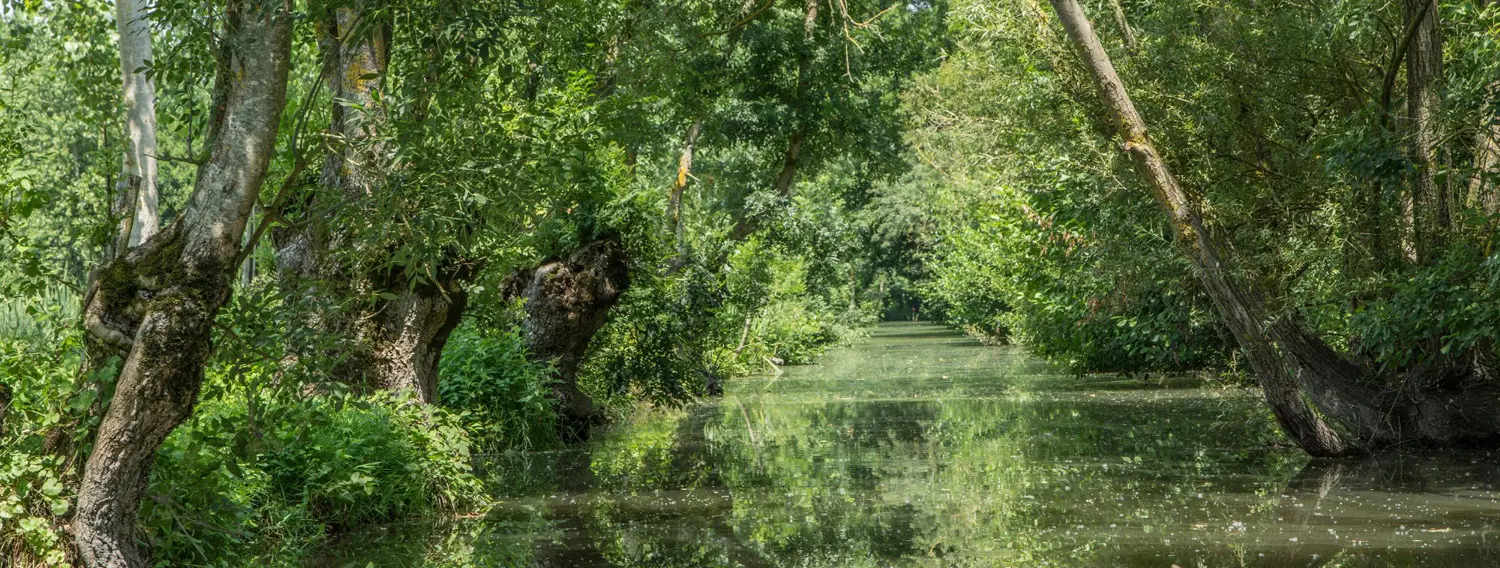
La Venise Verte: a unique ecosystem to discover
La Venise Verte, located in the eastern part of the Marais Poitevin, is a fascinating mosaic of water and greenery forming an enchanting landscape. Far from being purely natural, this setting is in fact the fruit of meticulous human handiwork over the centuries.
A landscape shaped by water and man
The Marais Poitevin large wetlandwas created by the gradual incursion of the ocean, forming a gulf between the Sèvre Niortaise and the Vendée. This gulf, formerly known as the Gulf of the Pictonswas gradually filled in by sediments brought in by the sea, creating a vast wetland area.
From the 11th century onwards, man set about transforming the marsh by building dykes, locks, canals and ditches, with the aim of draining the area and making it suitable for farming. The result was the dry marshland, now dotted with fields, meadows and farms.
A portion of the marsh, however, has been preserved in its natural state, characterized by a constant presence of water and a dominance of flora. This is the so-called the wet marsh, covering almost 15,000 hectares, which forms the Venise Verte (Green Venice).
In this region, the inhabitants have adapted their way of life to the environment, connecting places by boat and using natural resources such as wood, reeds, fish and waterfowl.
Fauna and flora of the Marais Poitevin: remarkable biodiversity
This environment is a sanctuary for the flora and faunaThe park is home to over 250 species of birds, including rare or endangered species such as the marsh harrier, purple heron, spoonbill and kingfisher.
Venise Verte is also home to mammals such as the coypu, otter and European mink, reptiles such as the ring-necked snake and asp viper, and amphibians such as the great crested newt and calamite toad.
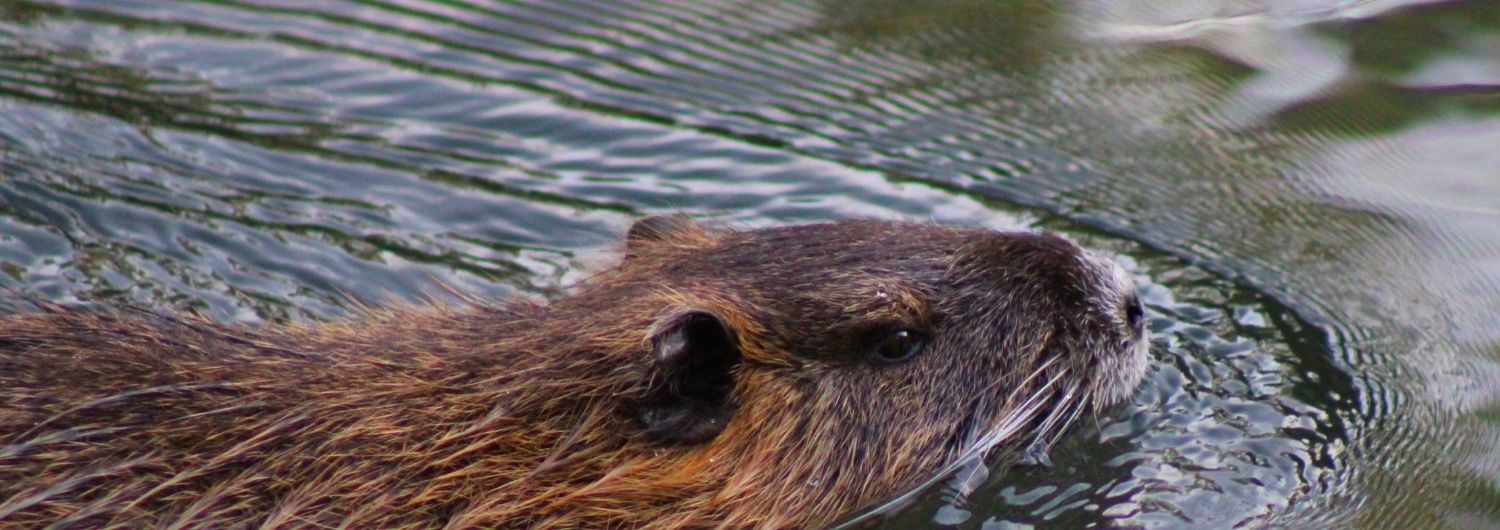
The marsh's plant life is equally impressive, with more than 750 species of plants, some of which are under protection, such as the estuary angelica or the orchis. Characteristic trees, such as ash or willowThe canals are enveloped in a canopy of vegetation, which is also home to a variety of aquatic plants.
Wet and dry marshes: understanding the differences
Venise Verte is just one part of the Marais Poitevin, which also includes the dry marsh and the Baie de l'Aiguillon.
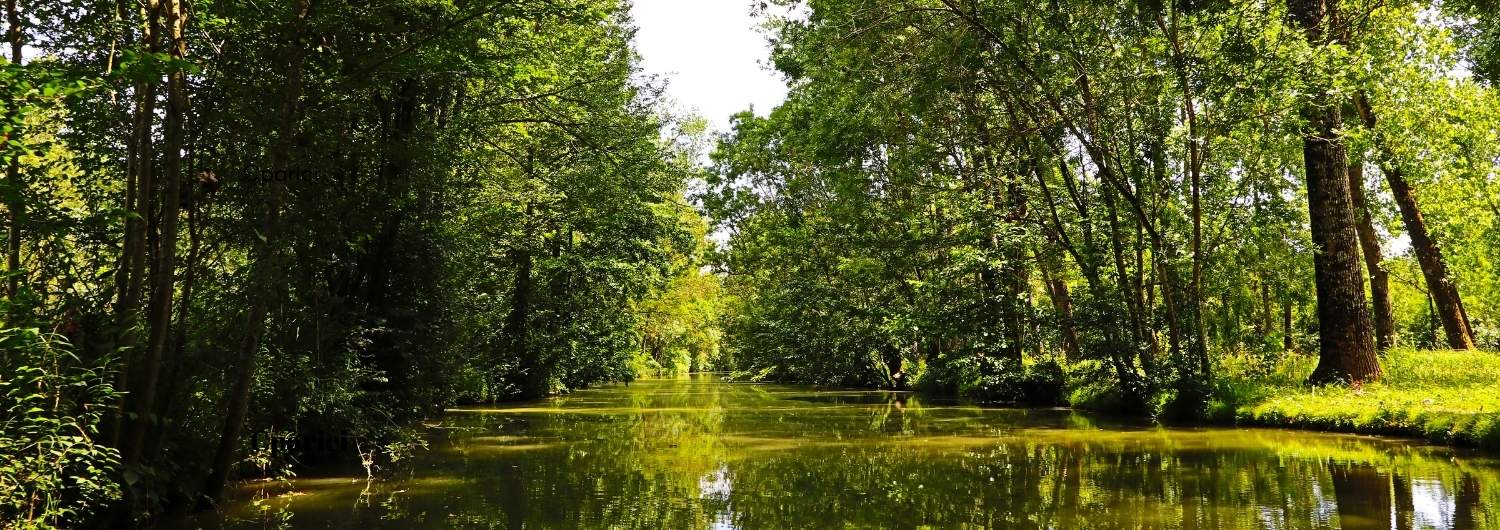
Understanding the contrasts between these areas highlights the diversity and history of this region.
The dry marshland, covering some 45,000 hectaresThe land is mainly used for agriculture, particularly cattle breeding. This bocage landscape contrasts sharply with the wet marshes, whose ever-present waters create a totally different panorama.
The Baie de l'Aiguillon, the most seaworthy area, is a unique ecosystem frequented by countless birds that come here to feed and rest during their migrations, offering a breathtaking natural spectacle.
Unforgettable activities and experiences in the Marais Poitevin
A prime destination for nature lovers and outdoor adventurers, the Marais Poitevin invites you to discover a wide range of activities, including hikingbirdwatching and fishing. This haven of peace offers a multitude of options to enrich your stay.
Discover our suggestions for a memorable getaway in the heart of the Marais Poitevin.
Boat trips: discover the green canals
An emblematic feature of the Marais Poitevin, the Venise Verte is the perfect place to explore by boat. Glide along the canals lined with ash, willow and water lilies, while admiring the landscape magical. The captivating tales told by the boatmen will enrich your journey with mysteries and local legends.
Choose from one of the many piers dotted around the marsh to rent a rowboat, with or without a guide. Paddling enthusiasts can also opt for a canoe or kayak, for a more intimate experience with nature.
- Coulonconsidered the heart of the Marais Poitevin, just a few kilometers away, offers unmissable boat trips. (Discover the town of Coulon)
- Arçaisbetween Coulon and Le Vanneau-Irleau. (Click here to discover Arçais)
- The Lapwing-Irleaufor a quiet, authentic discovery experience (Discover the lapwing here)
- Saint Hilaire La Paludto discover the wild marshes. (Discover Saint Hilaire La Palud here)
- Magne10 minutes away, is another picturesque destination with its windmills and architectural heritage.
- SansaisAlso nearby, there are many hiking and cycling trails that cross the marsh.
The Green Venice of the Marais Poitevin: villages, piers and scenic walks
The villages of Venise Verte (wet marshland)
Venise Verte corresponds to the wet and wooded Marais Poitevin, with its shady canals and pollarded ash trees. Villages like Coulon, Arçais and Saint-Hilaire-la-Palud are its tourist heart.
Coulon is the most lively and structured, Arçais offers a more peaceful atmosphere, while Saint-Hilaire-la-Palud provides access to more confidential areas. The Lapwing-Irleau and La Garette complete the picture with even more natural immersion.
The piers at Coulon: main entrance gate
À Coulon, In this area, there are a number of particularly well-developed landing stages. L'Embarcadère Prada and L'Embarcadère Cardinaud are among the best-known, offering both guided and self-guided tours. L'Embarcadère du Marais Sauvage offers a slight departure from the most popular circuits.
The routes from Coulon are varied, well-marked and ideal for a first discovery of the wet marshes.
Arçais and Le Vanneau: more intimate walks
À Arçais, The Au Martin Pêcheur landing stage and the Venise Verte landing stage offer quieter departures, often preferred by those wishing to avoid the crowds.
On the The Lapwing-Irleau, The Embarcadère du Vanneau offers immediate immersion in a dense, wild and very quiet marsh.
Saint-Hilaire-la-Palud: between Venise Verte and wild marshes
Saint-Hilaire-la-Palud is well located in Green Venice, But it is also a gateway to wilder areas. The Embarcadère de Bazoin is a key point, particularly for discovering the hydraulic structure and setting off on less-frequented circuits. The Embarcadère de la Grenouillère also offers quiet walks, ideal for discovering the river away from the main tourist flows.
Walks in the wet marsh (Venise Verte)
Throughout this area (Coulon, Arçais, Le Vanneau, Saint-Hilaire-la-Palud), strolls take you through a dense network of shady canals.
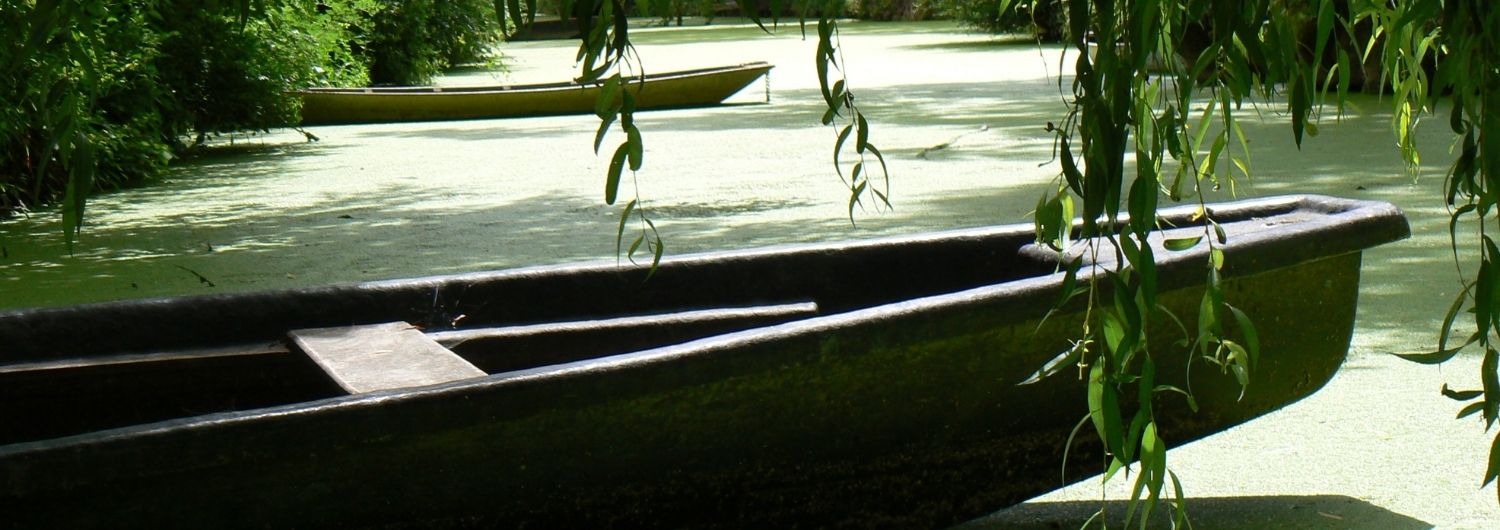
Routes generally last between 1 and 3 hours, in traditional boats, canoes or paddleboats.
The itineraries offer a peaceful atmosphere, with a wealth of ecological features. Guided walks provide a better understanding of the marsh's history, uses and biodiversity.
Le marais sauvage: a more confidential extension
Some areas accessible from these same villages (notably Le Vanneau and Bazoin) are moving towards a wilder marshes, less well-maintained and denser. The canals are narrower, the vegetation more invasive, and the number of visitors much lower.
These tours are perfect for total immersion, but sometimes require more orientation or the accompaniment of a guide.
The drained marsh: a totally different landscape
The reclaimed marsh is located outside Venise Verte, The landscape is open, agricultural and highly structured. Here, canals are straight and piers almost absent.
The area is best explored by bike or on foot, allowing visitors to understand how the land was developed and farmed. This contrast with the wet marsh greatly enriches the overall visit to the Marais Poitevin.
Choose your pier based on experience
For first-time visitors, the Coulon landing stages are ideal. For greater peace and quiet, Arçais or Le Vanneau offer a more intimate experience. Last but not least, Saint-Hilaire-la-Palud allows you to explore wilder areas while remaining in the Venise Verte.
By adapting your starting point, you can modulate your experience from family outings to nature immersion or more confidential explorations.
Hiking and cycling: explore the marsh trails
Whether you're a keen walker or cyclist, the Marais Poitevin offers a wealth of routes to discover. Follow the towpaths along the Sèvre Niortaise or Vendée rivers, and pass through charming market gardening villages.
The signposted paths will take you to the reclaimed marshes and the Baie de l'Aiguillon. As part of the Vélofrancette, a cycling route linking Normandy to the Atlantic, the Marais Poitevin offers an ideal setting for cycle tourists. Bike rentals are available on site, or bring your own for a tailor-made adventure.
Cultural visits: heritage and traditions of the Marais
With a rich cultural heritage, the Marais Poitevin is dotted with fascinating historical and traditional sites. Don't miss Maillezais Abbey, former episcopal see, or Château de Terre-Neuve, home to a museum dedicated to François Viète, pioneer of algebra.
You can also visit the Marais Poitevin soap factory, which uses local plants, or the Marais Poitevin farm, where you can taste goat's cheese, butter and local honey.
Birdwatching: a fascinating natural spectacle
A birdwatcher's paradise, the Marais Poitevin is home to over 250 species of birds. Specially equipped observatories and guided tours offer unique opportunities to observe these birds in their natural habitat.
Admire aquatic and terrestrial species, from herons to larks, in their natural environment. The Oiseaux du Marais Poitevin ornithological park, at Saint-Hilaire-la-Paludis particularly recommended for enthusiasts, with over 70 species to discover.
You can also take advantage of your visit to enjoy a boat trip, a waterside lunch or an educational activity.
Practical tips for organizing your visit
Planning a getaway to the Marais Poitevin? If you're wondering about the best time to go, accommodation options or means of transport, you've come to the right place. Here are a few practical tips to help you plan your stay in the heart of the Marais Poitevin.
Best times to visit the Marais Poitevin
The Marais Poitevin welcomes you all year round, but certain seasons are ideal for fully appreciating its assets. Spring and autumn offer a fascinating palette of colors and the opportunity to observe a wealth of flora and fauna.
Summer attracts the crowds, but remains the ideal time to explore the marshes by boat or bike, enjoying the gentle rays of the sun. Winter is quieter, but requires warm, waterproof clothing to keep out the cold and damp.
Accommodation and dining: where to stay and eat?
Whether you're looking for a hotel, a B&B, a gîte, a campsite or even a tree house, the Marais Poitevin is full of options to suit all preferences and budgets. Opt for the charm of a market-garden village like Coulon, Arçais or Maillezais, or the bustle of a city like Niort or La Rochelle.
The gastronomy of the Marais Poitevin, with its specialties such as angelica, farci poitevin, goat's cheese, butter and honey, promises a wealth of tasty discoveries. And don't forget the seafood to be enjoyed in the restaurants, crêperies, inns and farm inns in the villages and along the Sèvre Niortaise and Vendée rivers.
Getting around in the Marais: recommendations and tips
To explore the Marais Poitevin, use gentle means of transport: boats, bicycles and walking are the perfect way to enjoy the area in harmony with nature. These means of transport are available for hire at many points in the marsh, or you can bring your own.
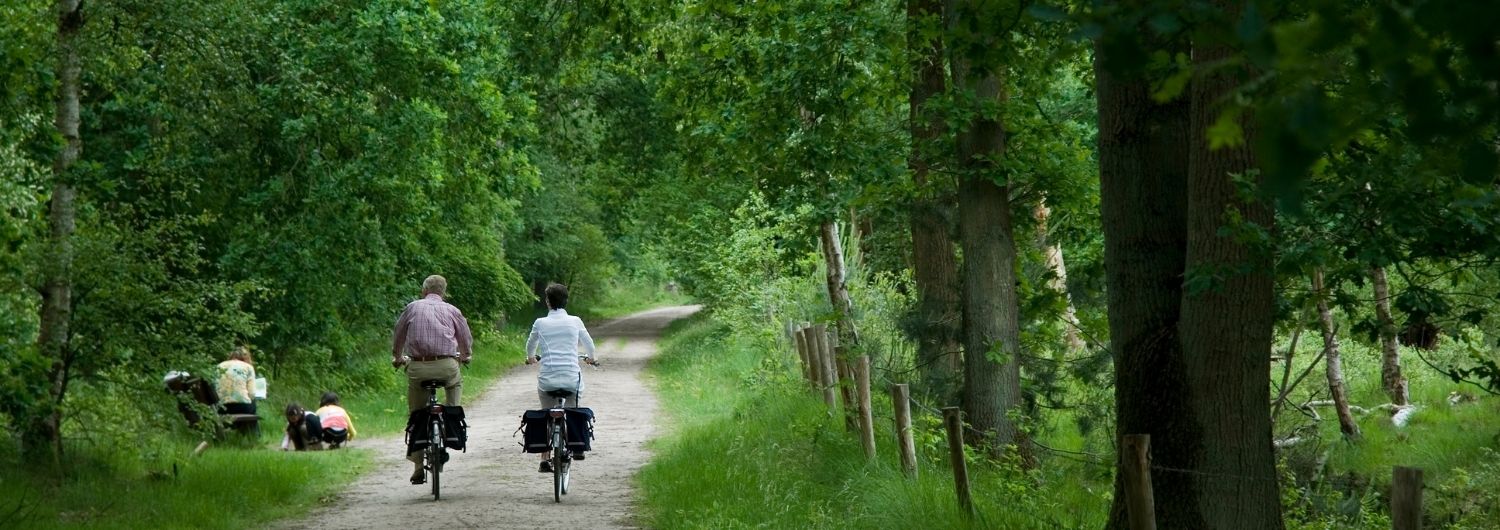
Signposted trails will guide you to the must-see sites, enriching your experience. For longer distances, your own car, a rental or options such as the train to Niort and buses linking the major villages are available. The barge, offering both transportation and unusual accommodation, is also a great alternative for sailing on the Sèvre Niortaise or the Vendée.
Conclusion
The Marais Poitevin, a destination in a class of its own, invites you to explore an unparalleled ecosystem, rich in cultural heritage and a diverse range of activities. Whether you're looking for tranquillity, communion with nature, cultural enrichment or adventure, the Marais Poitevin is sure to satisfy your every aspiration.
Time to plan your Marais Poitevin getaway for a memorable adventure in Green Venice. Let yourself be seduced by a boat trip through its emerald canals, explore the marshy paths on foot or by bike, visit exceptional sites, observe rare birdlife and savor the region's culinary delights.
The Marais Poitevin opens its doors to you. Don't miss this unique opportunity to discover this enchanting place!
FAQ
What is the Marais Poitevin and why is it nicknamed the Green Venice?
The Marais Poitevin, a vast expanse of wetlands located between the Vendée, Deux-Sèvres and Charente-Maritime regions to the west of France, is the largest in France. Franceis affectionately known as Green Venice. This nickname comes from its lush green canals, which evoke the picturesque scenes of Venice, and are lined with luxuriant vegetation.
What activities are available in the Marais Poitevin to enjoy nature and heritage?
The Marais Poitevin offers a multitude of activities for those wishing to explore its lush nature and rich heritage. These activities include :
- Navigating the canals of the wet marsh, also known as Green Venice, by boat, canoe or electric boat, you can admire the exceptional flora and fauna, traditional houses and locks.
- Visits to cultural sites such as the Maison du Marais Poitevin, which recounts the history of the region, the Niort Dungeon and the Château de la Guignardière, where games and puzzles reveal the local heritage.
- Birdwatching, with over 250 species inhabiting this ecosystem. For birdwatchers, the bird park Les oiseaux du Marais poitevin and the Michel Brosselin national reserve offer outstanding observatories.
- Participation in festivities organized by the Parc naturel régional du Marais poitevin, including the Fête du Parc, the Journées du patrimoine vivant, and many others celebrating the richness of the marsh.
How do I get to the Marais Poitevin from the region's main towns?
Reaching the Marais Poitevin is easy, whether by car, train or plane. From Niort, allow around 20 minutes by car, 45 minutes by train or by plane. from La Rochelle1h30 from Nantes, and 2h from Bordeaux. The nearest train station is in Niort, with direct connections to Paris in 1h45. For those arriving by air, La Rochelle airport is the nearest, with flights to various destinations in France and Europe.
Where are the best places to stay and eat in the Marais Poitevin?
Whether you're looking for accommodation or a place to eat, the Marais Poitevin has something to suit all tastes and budgets. Here are a few recommendations:
- For an immersive experience in the wet marshes, opt for a gîte or B&B in Arçais or Coulon. These typical villages offer the chance to cruise or cycle along the canals. You'll also find restaurants specializing in local cuisine, such as eels, mogettes and farci poitevin.
- If you're more interested in the maritime marshes close to the coast, hotels and campsites in Marans or Maillezais are available. These sites are ideal for exploring Maillezais abbey or Marans port, and sampling seafood such as oysters, mussels or éclades.

