

Chartreuse: history, production and secrets of a unique liqueur
Summary
Visit chartreuse is an emblematic French liqueur produced since the 17th century by Carthusian monks. Known for its secret recipe of 130 plants, It is distinguished by its aromatic complexity and unique historical heritage. Still produced today using traditional methods, the drink is available in several variants, including green and yellow. Both an exceptional spirit and a symbol of the country's heritage, the chartreuse fascinates amateurs and experts alike.
Introduction
Visit chartreuse is much more than a simple liqueur: it represents a cultural and historical heritage deeply rooted in French tradition. Developed by Carthusian monks over many centuries, the drink intrigues with its unique taste, secret composition and fascinating history. Today, it attracts spirits enthusiasts as well as the curious who wish to discover the riches of France's cultural heritage. the country through its emblematic specialties. If you'd like to discover more, take a look at this complete guide: https://cparici.com/fr/visiter-la-france-guide-des-regions-et-sites-touristiques.
In this article, we'll explore in detail everything you need to know about the chartreuse, from its definition to its manufacturing methods, its different variants and its cultural significance.
What is chartreuse?
A simple definition of chartreuse
Visit chartreuse is a traditional French liqueur made by Carthusian monks from a complex blend of plants, herbs and spices. This alcoholic beverage is distinguished by its unique character, linked to a recipe that has been kept secret for several centuries. In its most common definition, it is a plant-based spirit renowned for its aromatic richness and authenticity.

From a more global point of view, the term chartreuse has its origins in the Carthusian religious order, founded in the 11th century. It also refers to a specific monastic know-how, combining botany, distillation and tradition. This dual definition - both religious and gastronomic - explains why it occupies a special place in French heritage.
The different meanings of the word chartreuse
The word chartreuse is special in that it has several distinct meanings, which strongly influence search results and understanding of the subject.
First of all, this term is mainly known like a liqueur.
It also designates a Catholic religious order called the Carthusians. This monastic order is the originator of the famous drink, creating a direct link between spirituality and craft production.
It also corresponds to a mountain range in France, The Chartreuse massif, known for its natural landscapes and tourist heritage. This area plays an important role in the identity of this appellation.
Finally, this word is also used to designate a color between green and yellow, inspired directly by the color of the liqueur.
👉 This multiplicity of meanings makes the subject particularly rich in semantic terms, and makes it necessary to treat the topic holistically to fully meet user expectations.
The Chartreuse and its territory
The Chartreuse massif
Visit chartreuse is closely linked to a very specific area: the Chartreuse massif, located between Grenoble and Chambéry. This regional nature park is renowned for its mountainous landscapes, dense forests and exceptional biodiversity.
This territory plays a fundamental role in the identity of this liqueur, as it is home to the natural environment that inspired the selection of the plants used in its composition. The massif's altitude, climate and botanical wealth indirectly contribute to its history and reputation.
Today, the massif attracts many visitors who come to discover both nature and this cultural heritage.

La Grande Chartreuse
At the heart of the massif lies the Grande Chartreuse monastery, This emblematic site has been home to Carthusian monks since the 11th century. It is in this isolated environment that the chartreuse, in keeping with the monastic traditions and silence typical of this religious order.
The monastery is not open to visitors, but a nearby museum provides an insight into the history of the monks and the origins of this production. This is a major point of interest for history and heritage enthusiasts.
The relationship between this site and this liqueur reinforces the image of a product deeply rooted in its territory, where nature, spirituality and know-how come together.
Origins and history of the chartreuse
The 1605 manuscript
The history of chartreuse begins in 1605, when a mysterious manuscript is handed over to Carthusian monks in Paris. The document contained a complex recipe for an “elixir of long life”, composed of numerous medicinal plants. At the time, the formula was deemed too difficult to exploit immediately, which delayed production of the liqueur for several decades.
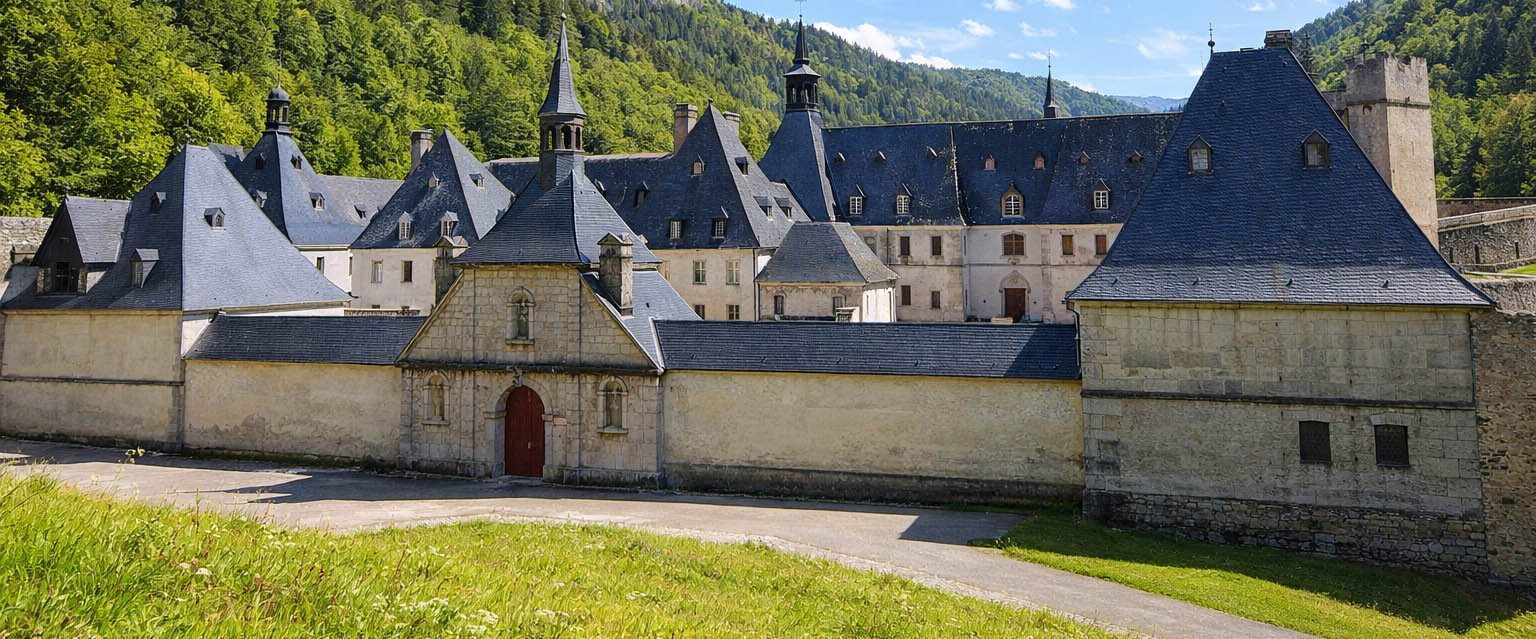
It wasn't until the 18th century that clerics succeeded in interpreting and simplifying this recipe. This marked a major turning point in its history, as it transformed theoretical knowledge into a concrete product. Today, this manuscript is considered the official origin of this emblematic beverage.
Carthusian monks and creation
The Carthusian monks played a central role in the development of the chartreuse. Settled in the Grande Chartreuse massif, near Grenoble, they gradually perfected the recipe by selecting plants and refining distillation methods.
It then becomes much more than a simple drink: it embodies a unique monastic savoir-faire, based on patience, precision and the transmission of knowledge. Only a few monks still know the complete recipe, which contributes to the mystery surrounding this spirit.
This spiritual and artisanal dimension reinforces its image of authenticity, often perceived as an exceptional product born of centuries-old tradition.
Evolution through the centuries
Over time, the chartreuse has been through many important historical periods. During the French Revolution, the monks were expelled and production was interrupted. However, the recipe was preserved, allowing production to resume at a later date.
In the 19th century, this liqueur experienced a major boom, with structured production and wider distribution, particularly internationally. Despite the successive expulsions of clerics, production was relaunched several times, notably in Spain, before finally returning to France.
Today, it is still produced using traditional methods, making it one of the few liqueurs in the world to have preserved such an authentic process. This historical continuity is a major factor in its worldwide renown.
How is chartreuse made?
A secret recipe with 130 plants
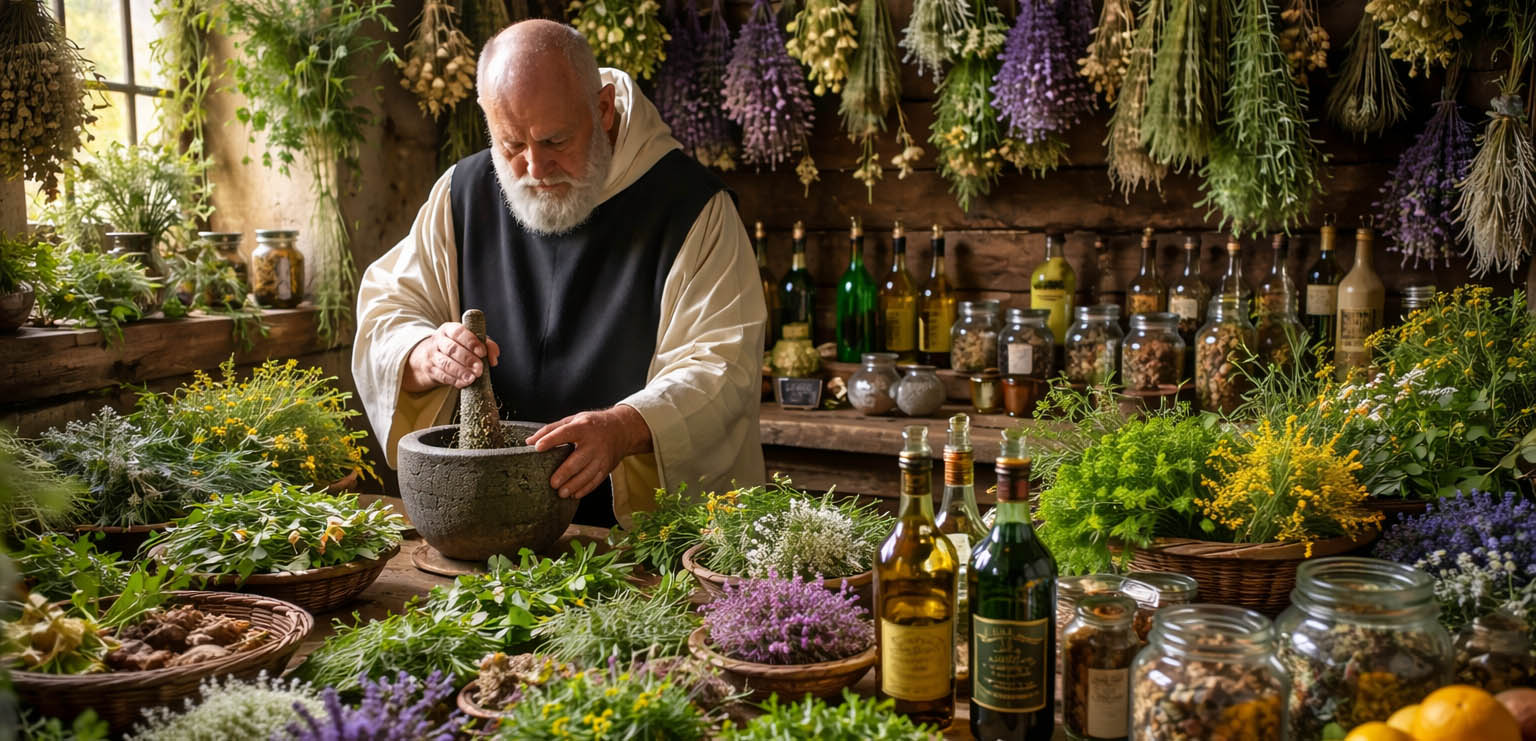
Visit chartreuse is based on a unique recipe composed of some 130 plants, flowers, roots and spices. This botanical combination is the very essence of this liqueur, and explains its exceptional aromatic richness. Each ingredient is carefully selected for its gustatory and sometimes medicinal properties, giving it a complex, balanced character.
The secret of this composition is jealously guarded by just a few Carthusian monks. This secrecy contributes greatly to the reputation of this spirit, often perceived as a mysterious and unique beverage.
From a botanical point of view, the diversity of the plants used allows us to obtain a very wide range of aromas, from herbaceous notes to spicy touches, which clearly sets this liqueur apart from other productions.
Manufacturing stages
The manufacture of chartreuse follows a precise process that combines tradition and technical expertise. The first step is to prepare the plants, which are then macerated in alcohol to extract their aromas. This phase is essential to give the product its aromatic base.
The mixture is then distilled in special stills. This distillation concentrates the flavors and produces a purified spirit. The liquid is then aged in oak barrels, adding depth and complexity.
Finally, a blend is made to balance the different flavors. This final step ensures consistency of taste, despite the diversity of plants used.
The role of monks today
Even today, the chartreuse is produced under the supervision of Carthusian monks, who perpetuate an ancestral know-how. Only two or three monks know the entire recipe, which keeps the production a mystery.
The monks don't just preserve tradition: they are actively involved in every key stage of production. Their involvement guarantees the authenticity and quality of the product, while respecting historical methods.
This limited, controlled production reinforces its value, making it a rare and sought-after liqueur on the international market.
The different chartreuses
Green chartreuse
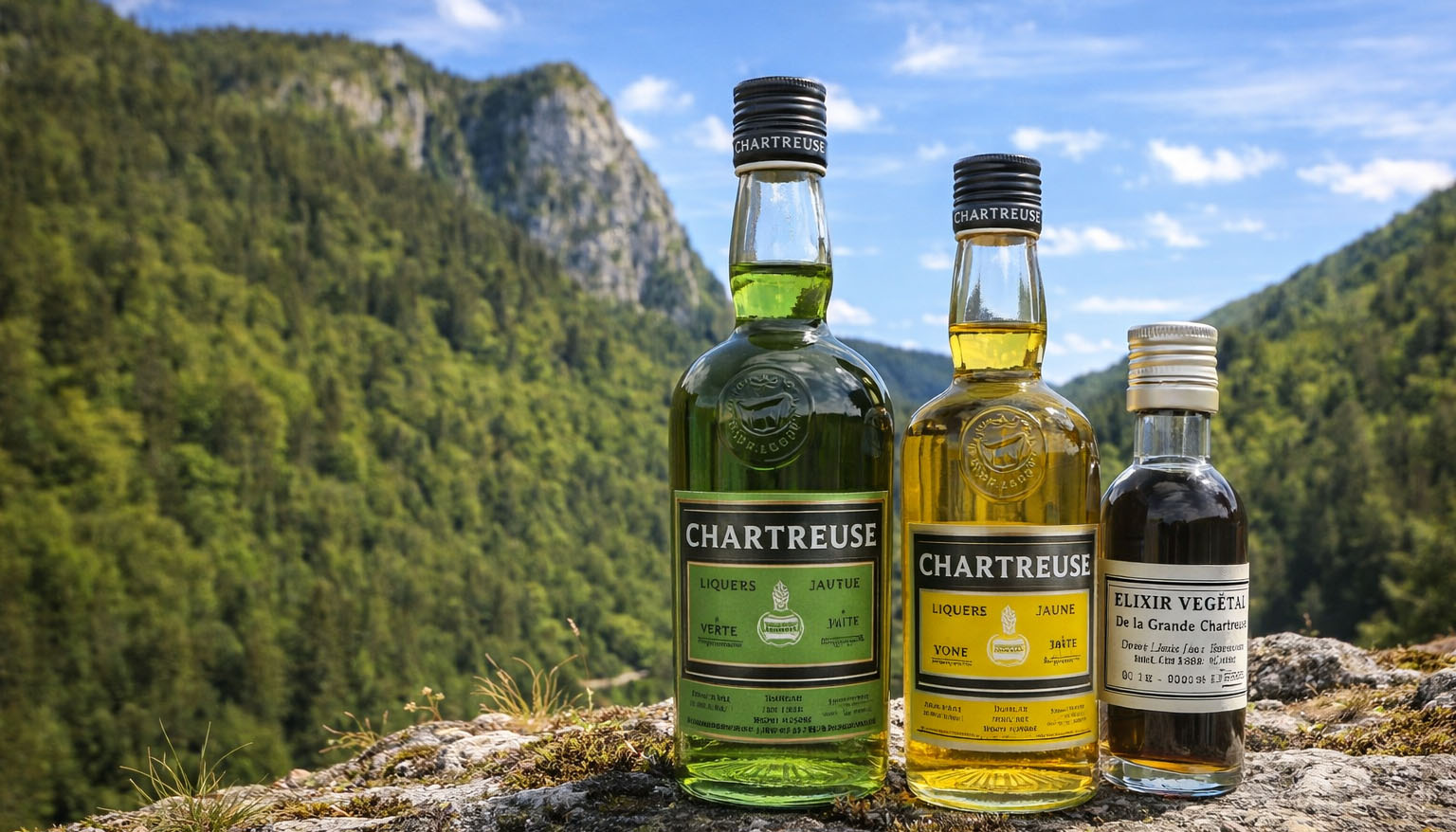
Visit chartreuse verte is the best-known and most powerful version of this liqueur. It is distinguished by its intense natural color and high alcohol content, generally around 55 %. This variety is renowned for its complex aromatic profile, dominated by herbaceous, peppery and slightly minty notes.
In the world of spirits, this version is often considered the most authentic, as it is closest to the original recipe developed by the Carthusian monks. Its pronounced taste makes it an ideal choice for a digestif.
Thanks to its rich aroma, it is also widely used in mixology, further enhancing its popularity with cocktail lovers.
Yellow chartreuse
Visit chartreuse jaune offers a softer, more accessible approach. Less alcoholic, at around 40 %, it has a sweeter, rounder aromatic profile. Its golden color comes from a different dosage of the plants used in the recipe.
This version appeals to a wider audience, especially those discovering this spirit for the first time. Its more delicate taste highlights notes of honey, spices and flowers, making it ideal as an aperitif or light digestif.
It is a perfect illustration of the monks' ability to adapt their know-how while preserving the essence of the original product.
Plant elixir
The plant elixir is a more concentrated and intense version of the chartreuse. With an alcohol content of up to around 69 %, it has historically been regarded as a remedy or tonic.
This form is distinguished by its aromatic power and its particular use: it is often consumed in very small quantities, diluted or used for its digestive properties. It thus represents the rawest and most traditional expression of this liqueur.
Even today, it is appreciated for its unique character and its direct link with its medicinal origins.
Chartreuse comparison chart
| Type | Color | Alcohol | Taste | Usage |
|---|---|---|---|---|
| Green | Green | ~55% | Powerful, herbaceous | Digestif, cocktails |
| Yellow | Yellow | ~40% | Mild, sweet | Aperitif |
| Elixir | Amber | ~69% | Very intense | Medicinal |
What does chartreuse taste like?
Aromatic profile
Visit chartreuse is distinguished by a particularly rich and complex aromatic profile, making it a unique liqueur in the world of spirits. On first tasting, it reveals an intense combination of flavors from carefully selected plants, spices and flowers.
Herbaceous notes generally dominate, accompanied by peppery, minty and sometimes slightly sweet touches. This aromatic diversity makes for an evolving taste experience, where each sip can reveal new nuances.
Depending on the version tasted, the taste can vary: the green is more powerful and intense, while the yellow offers a milder, more accessible profile. In all cases, this spirit retains an unmistakable aromatic signature.
Why Chartreuse is unique
Visit chartreuse is above all based on its exceptional plant composition. The blend of 130 plants creates a complexity that is difficult to reproduce, setting this liqueur apart from most other spirits.
In addition to its recipe, the manufacturing process plays a key role in its taste. Maceration, distillation and ageing develop deep, harmonious aromas. The result is a subtle balance between strength and finesse.
Finally, the secrecy surrounding its manufacture reinforces its unique character. Few products can boast such a combination of tradition, mystery and richness of taste, which is why it is often considered a world benchmark.
How to drink chartreuse
Digestive
Visit chartreuse is traditionally consumed as a digestive, i.e. after a meal. This practice is directly linked to its monastic origins and its supposed digestive properties, stemming from the richness of the plants it contains.
Served chilled or at room temperature, it prolongs the gastronomic experience while providing a sensation of warmth and aromatic complexity. This liqueur is particularly appreciated at the end of a meal for its herbaceous notes, which ease digestion and offer an intense tasting experience.
In this context, it is generally consumed pure, in small quantities, to take full advantage of its aromas.
In cocktails
Visit chartreuse is also widely used in mixology, particularly in sophisticated cocktails. Thanks to its unique aromatic profile, it brings rare depth and complexity to creations.
Among the best-known cocktails is the “Last Word”, which combines this liqueur with gin, maraschino and lime juice. It can also be used in small doses to spice up classic recipes or create original combinations.
Its intensity requires precise dosage, however, as it can quickly overpower the other ingredients.
Tasting tips
To fully appreciate the chartreuse, When serving liqueurs, it's advisable to follow a few simple principles. First, the choice of glass is important: a small liqueur glass concentrates the aromas.
Temperature also plays a key role. A chilled version will bring out the liveliness of the vegetal notes, while tasting at room temperature will reveal more of the product's complexity.
Finally, we recommend taking the time to savor each sip. This liqueur is a gradual discovery, with an evolution of aromas on the palate that gives it its richness.
Why is Chartreuse so famous?
A unique liqueur
Visit chartreuse is often considered the world's most unique liqueur, thanks in large part to its secret recipe and monastic origins. Unlike many industrial spirits, it is based on centuries of traditional craftsmanship.
This uniqueness is due in no small part to the use of a complex blend of plants, giving this product an aromatic richness that is difficult to reproduce. Few beverages can rival this combination of tradition, naturalness and mystery.
As a result, it has become a benchmark for lovers of exceptional liqueurs.
Limited production
Visit chartreuse is also explained by the fact that production is deliberately limited. The Carthusian monks prioritized quality over quantity, which contributes to the product's rarity.
This limitation creates an effect of rarity that reinforces its premium image on the market. Unlike other spirits produced on a large scale, it retains an almost confidential dimension, much sought-after by connoisseurs.
This artisanal approach contributes greatly to the perceived value of this spirit, often associated with an exceptional product.
International recognition
Over time, the chartreuse has gained international recognition. Exported to many countries, it can now be found in specialized bars and high-end establishments.
Its popularity has grown thanks to its use in iconic cocktails and its authentic image. It has become a symbol of French savoir-faire abroad.
This worldwide reputation confirms the special status of this liqueur, both a traditional product and a contemporary benchmark in the world of spirits.
Conclusion
Visit chartreuse is much more than a simple liqueur: it embodies a veritable living heritage, at the crossroads of history, monastic tradition and craftsmanship. Thanks to its unique recipe based on 130 plants, and its centuries-old production process, it continues to fascinate connoisseurs and experts the world over.
Over the course of this article, we have explored the origins, manufacture, different variants and uses of the chartreuse, This territorial dimension further enhances its authenticity, making it a product with deep roots in French culture. This territorial dimension further enhances its authenticity, making it a product deeply rooted in French culture.
Whether as a pure tasting experience, a cocktail party or as part of a sightseeing trip, it offers a complete experience, combining gustatory pleasure and cultural discovery. Today, it remains a benchmark in the world of spirits, a symbol of excellence and tradition.
Chartreuse FAQs
What exactly is chartreuse?
Visit chartreuse is a French liqueur made by Carthusian monks from a blend of around 130 plants. It is distinguished by its secret recipe, ancient history and complex aromatic profile.
What's the difference between green and yellow chartreuse?
The green version is higher in alcohol and has a more intense, herbaceous taste, while the yellow version is milder, sweeter and less alcoholic. These differences are due to the dosage of plants used in the recipe.
How many plants are in the chartreuse?
Visit chartreuse is made from around 130 plants, making it a particularly complex liqueur. This botanical diversity contributes to its rich aromas and unique character.
Where is chartreuse made?
It is produced in France, in the Chartreuse region, near Grenoble. It is made under the supervision of Carthusian monks, using traditional methods.
Can you visit the Carthusian monastery?
It's not possible to visit the monastery where this liqueur is produced, but a nearby museum provides an insight into its history and that of the Carthusian monks.
What's the alcohol content?
Alcohol content varies according to version: around 55 % for the green, 40 % for the yellow and up to 69 % for the vegetal elixir.
How to drink it?
It can be drunk neat as a digestive, chilled or at room temperature. It is also used in cocktails to bring complexity and aromatic intensity.
Why is it expensive?
This product is considered top-of-the-range because of its limited production, secret recipe and complex manufacturing process.
Discover the region and taste the chartreuse
Official websites for exploring the massif
To fully understand the world of chartreuse, The Chartreuse massif offers an exceptional natural setting, ideal for combining tourism, culture and gastronomy. The Chartreuse massif offers an exceptional natural setting, ideal for combining tourism, culture and gastronomy.
Here are the main sites to consult to organize your visit:
- https://www.chartreuse-tourisme.com
➡️ The official website for exploring the region, its villages and activities - https://www.parc-chartreuse.net
➡️ The regional nature park, perfect for discovering the fauna, flora and landscapes. - https://www.grenoble-tourisme.com
➡️ Strategic starting point for access to the massif - https://www.savoie-mont-blanc.com
➡️ Global tourism portal including the Chartreuse on the Savoie side
Cultural sites around La Chartreuse
The history of chartreuse is closely linked to that of the Carthusian monks. To better understand this heritage, there are a number of cultural sites that are a must.
- https://www.musee-grande-chartreuse.fr
➡️ Museum dedicated to the history of the monks and this emblematic liqueur - https://www.chartreuse.fr
➡️ Official website of the Carthusian order, to discover their way of life and traditions.
Where to taste chartreuse
Discover the chartreuse, It also means enjoying it in its original environment. There are several places where you can enjoy this authentic experience.
- https://www.chartreuse.fr/voir-faire/visites/
➡️ Official information on liqueur tours and experiences - https://www.cavesdelachartreuse.com
➡️ The historic cellars of Voiron, linked to the ageing of the product - https://www.chartreuse-tourisme.com/restaurants/
➡️ Local restaurants serving liqueur specialities - https://www.grenoble-tourisme.com/fr/deguster/
➡️ Bars and establishments in Grenoble to discover cocktails
Experiments around the chartreuse
To find out more about chartreuse, With a wide variety of recipes and taste experiences on offer.
- https://www.diffordsguide.com/cocktails/search?ingredient=chartreuse
➡️ Recipes for famous cocktails like the “Last Word”.” - https://www.liquor.com/search?q=chartreuse
➡️ Tasting tips, trends and ideas

