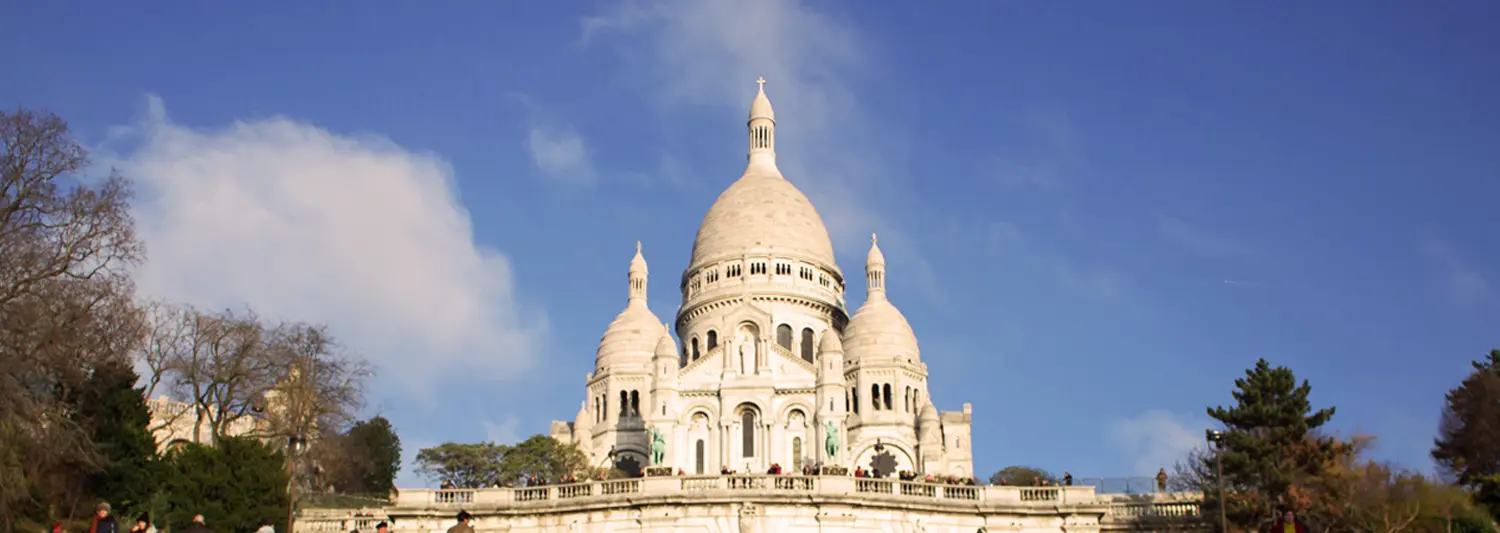
Montmartre
Perched 130 meters above sea level, Montmartre hilllocated in the 18th arrondissement of Parisoffers an exceptional panorama of the right bank of the Seine. This emblematic location is steeped in history, art and romance, having been a source of inspiration for renowned artists such as Renoir, Picasso and Van Gogh.
Montmartre also boasts a unique atmosphere, combining the picturesque charm of its streets with the bustling life of its squares and cafés. Discover the majestic Sacré-Coeur Basilica, stroll around Place du Tertre, enjoy the Moulin Rouge shows or savor a glass of wine in one of the neighborhood's authentic guinguettes. This article offers you a complete guide to exploring Montmartre, with a focus on its art, history and music.
At the heart of Montmartre's history
Before becoming an emblematic district of Paris in 1860, Montmartre stood out as an independent commune, rich in its own identity and unique way of life. Let's discover the many facets of Montmartre, from its artistic and bohemian beginnings to its integration into the Parisian landscape.
Artistic and bohemian origins
Montmartre has long been a haven for artists, poets, writers and musicians. As early as the 15th century, the area was bustling with cabarets, inns and guinguettes, becoming a veritable hotbed of inspiration and entertainment.
In the 17th century, the Society of Jesus was founded in Montmartre by Saint Ignatius Loyola and his companions. The 18th century saw the establishment of the Basilica of the Sacred Heart, transforming Montmartre into an important place of pilgrimage.
The 19th century was marked by demographic and industrial development, notably with the exploitation of gypsum quarries and the installation of windmills. Montmartre also established itself as a rebellious and revolutionary district, playing a key role in the Paris Commune of 1871.
Montmartre during the Belle Époque
Between the end of the 19th and the beginning of the 20th century, Montmartre experienced its golden age and became the beating heart of Parisian artistic and cultural life. Famous painters such as Renoir, Picasso, Van Gogh and Toulouse-Lautrec found their muse here, capturing the essence of Montmartre life. The district also boasts legendary cabarets and music halls such as the Moulin Rouge, the Lapin Agile and the Chat Noir, where icons such as Mistinguett, Maurice Chevalier and Aristide Bruant perform.
Montmartre symbolized joie de vivre, freedom and creativity.
Montmartre today: between heritage and modernity
Today, Montmartre is a must-see tourist destination, attracting millions of visitors for its panoramic views of Paris, the Sacré-Coeur basilica, the Place du Tertre with its painters, and the charming alleyways that retain the spirit of old Montmartre. The district remains lively and dynamic, hosting cultural events such as the fête des vendanges, the jazz festival and the film festival.
Montmartre has managed to preserve its rich heritage and charm while embracing modernity and opening up to the world.
Art in Montmartre: a living tradition
The district stands out not only as a historic part of Paris, but also as a veritable hotbed of the arts. This mythical location has been the cradle of many major artistic movements. In this section, discover art in Montmartre through its artists' studios, contemporary art galleries and varied urban expressions.
Diving into artists' studios
Montmartre has played host to renowned artists such as Renoir, Picasso, Van Gogh and Toulouse-Lautrec, leaving their mark on this unique neighborhood. Visit historic workshops, now transformed into museums. The Musée de Montmartre opens its doors to explore works by Suzanne Valadon, Emile Bernard and Raoul Dufy, while the Musée Gustave Moreau exhibits masterpieces by the master of Symbolism. Don't miss the Bateau-Lavoir, former home of artists such as Picasso and Matisse, considered the cradle of Cubism.
Contemporary art galleries
Far from confining itself to its past, Montmartre continues to vibrate to the rhythm of contemporary art. Art galleries such as Galerie W showcase both emerging and established artists, in a range of disciplines from painting and photography to sculpture and street art. Galerie L'Art de Rien, meanwhile, focuses on outsider art, encompassing art brut, singular or popular. And the Place du Tertre remains a must-see, with its open-air painters ready to immortalize your portrait.
Street art and urban expression
Montmartre is also a showcase for street art, where urban works of art enrich the architecture and landscape. Discover frescoes, collages, stencils and graffiti adorning facades, doors and staircases. Follow the Montmartre à la Une association's street art trail to appreciate the creations of over 80 artists, including C215, Jef Aérosol, Miss.Tic and Levalet. You can also take part in street art workshops to learn the techniques of this contemporary art form and create your own work.
Music and Montmartre: a timeless melody
Montmartre is known not only for its bohemian ambience and picturesque streets, but also as a musical epicenter, home to diverse genres and styles such as cabaret, jazz and rock. This section invites you to explore Montmartre's music scene, from its historic cabarets and iconic jazz clubs, to its captivating festivals and musical events, not forgetting the popular balls.
Historic cabarets: the Moulin Rouge, the Lapin Agile
In the heart of Montmartre, cabaret and music hall shine brightly in legendary venues such as the Moulin Rouge and the Lapin Agile. Inaugurated in 1889, the Moulin Rouge is the quintessential Parisian cabaret, famous for its French Cancan and immortalized by posters by Toulouse-Lautrec. The older Lapin Agile, which opened in 1860, was a meeting place for illustrious artists such as Picasso, Apollinaire and Brassens, who came to perform popular and satirical songs.
These Montmartre institutions continue to offer top-quality shows, where dance, song, humor and poetry meet for the pleasure of all.
Montmartre and jazz: from cellars to clubs
By the 1920s, Montmartre had established itself as a jazz hot spot, welcoming American legends such as Sidney Bechet, Louis Armstrong and Duke Ellington to its cellars and clubs. The district continues this tradition with renowned establishments such as the Sunset-Sunside, the Baiser Salé and the Duc des Lombards, which open their stages to international stars and new talents.
Every year, the Montmartre Jazz Festival brings the neighborhood to life with free concerts in its streets, gardens and churches.
Music festivals and events
This festive district par excellence is the scene of numerous festivals and musical events, attracting artists from all over the world. The Montmartre Festival, for example, celebrates art in all its forms on the Butte, offering concerts, performances, workshops and exhibitions throughout the district. The Fête de la Musique, meanwhile, is a celebration of musical diversity, with open stages, entertainment and surprises for all.
Montmartre remains a vibrant district in the heart of Paris, marked by a timeless melody that continues to seduce and inspire.
Conclusion
Montmartre proves to be a district apartThe Paris Opera House, steeped in charm and history, offers a timeless escape through art and music. This emblematic place invites you to explore its rich past, legendary artists, mythical cabarets, inspiring galleries, vibrant street art and numerous festivals and musical events.
This neighborhood has a unique soul, atmosphere and melody that captivate and enchant. Don't miss the opportunity, book your guided tour now and immerse yourself in the enchantment of the Butte.
FAQ
What's the best way to visit Montmartre?
To make the most of Montmartre, we recommend :
- Opt for a guided tour of Montmartre. This will enable you to discover the neighborhood's iconic sites, historical anecdotes and hidden secrets. Choose between a tour of Montmartre and Sacré-Coeur, or a visit in the footsteps of Amélie Poulain.
- Explore for yourself picturesque alleyways and secret cul-de-sacs. You'll discover murals by local artists, the Clos Montmartre vineyards, the Moulin de la Galette, the Maison Rose, the Lapin Agile, and much more.
You can follow this route or this one for the full experience.
What's the best way to explore Montmartre?
For a memorable ride, consider these suggestions:
- Start at Marché Saint-Pierre, climb up to the Sacré-Coeur basilica, then descend to Place du Tertre, the Musée de Montmartre, the Jardin Sauvage Saint-Vincent, and the Moulin de la Galette.
- Start with the Saint-Pierre de Montmartre church, then discover the Je t'aime wall, the Montmartre cemetery, the Dali Paris museum, the Musée de la Vie Romantique and finish with the Moulin Rouge.
What's so special about Montmartre?
Montmartre is distinguished by its historical and artistic character. Perched on a hill, this district offers a panoramic view of Paris. It's famous for its Sacré-Coeur basilica, charming streets, lively squares, museums, cabarets and artists' studios.
Does Montmartre suck?
The area is generally safe. However, due to mass tourism, it is advisable to be vigilant for potential scams. This historic and artistic district is packed with places of interest and charm, such as the Sacré-Coeur Basilica, Place du Tertre, the Je t'aime Wall and the Moulin Rouge.