

Visit Nantes : What to see and do in the city of the Dukes of Brittany?
Nantes, a jewel of the Loire-Atlantique, is located just 50 km from the Atlantic Ocean. This dynamic, cosmopolitan city has navigated its way through history with great success, continually reinventing itself. It is renowned for its rich artistic and cultural heritage, offering a wide range of activities and experiences for everyone—residents and visitors alike.
In this article
This article aims to guide you in discovering what to see and do in Nantes. You’ll also discover the interplay between contemporary art and history in Nantes through must-see sites such as the Castle of the Dukes of Brittany, the Memorial to the Abolition of Slavery, and the Nantes History Museum.
Les Machines de l’île, the symbol of Nantes
Located on the former shipyard site, the Machines de l’île are now the city’s most famous attraction. For many travelers, they are the main reason to visit Nantes and play a major role in shaping the creative image of this city on the Loire.
This art project, conceived by François Delarozière and Pierre Orefice, blends the mechanical world of Leonardo da Vinci with the imagination of Jules Verne, a writer born in the town in 1828. The complex is located on the Île de Nantes, right next to the banks of the Loire River and former industrial sites.
Address: Parc des Chantiers, Boulevard Léon-Bureau, 44200 Nantes.
The Great Elephant, a spectacular attraction
A true symbol of the City of the Dukes, the Grand Éléphant stands nearly twelve meters tall and weighs about forty-eight metric tons. This machine monumentThe tour takes visitors on a roughly 30-minute walk through the old shipyards.
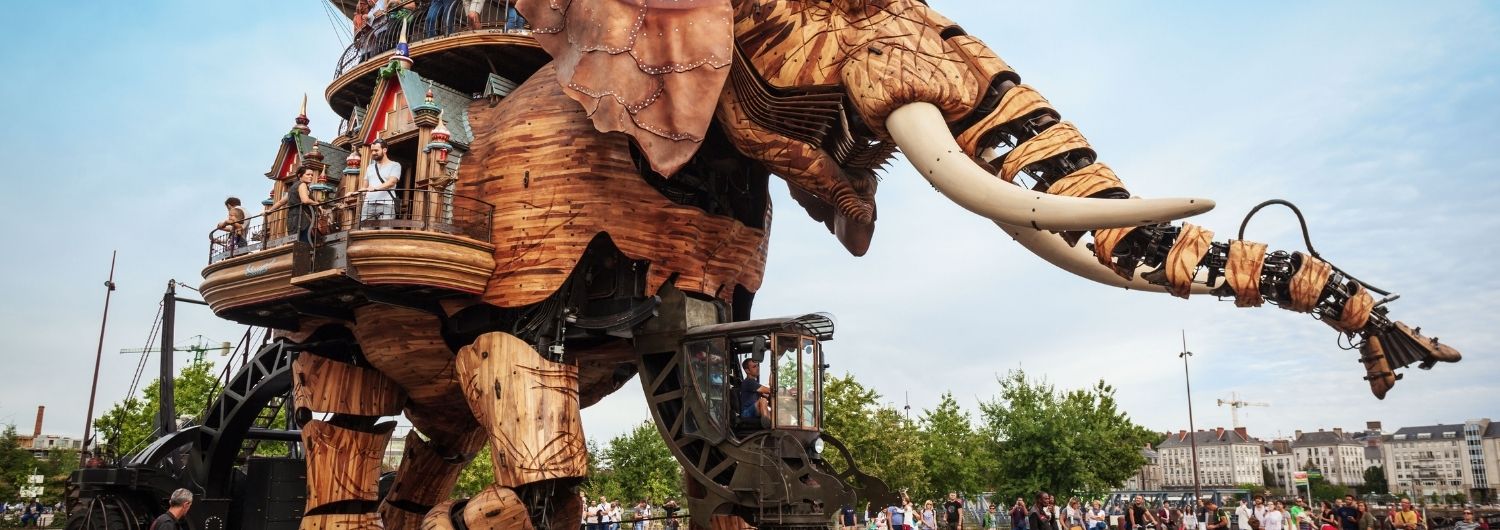
The tour offers a unique vantage point from which to view the docks, the renovated industrial buildings, and part of the Île de Nantes. The mechanical animal can accommodate about 50 passengers and regularly sprays water from its trunk.
It is recommended that you book tickets several days in advance during school breaks or the summer season.
Practical information:
- Duration of the walk: about 30 minutes.
- Reservations are recommended.
- Tram access: Line 1, Chantiers Navals stop.
Schedules and rates are available on the official website:
https://www.lesmachines-nantes.fr
The Gallery of Machines
The Galerie des Machines features several mechanical creations inspired by the animal kingdom. Visitors can see birds, giant insects, sea creatures, and various installations brought to life by the machinists.
This tour provides insight into how the mechanisms work and what the artistic teams do. The demonstrations are one of the highlights of the tour, especially for families.
For those who want to visit the town with children, this attraction is often a must-see during their stay.
The Carousel of the Marine Worlds
Located on the banks of the Loire River, the Carrousel des Mondes Marins stands nearly twenty-five meters tall. This monumental attraction features several levels dedicated to the depths of the sea, the abyssal depths, and the world of the oceans.
Each creature can be operated by passengers. Flying fish, mechanical jellyfish, and giant crabs offer a unique experience that sets Nantes apart from many other French cities.
What is there to do around the Machines de l’île?
After the tour, there are several walking routes that let you continue exploring the neighborhood:
- the banks of the Loire; ;
- Chantiers Park; ;
- the Buren rings; ;
- the old industrial warehouses; ;
- the artworks along the "Voyage à Nantes" route.
The neighborhood is also home to several establishments that are popular with visitors.
Where can I eat nearby?
La Cantine du Voyage
Address: Quai des Antilles, 44200 Nantes.
This seasonal restaurant on the banks of the Loire offers casual dining and a spacious terrace. Its location lets you enjoy the atmosphere of the Île de Nantes after a day of sightseeing.
The Island Bistro
Address: 15 Boulevard Léon-Bureau, 44200 Nantes.
This restaurant, located just a few minutes' walk from Les Machines, serves a French cuisine It is a traditional town that welcomes both locals and tourists.
Tips for Planning Your Visit
To avoid the crowds, it’s best to arrive as soon as the park opens, especially between June and September. A half-day is usually enough to explore the Grand Elephant, the Gallery of Machines, and the immediate surroundings.
Visitors who want to spend two days in Nantes can devote an entire morning to this neighborhood before continuing their tour to the historic center and the Castle of the Dukes of Brittany.
According to the Michelin Guide, the Machines de l’île are among the destination’s major attractions and offer one of the most unique cultural experiences in western France:
https://voyages.michelin.fr/europe/france/pays-de-la-loire/loire-atlantique/nantes
For many travelers, exploring this site has become an essential part of any visit to the city. Its unique character plays a major role in the city’s appeal to tourists and explains why so many visitors choose to visit Nantes each year.
The Castle of the Dukes of Brittany, the historic heart of the city
No visit to Nantes is complete without exploring the Castle of the Dukes of Brittany. Located in the heart of the historic center, this landmark is one of the most important symbols of the City of the Dukes and offers insight into the history of Brittany, the Loire region, and the city’s development.
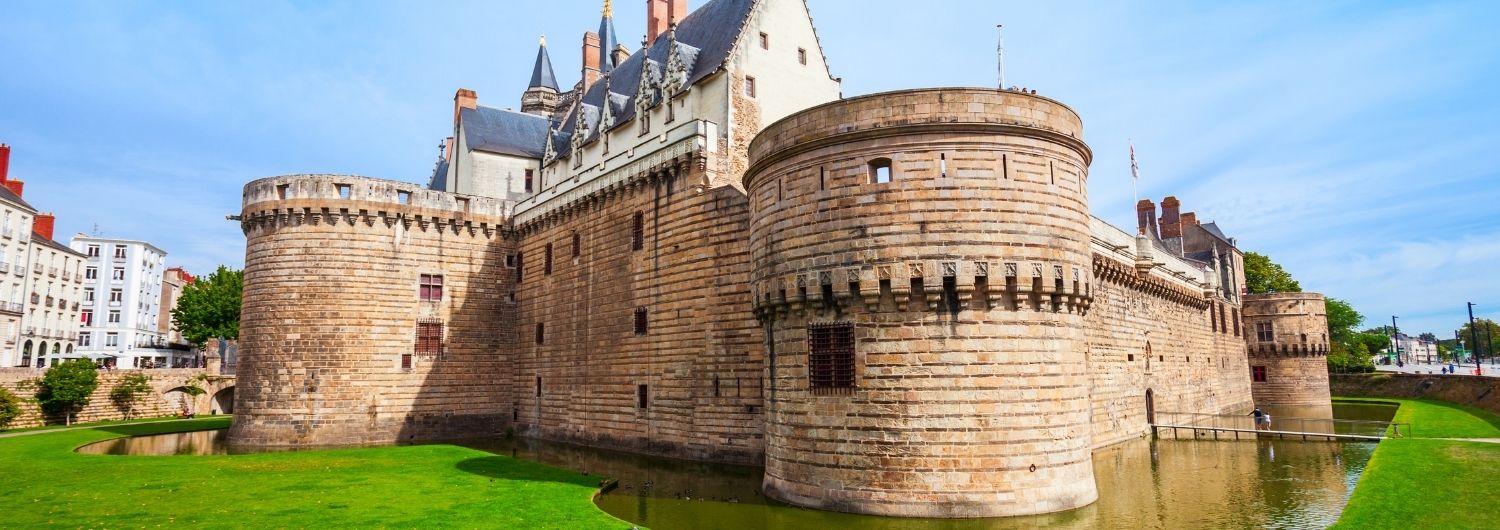
Built in the late 15th century by François II and later by his daughter Anne of Brittany, the castle combines the features of a medieval fortress with those of a princely residence. Today, it houses the Nantes History Museum and remains one of the city’s most visited sites.
Address: 4 Place Marc-Elder, 44000 Nantes.
A fortress in the heart of the city
The imposing white stone ramparts, surrounded by a moat, offer a spectacular view as soon as you arrive at Place Marc-Elder. The castle is located just a few minutes from the SNCF train station, which often makes it the first stop for travelers arriving in Nantes.
The city walls, defensive towers, and inner courtyard bear witness to the strategic role Nantes played in the late Middle Ages. The site is now considered one of the major monuments of the heritage regional.
The Nantes History Museum
Spanning thirty-two rooms, the museum traces several centuries of local history, from the ducal era of Brittany to the contemporary city.
The tour highlights, among other things:
- the Breton period; ;
- maritime trade; ;
- the development of the port; ;
- the slave trade; ;
- industrialization; ;
- recent urban changes.
The modern exhibition design makes the visit enjoyable for both adults and families. More than 850 objects are on display for visitors to see along the tour route.
Climb the ramparts
The walkway is one of the most enjoyable experiences at the site. About 500 meters long, it offers views of:
- the cathedral Saint Peter and Saint Paul; ;
- the historic district; ;
- the LU Tower; ;
- the rooftops of downtown; ;
- the moat gardens.
Admission to the ramparts is free, making it a particularly attractive option for visitors on a tight budget.
Practical information
The courtyards and ramparts are open every day.
Museum areas are generally open from 10 a.m. to 6 p.m. and are closed on Mondays except during the summer. During the summer, the castle welcomes visitors seven days a week with extended hours. It is recommended that you check the hours before your visit, as certain temporary exhibitions may affect visiting hours.
Tram stop:
- Duchess Anne – Castle.
Average visit duration:
- City walls only: 45 minutes; ;
- Museum and castle: 2 to 3 hours.
The Bouffay neighborhood, the medieval heart of the city
After exploring the castle of the Dukes of Brittany, it’s just a few minutes’ walk to the Bouffay neighborhood. Considered the historic heart of the city, this area is home to much of its medieval heritage and is now one of the liveliest parts of town.
With its cobblestone streets, half-timbered houses, small squares, and numerous outdoor cafes, the Bouffay neighborhood offers an atmosphere very different from that of the grand boulevards built in the 18th century. It’s a neighborhood where you can take the time to stroll and discover the’architecture to explore the historic district and enjoy the local cuisine.
For many visitors, exploring Nantes without strolling through the Bouffay would be like missing out on the very soul of the City of the Dukes.
A journey through more than a thousand years of history
Le Bouffay is the oldest neighborhood in Nantes. As early as the Middle Ages, it served as the center of the city’s political, judicial, and commercial power, centered around a fortress built at the end of the 10th century. Over the centuries, streets developed around this stronghold, creating an urban fabric whose layout is still largely visible today.
As you stroll through the streets of La Juiverie, La Bâclerie, Les Échevins, or Le Vieil-Hôpital, you’ll discover a remarkably well-preserved heritage. The historic facades, narrow alleys, and small inner courtyards evoke the layout of the medieval city.
Must-See Spots in the Neighborhood
The best way to explore Le Bouffay is on foot. There are several sites worth stopping at.
Bouffay Square
Once the heart of the medieval market, this square is now lined with cafés and restaurants. It’s an excellent starting point for exploring the neighborhood and understanding how it has evolved over the centuries. For a long time, it was home to the town’s main administrative, judicial, and commercial activities.
L'church Sainte-Croix
Address: Place Sainte-Croix, 44000 Nantes.
Its bell tower, topped by a clock, is one of the landmarks of the historic center. The current building is the result of several reconstruction efforts and retains a richly decorated interior.
Half-timbered houses
The neighborhood is home to several 15th- and 16th-century houses, particularly on Rue de la Juiverie and Rue des Échevins. These half-timbered facades are among the most photographed sights in Nantes.
An ideal stop for foodies
Le Bouffay is also the neighborhood where people come for lunch or dinner after a morning of sightseeing. There’s a wide variety of dining options, ranging from traditional brasseries to international cuisine.
Among our most popular addresses:
- At Mom's, located at 2 rue de la Juiverie, offers hearty French cuisine in a friendly atmosphere.
- The Priest's Cafeteria, 1 Rue Sainte-Croix, is a local institution located across from the church.
- The Reflection, located at 4 rue des Trois-Croissants, stands out for its inclusive concept and seasonal cuisine.
- For a quicker break, Ginette's Grocery, located on Place du Bouffay, serves brunch, salads, and pastries all day long.
Shopping in the historic streets
The narrow streets of Bouffay are home to many independent shops, bookstores, wine shops, and artisanal businesses. Unlike the big-name stores in the nearby shopping center, this part of town retains a very local character.
Fans of regional products will be able to take home, among other things:
- a Muscadet from the Nantes wine region; ;
- artisanal cookies; ;
- salted butter caramel; ;
- dishes made with beurre blanc.
A lively atmosphere all year round
In the evening, the neighborhood takes on a different atmosphere. The outdoor seating areas fill up quickly, and the streets become one of the city’s main nightlife hotspots. While not exclusively a party district, Bouffay remains the liveliest part of the historic center.
Throughout the year, a variety of heritage activities, guided tours, and cultural events also offer a deeper understanding of the neighborhood’s history and its evolution since the Middle Ages.
Practical advice
The best time to explore Le Bouffay is in the morning, before the crowds arrive, or in the late afternoon when the facades are bathed in beautiful light.
Plan on spending between an hour and a half and two hours to leisurely explore the main streets, do some shopping, and enjoy a break at an outdoor café.
Thanks to its proximity to the Castle of the Dukes of Brittany, the cathedral, and the Passage Pommeraye, the Bouffay fits easily into a itinerary Designed for those visiting Nantes, whether for a day trip or a longer stay.
The Passage Pommeraye, the architectural gem of downtown
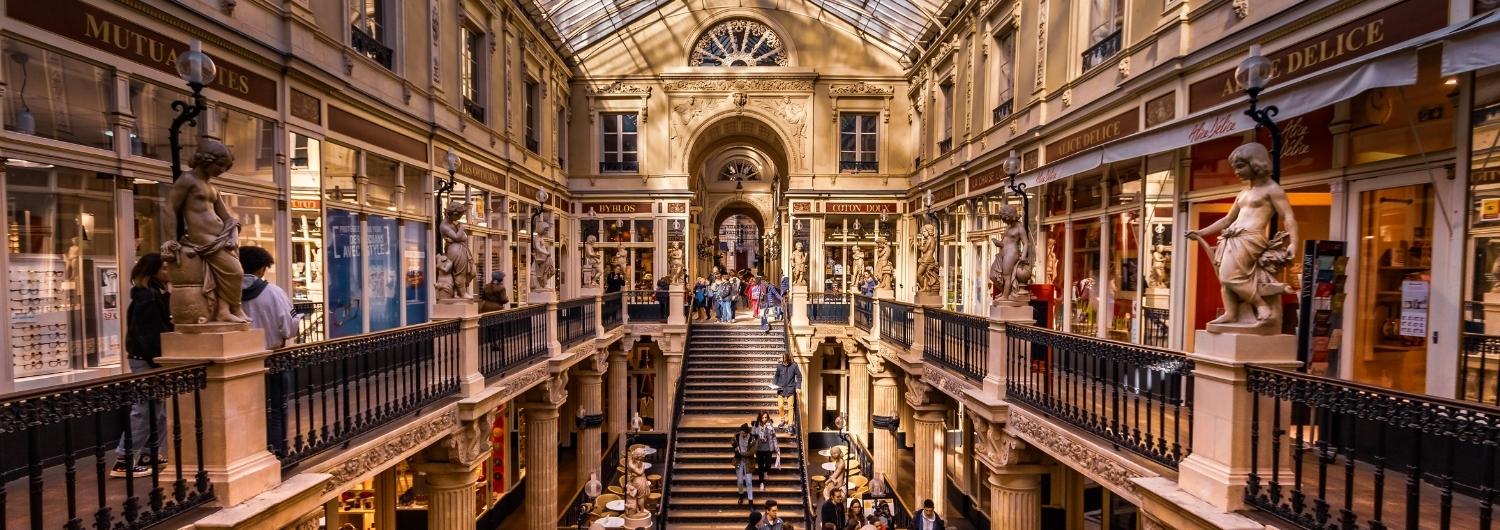
If there is one place that perfectly encapsulates the elegance of 19th-century Nantes, it is the Passage Pommeraye. More than just a shopping arcade, this building is a true historic landmark where architecture, commerce, and the art of living come together. For many residents, it’s one of the must-see spots to discover during a visit to the city.
Opened in 1843, the passageway connects Rue de la Fosse to Rue Santeuil, bridging a significant elevation difference with a majestic central staircase. Its neoclassical architecture, wrought-iron balconies, glass roofs, and numerous sculptures give it a unique atmosphere that appeals to both history buffs and photographers alike.
Address: Passage Pommeraye, 20 Passage Pommeraye, 44000 Nantes.
A 19th-century masterpiece
Originally, developer Louis Pommeraye wanted to create a covered shopping arcade inspired by those that have been very successful in Paris. The goal is twofold: to facilitate movement between two shopping districts and to provide an elegant space sheltered from the elements.
The project was entrusted to architect Jean-Baptiste Buron, who designed a passageway spread over three levels. The shops are highlighted by a spectacular glass roof that lets in natural light, while allegorical statues representing Commerce, the Arts, the Sciences, and Industry serve as a reminder of the project’s ambition.
Designated a historic monument in 1976, the Passage Pommeraye is now considered one of the most beautiful covered arcades in Europe.
Source: Ministry of Culture – Mérimée Database
https://www.pop.culture.gouv.fr/
A Gallery That's Still Thriving
Unlike some historic passages that have become mere tourist attractions, the Passage Pommeraye has retained its commercial purpose. It is home to bookstores, independent shops, home decor stores, fashion boutiques, and a few tea rooms.
Even if you’re not shopping, it’s nice to take the time to admire the architectural details: the moldings, the grand staircases, the intricately crafted balustrades, and the play of light beneath the glass roof.
The passage is especially photogenic early in the morning, when there aren't many people around yet.
What is there to do around the Passage Pommeraye?
One of this area’s main advantages is its proximity to several of the town’s iconic sites.
In less than a ten-minute walk, you can reach:
- Place Royale; ;
- Graslin Square; ;
- the Graslin Theater; ;
- Cambronne Street; ;
- the banks of the Loire.
With so many monuments in one area, it's easy to plan a walking tour without using public transportation.
The Jardin des Plantes, a natural oasis in the heart of Nantes
Just a short walk from the SNCF train station and the Castle of the Dukes of Brittany, the Jardin des Plantes offers a true oasis of peace right in the heart of the city. Spanning seven hectares, with more than 10,000 plant species and renowned botanical collections, it ranks among the most beautiful gardens in France. Whether you’re traveling with family, as a couple, or on your own, this stop lets you slow down and discover another side of the City of the Dukes.
Created in the early 19th century under the leadership of botanist Jean-Marie Écorchard, the garden is now a designated historic site Remarkable garden. It combines a scientific mission with meticulous landscaping, where century-old trees, flower beds, tropical greenhouses, and contemporary artworks coexist.
Address: Place Charles-Leroux, 44000 Nantes.
An Exceptional Botanical Heritage
The Jardin des Plantes is home to an impressive variety of plants. As they stroll along the paths, visitors can see magnolias, camellias, sequoias, palm trees, collections of perennials, and several rare species from all five continents.
Some of the plantings are over 150 years old and bear witness to the city’s long horticultural tradition. Educational signs are placed along the trail, explaining the origins of the plant species, their botanical characteristics, and their role in biodiversity.
Gardening enthusiasts will also enjoy the greenhouses, which house tropical and subtropical plants in suitable climatic conditions.
Source : City of Nantes – Jardin des Plantes
https://metropole.nantes.fr
Artworks along the paths
The Jardin des Plantes is not limited to its botanical treasures. For several years now, it has been hosting art installations that offer a fresh perspective on this historic site.
The works of artist and illustrator Claude Ponti particularly impressed visitors with their giant characters and benches unusual and their poetic displays. Some of the works have become true symbols of the garden and are especially popular with children.
This fusion of nature and contemporary art perfectly illustrates the cultural identity of Nantes, where art regularly takes over public spaces.
The Île de Nantes: Where Industrial Heritage Meets Contemporary Art
Once home to shipyards and port activities, the Île de Nantes has become one of the most ambitious urban renewal projects in Europe. Located in the heart of the Loire region, it perfectly illustrates the city’s transformation, as it has successfully reinvented its industrial heritage into a vast space dedicated to culture, architecture, innovation, and recreation.
While the Machines de l’île are now the neighborhood’s symbol, the area is well worth spending several hours exploring. With its outdoor art installations, contemporary buildings, landscaped waterfronts, and green spaces, this part of the city offers an experience quite different from that of the historic center.
For those who want to experience Nantes in a different way, the island is a must-see destination where you can see how a former industrial wasteland has been transformed into an internationally recognized urban laboratory.
A completely reinvented neighborhood
Until the late 1980s, life on the Île de Nantes revolved largely around the Dubigeon shipyards. For nearly two centuries, thousands of workers built ocean liners, cargo ships, and military vessels there.
After the shipyards closed, the municipality undertook a major redevelopment of the site. The goal was not to erase its industrial past, but to give it a new purpose while preserving many of its heritage features.
Today, former ship launch ramps, Titan cranes, steel structures, and industrial buildings stand side by side with architecture schools, cultural spaces, housing, and public gardens.
This redevelopment is often cited as an example of successful urban renewal.
Source: Samoa – Development of the Island of Nantes
https://www.samoa-nantes.fr
The Rings of Buren, an iconic work
As you walk along the Quai des Antilles, you can't miss the Buren Rings.
Conceived by the artists Daniel Buren and Patrick Bouchain, this installation consists of eighteen metal rings lined up facing the Loire. During the day, they frame the landscape along the river; at night, they light up in different colors and offer a sight that photographers particularly enjoy.
The artwork has become one of the contemporary symbols of Nantes as a tourist destination.
Address: Quai des Antilles, 44200 Nantes.
Les Nefs: A Reminder of the Old Shipyards
The massive metal warehouses that now house the Machines de l’île were once used for shipbuilding.
These monumental structures were preserved during the neighborhood's redevelopment and now host exhibitions, cultural events, and various seasonal activities.
If you look up, you can still see the impressive steel trusses that bear witness to the site’s industrial past.
A walk along the Loire River
The waterfront on the Île de Nantes is one of the most pleasant places in the city for a walk or bike ride.
Along the route, there are several spots where you can take a break:
- the terraces along the Quai des Antilles; ;
- the floating docks on the Loire; ;
- the gardens of Parc des Chantiers; ;
- the works of *Voyage à Nantes*; ;
- the old Titan cranes, designated as Historic Monuments.
In the summer, this promenade is particularly lively thanks to the open-air cafés, temporary art installations, and numerous cultural events.
"Le Voyage à Nantes," an open-air art exhibition
Since 2012, Le Voyage à Nantes has profoundly transformed the city’s image. More than just a cultural event, it is a permanent exhibition that invites residents and visitors alike to discover the city’s heritage, neighborhoods, and contemporary artworks from a unique perspective.
The concept is simple: a green line painted on the ground guides visitors from one site to another through the city center and the Île de Nantes. By following this route, anyone can explore the city at their own pace, without needing a complicated map. This concept is now part of the city’s tourism identity and plays a major role in its appeal.
For those who want to explore Nantes on foot, this route is probably the best way to visit the main landmarks, museums, gardens, and art installations, while discovering some lesser-known spots.
A green line as a guiding thread
The famous Green Line winds its way for about 20 kilometers and passes through the city’s main neighborhoods. It provides easy access to iconic sites such as the Castle of the Dukes of Brittany, the Machines de l’Île, the Passage Pommeraye, the Jardin des Plantes, and the banks of the Loire.
Another highlight of this tour is the unexpected discoveries it offers. As visitors follow the route, they come across hidden squares, inner courtyards, contemporary artworks, and little-known viewpoints of Nantes’s heritage.
No registration is required: just look for the green line and follow it however you like. Everyone can tailor their route based on how much time they have.
Artworks that engage with the city
"Le Voyage à Nantes" is not about displaying works in a museum. Here, art is integrated directly into public spaces and engages with the city's history.
As you stroll along, you’ll discover works by French and international artists. Some have become permanent fixtures, while others are replaced with each summer season.
Among the best-known facilities are:
- Daniel Buren's "Rings" on the Quai des Antilles; ;
- Claude Ponti's giant benches in the Jardin des Plantes; ;
- the many art installations scattered throughout the streets of the historic district.
This approach turns the visit into a real hunt for artworks, where every detour may hold a surprise.
A New Way to Explore Our Heritage
One of the great successes of *Voyage à Nantes* is that it fosters a dialogue between historical heritage and contemporary art.
The tour naturally takes visitors from the Castle of the Dukes of Brittany to the old shipyards, passing through 18th-century squares, covered arcades, and historic gardens along the way. This diversity shows that the city is not limited to a single monument, but offers a succession of complementary atmospheres.
By following the green line, it becomes easy to understand how Nantes has evolved over the centuries, from its past as the capital of the Duchy of Brittany to its current status as a cultural metropolis.
Agenda culturel nantais: Don't miss these events
Nantes, a vibrant cultural hub, offers eclectic and high-quality festivals throughout the year. With a focus on music in all its diversity, we invite you to discover three major cultural events you won’t want to miss: the Scopitone Festival, the Rendez-vous de l’Erdre, and the Folles Journées.
Festival Scopitone: Electronic music and digital arts
Internationally recognized, the Scopitone Festival celebrates the alliance of electronic music and digital arts. This annual September event transforms Nantes into a vibrant stage, with emblematic venues such as Stereolux, the Lieu Unique and the Château des Ducs de Bretagne.
Featuring electronic music concerts, art installations that utilize new technologies, lectures, workshops, and activities for young audiences, the Scopitone Festival is the perfect opportunity to explore avant-garde creations and take part in immersive and entertaining experiences.
Les Rendez-vous de l’Erdre: Jazz and Yachting
The free festival “Les Rendez-vous de l’Erdre” combines jazz and boating, showcasing a stunning collection of boats. Held in late August or early September along the Erdre River and the Nantes–Brest Canal, across 15 municipalities in the Loire-Atlantique department, the festival features more than a hundred jazz concerts, covering all styles—from swing to free jazz—with artists of local, national, and international renown.
At the same time, more than 200 vintage boats take part in this event, featuring parades, regattas, and a variety of activities. Les Rendez-vous de l’Erdre celebrates community and camaraderie while showcasing the region’s maritime and musical heritage.
Les Folles Journées: Classical music festival
Since 1995, Les Folles Journées has been a must-attend event for music lovers in Nantes, taking place in late January or early February. It is the largest classical music festival in France, bringing together more than 300,000 attendees and 1,500 artists each year for a rich and varied program.
With short concerts based on a theme that changes annually, the festival invites audiences to explore the classical repertoire, from must-hear works to innovative interpretations. The Nantes Convention Center, along with other iconic venues in the city and region, serves as the setting for this flagship event, offering emotional intensity and a shared passion for classical music.
Conclusion
Nantes is a fascinating city where culture and history, art and technology, as well as dreams and reality, blend harmoniously. It invites you on an enriching journey filled with endless discoveries and wonders.
Whether your passion lies in extraordinary mechanical creations, electronic music, jazz, classical music, contemporary art, or history, Nantes will satisfy your thirst for knowledge and appeal to your artistic sensibilities. Don’t miss this opportunity—plan your getaway to Nantes today and immerse yourself in its cultural treasures.
For more information, visit the following websites: Nantes Tourisme, The Machines of the Island, Scopitone Festival, Les Rendez-vous de l’Erdre, Les Folles Journées.
Nantes - FAQ
FAQ: Everything You Need to Know About Visiting Nantes
How many days does it take to visit Nantes?
One day is enough to see the main must-see attractions, such as the Castle of the Dukes of Brittany, the Bouffay district, the Passage Pommeraye, and the Machines de l’île. To fully enjoy the destination, visit a few museums, and stroll along the Loire River, it’s best to plan for two days. A three-day stay gives you time to explore the lesser-known neighborhoods and the area surrounding the city.
When is the best time to visit Nantes?
Spring and early fall are the most pleasant seasons, thanks to mild temperatures and moderate crowds. Summer is the perfect time to enjoy the “Voyage à Nantes” route, outdoor cafes, and the many cultural events held throughout the city.
Is it possible to explore Nantes on foot?
Yes. The historic center is relatively compact, and most of the main attractions are within a few minutes’ walk of each other. It’s easy to walk between the Castle of the Dukes of Brittany, the Bouffay, the Passage Pommeraye, Place Graslin, and the banks of the Loire. To reach some of the more distant neighborhoods, the tram, bus, or Navibus are convenient options.
What can you do in Nantes when it rains?
Even in bad weather, the city offers plenty to see and do. You can explore the Castle of the Dukes of Brittany and its history museum, the Nantes Museum of Art, the Natural History Museum, the Passage Pommeraye, or even catch a show at the Planetarium. Les Machines de l’île also offers indoor areas that are accessible depending on the activities.
What are the must-see attractions in Nantes?
Must-see sites include the Machines de l’île, the Castle of the Dukes of Brittany, the Bouffay district, the Passage Pommeraye, the Jardin des Plantes, the Île de Nantes, the Anneaux de Buren, and the Voyage à Nantes trail. These sites offer a good overview of the history, architecture, and creativity that define the city.
Is Nantes a family-friendly destination?
Yes. Families particularly enjoy the Machines de l’île, the Jardin des Plantes, the Natural History Museum, the Planetarium, and the many green spaces and playgrounds. The relatively short distances between these tourist attractions also make it easy to get around with children.
How much should you budget for a weekend in Nantes?
The budget depends mainly on the level of’hosting and selected activities. For a weekend, it’s reasonable to budget between €150 and €300 per person, including lodging, meals, transportation, and major attractions. The Nantes City Card can help you save money by bundling several admission fees and public transportation fares.
How do you get around in Nantes?
The public transportation system includes three tram lines, numerous bus routes, the Navibus on the Loire River, and bike-sharing services. However, walking remains the most enjoyable and convenient way to explore the historic center.
What are the best neighborhoods to stay in?
From downtown, the Graslin district, the Bouffay, and the area around the Castle of the Dukes of Brittany, you can easily visit the main attractions on foot. For a more contemporary atmosphere, the Île de Nantes is also an excellent choice, particularly because of its proximity to the Machines de l’île and the banks of the Loire River.
Is Nantes part of Brittany?
Historically and culturally, Nantes has been an essential part of Brittany since its founding in the 9th century, with the creation of the Kingdom and later the Duchy of Brittany. However, administratively speaking, it has not been part of Brittany since the French Revolution, when it was incorporated into the Loire-Atlantique department within the Pays de la Loire region.
What's the nickname for the city of Nantes?
Nantes is often nicknamed «the Venice of the West» because of its dense network of waterways—including the Loire, the Erdre, and the Sèvre—that crisscross the city. This nickname also reflects its rich maritime and commercial history, reinforcing its ties with other European cities.
Where to go for a walk in Nantes?
There is a wide variety of walking tours in Nantes, and your choice will depend on your interests. For an unforgettable experience, consider:
- Visit the Jardin des Plantes to discover an impressive collection of over 10,000 plant species, enhanced by original sculptures.
- Explore Les Machines de l’île, an innovative art project where mechanics and creativity come together, inspired by Jules Verne and Leonardo da Vinci. Marvel at the Grand Elephant, the Carousel of the Marine Worlds, and the Gallery of Machines.
Is Nantes part of the Vendée?
No, Nantes is not located in the Vendée department, but in the neighboring Loire-Atlantique department, and is part of the Pays de la Loire region. Nantes is also recognized as the historic capital of Brittany, a region with which it shares a rich cultural heritage.

