
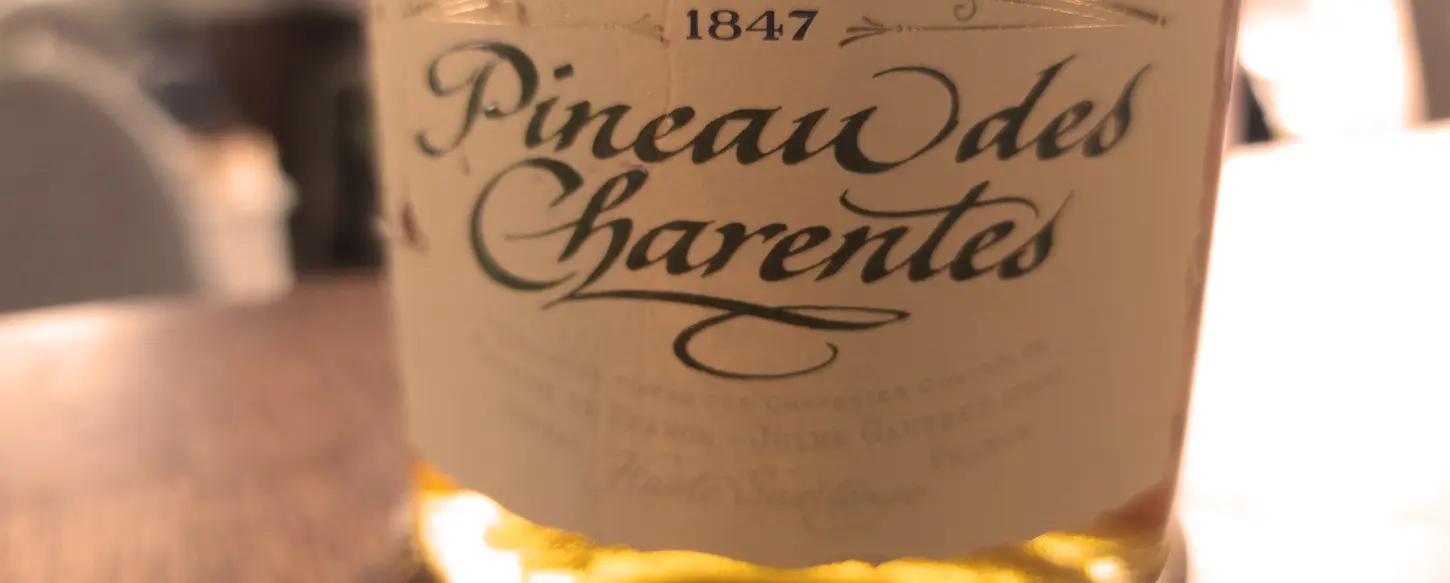
Pineau des Charentes
Visit Pineau des Charentes is a unique French liqueur wine, the result of a subtle marriage between fresh grape must and cognac. Although it is still too often misunderstood outside its region of origin, it is an integral part of France's gastronomic heritage. French.
Served chilled as an aperitif, it seduces with its balance of fruity sweetness and aromatic intensity. In the kitchen, it enhances sauces and desserts, while in modern mixology, it is increasingly attracting bartenders in search of refined, low-alcohol spirits. This article takes a look at the history, production, types and uses of Pineau des Charentesto (re)discover the richness of this regional treasure.
What is Pineau des Charentes?
Pineau des Charentes is a liqueur wine produced in the Charentes region of France. in the region des Charentes, in western France. Produced by blending grape must and cognacIt offers a rich, complex palette of aromas. Traditionally served as an aperitif, it can also accompany dishes or desserts.
Origins and legend
A chance discovery in 1589
The history of Pineau des Charentes is rooted in the late XVIᵉ century, in the heart of the Charente terroir. According to legend, a winemaker inadvertently poured grape must into a barrel already containing a little cognac. The mixture, forgotten and then rediscovered a few years later, revealed a beverage of astonishing smoothness and aromatic complexity. This "happy accident" marked the birth of this liqueur wine, which would gradually become a regional emblem.
Officialization and AOC designation
It was not until the XXᵉ century that the Pineau des Charentes gains its letters of nobility. In 1945, he was awarded theAppellation d'Origine Contrôlée (AOC)a guarantee of authenticity and quality. This recognition defines strict production rules: authorized grape varieties, proportions, geographical area, ageing period and blending methods. Since then, several revisions have refined these specifications (2011, 2024 and 2025), further reinforcing the product's high standards of quality.
A heritage rooted in the Charente region
More than just an aperitif, the Pineau des Charentes is a reflection of its territory. It shares its production zone with the famous cognac, benefiting from the same limestone soils, temperate oceanic climate and the ancestral know-how of Charente winegrowers. Each sip embodies the richness of a terroir and the transmission of a centuries-old winemaking tradition.
Production and appellation
A terroir shared with Cognac
Visit Pineau des Charentes draws all its identity from its terroir. Its production area covers the Cognaca large part of the Charentethe Charente-Maritime and some municipalities in the Deux-Sèvres and Dordogne. The soils are predominantly limestone, sometimes clay-limestone, which favors good water retention and optimal grape ripeness. The oceanic climate, tempered by the proximity of the Atlantic, provides an ideal balance between humidity and sunshine, essential for the production of a well-balanced liqueur wine.
The complementary nature of the cognac and cognac-growing areas Pineau des Charentes enables winegrowers to diversify their activities, while retaining a common know-how: distillation and ageing in oak barrels.
Grape varieties and blends
The richness of Pineau des Charentes is also due to the diversity of authorized grape varieties.
For white Pineauthe most commonly used grape varieties areUgni blancthe Colombard and the Folle blancheto which can be added the Semillon and the Montils. These varieties give aromas of white flowers, citrus and sometimes candied fruit.
For red and rosé PineauThe main grape varieties are Cabernet Francthe Cabernet Sauvignon and the Merlotwith notes of red fruit, spices and sometimes cocoa.
The traditional recipe calls for a precise blend: about ¾ of fresh grape must (unfermented) and ¼ of cognac from the same vineyard. This mutage stops fermentation and preserves the grapes' natural sugars.

Manufacturing process
The development of Pineau des Charentes is a demanding skill, handed down from generation to generation.
Harvest The grapes are harvested at perfect ripeness, guaranteeing excellent aromatic intensity.
Mutage fresh must is blended with cognac, young but already precisely distilled.
Aging The blend is then aged in oak barrels. The duration varies according to the type of Pineau:
minimum 18 months for the white, including 12 in casks,
minimum 12 months for red and rosé, including 8 in barrel.
Over time, the wine develops complex aromas: honey, dried fruit and nuts for aged whites, jammy fruit and cocoa for reds. Some Pineaux are aged much longer, producing exceptional cuvées.
The importance of AOC
L'Appellation d'Origine Contrôlée Pineau des Charentes is a true guarantee of quality. It imposes strict rules:
geographical origin of the grapes,
authorized grape varieties,
must/cognac proportions,
minimum ageing times.
This rigorous approach assures consumers that every bottle of Pineau des Charentes faithfully reflects its terroir, typicity and history.
Varieties and typologies
The three colors of Pineau des Charentes
Visit Pineau des Charentes is available in three main families, which differ in terms of grape varieties, aromas and table uses.
White Pineau This is the most traditional and the most widely consumed. Made from grape varieties such asUgni blanc and the ColombardIt has a luminous golden color. On the palate, it reveals notes of honey, candied fruit, white flowers and sometimes nuts. It's the ideal companion to foie grasfrom melon or blue cheeses.
Red Pineau from grape varieties such as Cabernet Franc and the MerlotThis wine has an intense ruby color. Its aromas are reminiscent of ripe red fruit (cherry, strawberry, raspberry), sometimes enhanced by notes of cocoa and spices after aging. A perfect accompaniment to chocolate desserts or duck dishes.
Pineau rosé Lesser-known, it lies midway between the first two. Its color, from light pink to deep raspberry, is seductive, and its aromas are reminiscent of fresh red berries. Light and fruity, it's ideal as an aperitif or for summer cocktails.

Age classifications
In addition to color, the Pineau des Charentes is also classified according to its ageing time. This hierarchy has a direct influence on its aromatic complexity and value.
Young Pineau This is the most accessible, with a minimum ageing period of 18 months (12 in barrel) for the white and 12 months (8 in barrel) for the red and rosé. Its aromas are lively, fruity and fresh.
Old Pineau For red wines, it must be aged for at least 5 years in barrel. It then develops a more pronounced aromatic richness, with notes of dried fruit, caramel and toasted wood for the white, or jammy fruit and spices for the red.
The very old Pineau (or extra-vieux): aged for over 10 years, it becomes a true cellar treasure. Its complexity is exceptional, with aromas of rancio, dried fruit, walnut, prune and leather. These rare cuvées appeal to discerning connoisseurs, and can be enjoyed like fine spirits.
A diversity of food and wine pairings
This classification makes it possible to adapt Pineau des Charentes to a wide range of situations:
a Young white pineau for a light aperitif,
a Red Pineau for a gourmet dessert,
a old Pineau to accompany a mature cheese,
a very old Pineau as an after-dinner drink, sipped slowly like a prestige cognac.
This variety explains why Pineau des Charentes is enjoying a resurgence of interest: it's just as suited to traditional tables as it is to modern cocktail bars.
Sensory profile & tasting
A unique balance of softness and intensity
Visit Pineau des Charentes is distinguished by its ability to marry grape freshness to the the aromatic strength of cognac. It is a liqueur wine with an average alcohol content of 17 %This subtle balance makes it both accessible and refined. This subtle balance makes it both accessible and refined, ideal to seduce novices and enlightened connoisseurs alike.
Typical color aromas
White Pineau reveals notes of honeyof white flowers, d'citrus and candied fruit. After several years of ageing, it evolves towards aromas of nuts, d'almond and caramel.
Red Pineau offers a remarkable fruity intensity: cherry, burr, raspberrysometimes with touches of cocoa andspices.
Pineau rosé is somewhere in between: fresh, gourmand, marked by aromas of redcurrant and fresh red fruitsIts light, thirst-quenching character makes it very appealing.
This aromatic diversity, which is directly linked to grape varieties and ageing, explains the great versatility of this wine. Pineau des Charentes at the table and in mixology.
Texture and mouthfeel
On the palate, the Pineau des Charentes seduces with its roundness and its generosity. The attack is soft, driven by the grape's natural sugars, then balanced by a hint ofacidity which avoids any heaviness. The presence of cognac adds long finish and subtle warmth, leaving a pleasant, sometimes lingering finish with woody notes for aged vintages.
Service Tips
To take full advantage of its qualities, the Pineau des Charentes must be served in the best possible conditions:
Ideal temperature between 6 and 8 °C for young Pineaux, slightly higher (10 to 12 °C) for old Pineaux.
Glass type Use a small tulip-shaped glass or a white wine glass to concentrate aromas while allowing good aeration.
Storage after opening An opened bottle can be kept for several weeks in the refrigerator, without any noticeable loss of quality, unlike many classic wines.
The tasting experience
Enjoy a Pineau des Charentesoffers a sensory experience at the crossroads of worlds: the fruity freshness of a wine and the aromatic depth of a spirit. This duality makes it a unique aperitif that deserves to be rediscovered for every season and every occasion.
Practices and agreements
The traditional aperitif
The primary role of the Pineau des Charentes is that of an aperitif. Served well-chilled, it immediately brings out its fruity freshness and its roundness in the mouth. In the homes of the Charente region, it goes well with a simple piece of melona slice of foie gras or a tray of blue cheeses such as Roquefort. These traditional pairings, handed down from generation to generation, bear witness to Pineau's deep roots in regional gastronomy.
In the kitchen: an ally for chefs
Beyond the aperitif, the Pineau des Charentes has conquered the kitchens of amateurs and top chefs alike. Thanks to its balance between sweetness and freshnessit can be used:
for deglaze pan-fried meat or foie gras,
to make creamy sauces with poultry,
for perfuming desserts such as poached pears, fruit tarts or even crèmes brûlées.
Its rich aroma blends particularly well with local products from the South-West: duck, oysters, distinctive cheeses and nut-based desserts.
Cocktails: a modern renaissance
In recent years, the Pineau des Charentes has been given a second life by mixology. Appreciated for its moderate alcohol content and its aromatic versatilityIt has won over bartenders looking for original alternatives to vermouths and liqueurs. It can be found in innovative creations such as :
the P&T (Pineau & tonic), refreshingly simple,
the Pineau-jitoa fruity take on the famous mojito,
the Martinellea cocktail combining white Pineau and gin,
or sweet variations based on Red Pineau and red berries fresh.
These new uses contribute to the revival of Pineau des Charenteswhich attracts a younger, more cosmopolitan clientele.
A match made in heaven
The versatility of Pineau des Charentes makes it an ideal beverage for any situation:
as an aperitif to launch a convivial meal,
in the kitchen to enrich regional or creative dishes,
in cocktails to surprise a modern party,
digestive when aged for a long time, with the complexity of a refined spirit.
Pineau is equally well suited to family tables than trendy barsThis is proof of its incredible ability to span the ages and appeal to a wide variety of audiences.
Producers, volumes and distribution
A network of varied producers
Visit Pineau des Charentes is produced by a wide variety of players. They include :
from small family farmswho perpetuate a tradition of craftsmanship handed down from generation to generation,
from wine cooperativeswhich bring together several local producers to pool resources,
and major Cognac houseswho also produce Pineau to complete their range.
This plurality ensures a wide variety of styles, from confidential cuvées to more accessible, widely distributed productions.
Production volumes
Every year, around 14 million liters from Pineau des Charentes are produced. This figure may seem modest compared to the volume of wine or cognac produced, but it reflects our determination to maintain quality production faithful to the terroir.
Nearly 80 % production is consumed in Francemainly in western France and Paris.
The rest is exported, but Pineau's international reputation is still limited compared to its illustrious cousin Cognac.
Consumption still local but growing
Historically, the Pineau des Charentes remains firmly rooted in its native region, where it is served almost naturally as an aperitif. However, its consumption is gradually expanding:
at Europe (particularly in Belgium and Luxembourg),
at Canadawhere fans of niche French products discover it,
and United StatesThis is thanks to bartenders' growing interest in original, low-alcohol spirits.
A changing image
For a long time, the Pineau des Charentes has suffered from a somewhat outdated image, confined to family aperitifs. But recent advertising campaigns, tasting competitions and, above all, the popularity of cocktail bars are all helping to restore its place on the international scene.
While the majority of bottles are still being tasted in the Charentes region, the trend is clear. Pineau des Charentes is winning over more and more consumers around the world.
Renaissance, image and innovation
A drink in search of modernity
For a long time, the Pineau des Charentes has suffered from an aging reputation. Considered a "country" aperitif, it struggled to appeal to younger generations and to establish itself against trendier spirits such as gin or spritz. In recent years, however, it has undergone a veritable back in favorThe company's strategy of modernization and growing consumer interest in authentic, lower-alcohol products are the driving forces behind this trend.
New labeling initiatives and regional promotion
In 2024, ageographical labelling was created to distinguish certain emblematic production areas, such as theÎle de Ré or theOleron Island. This type of valorization strengthens the local roots of the Pineau des Charenteswhile highlighting the diversity of our terroirs. This approach is part of a broader trend to recognize niche products and their direct link to the land where they were born.
The role of mixology in its renaissance
One of the main driving forces behind the revival of the Pineau des Charentes is undoubtedly the mixology. In cocktail bars in Paris, London and New York, it is now used as an alternative to vermouth or port. With its fruity aromas and natural sweetnessIt allows you to create cocktails that are both refined and accessible, appealing to a younger clientele.
Bartenders particularly appreciate Pineau for :
its versatility (it goes equally well with strong spirits and lighter bases),
sound moderate alcohol content (17 % on average), which is perfectly in line with the trend low-ABV (low-degree alcohols),
and its aromatic richnesswhich adds depth and roundness to the creations.
International communications
To break away from its strictly regional image, the producers of Pineau des Charentes are increasingly investing in communications and exports. Targeted campaigns highlight the brand's authenticity, history and modernity. This international opening is aimed at conquering new markets, particularly in North America and Asia, where consumers are looking for unique products with a strong identity.
A promising future
Thanks to this dynamic, the Pineau des Charentes is no longer just a regional aperitif. It is becoming a trendy productThis is a product that will appeal to French gastronomy enthusiasts and contemporary cocktail lovers alike. This renaissance illustrates the strength of a product that knows how to evolve while remaining faithful to its terroir and history.
Why taste Pineau des Charentes today?
A balance between tradition and modernity
Visit Pineau des Charentes is the perfect example of a product that has preserving its heritage while adapting to new consumer trends. Heir to a long winemaking tradition, it retains this intimate link with the Charente terroir, while appealing to new generations thanks to its use in modern cocktails and its growing place in contemporary gastronomy.
A friendly, affordable drink
With its moderate alcohol content and fruity aromatic palette, the Pineau des Charentes has established itself as a beverage user-friendlyideal for sharing with friends and family. Sweeter than a cognac, but more refined than a simple sweet wine, it represents a happy medium that appeals to a wide audience. This accessibility is one of the reasons for its revival among young consumers.
Exceptional versatility
Visit Pineau des Charentes can be enjoyed in a multitude of contexts:
as an aperitiffor its historic role and classic pairings (melon, foie gras, cheeses),
during mealtimeto accompany regional or creative dishes,
in dessertsthanks to its sweet, fruity aromas,
in cocktailsA stylish and original alternative to vermouths or liqueurs,
digestivewhen aged for a long time, comparable to the finest spirits.
A liqueur wine to rediscover
Beyond its traditional image, the Pineau des Charentes has positioned itself as a exceptional liqueur wine. It embodies a unique sensory experience that combines grape freshness and the cognac depth. Rediscovering this product means reconnecting with a part of France's gastronomic heritage, while exploring new ways of enjoying it.
In short, the Pineau des Charentes is not just a drink: it's an invitation to travel, between authenticity, share and creativity.
Grands Domaines de Pineau des Charentes
Domaine du Chêne
Located in the heart of the Charente region, Domaine du Chêne is renowned for the exceptional quality of its Pineaux. Their know-how, handed down from generation to generation, guarantees top-quality products.
Croizet House
Maison Croizet, founded in 1805, is a benchmark for Pineau. Their diversified range offers unique flavors from the best terroirs of the Charente.
Domaine Michel Forgeron
Domaine Michel Forgeron stands out for its artisanal production methods. Their Pineaux often win awards in international competitions for their excellence.
Here are a few examples of exceptional vintage Pineau des Charentes:
Maison Prunier - Vintage 1950 : This Pineau Blanc, aged for over 70 years in oak barrels, offers exceptional aromatic complexity, with notes of candied fruit, honey and spices.
Château de Beaulon - Blanc Vieille Réserve Or : This Pineau Blanc, from an undisclosed vintage, has great finesse and remarkable elegance, with notes of dried fruit, white flowers and vanilla.
Pierre Ferrand - Pineau des Charentes Blanc Vieille Réserve : This Pineau des Charentes Blanc, aged over 20 years in oak barrels, develops intense, harmonious aromas, with notes of candied fruit, rancio and sweet spices.
Distillerie des Moisans - Deau Millésime 2000 : This Pineau des Charentes Blanc, vintage 2000, is distinguished by its freshness and liveliness, with notes of citrus, exotic fruit and white flowers.
Maison Roussille - White Pineau des Charentes Vintage 1998 : This 1998 vintage Pineau des Charentes Blanc offers a complex, evolved aromatic palette, with notes of dried fruit, honey, beeswax and fine spices.
It's important to note that these vintage Pineau des Charentes are generally produced in limited quantities and are therefore quite difficult to find. They are often sold at high prices, reflecting their rarity and exceptional quality.
Practical information for tasting Pineau des Charentes
How to serve Pineau des Charentes?
Pineau is best served chilled, between 8 and 10°C. For white Pineau, use a white wine glass, while for rosé and red Pineau, a red wine glass is recommended.
Food and Pineau des Charentes pairings
Pineau Blanc goes perfectly with seafood, blue-veined cheeses and fruit-based desserts. Pineau Rosé goes well with spicy dishes and charcuterie. Pineau Rouge goes well with red meats and chocolate desserts.
Frequently asked questions
What is Pineau des Charentes?
Visit Pineau des Charentes is a liqueur wine obtained by blending fresh grape must with cognac. This mutage prevents fermentation, preserving the grape's natural sugars while adding the eau-de-vie's aromatic richness.
What's the difference between white, rosé and red Pineau?
Visit White Pineau is made from white grape varieties such as Ugni blanc and offers notes of honey and white flowers. The Red Pineau and the roséThese wines, made from red grapes (Merlot, Cabernet), reveal aromas of fresh or jammy red fruit, with varying degrees of power depending on ageing.
How do you enjoy Pineau des Charentes?
Visit Pineau des Charentes Serve chilled, between 6 and 8°C for young vintages, and slightly warmer for older Pineaux. Depending on its type, it can be enjoyed as an aperitif, cocktail or digestif.
What dishes or desserts go well with Pineau des Charentes?
Pineau goes perfectly with melonthe foie grasthe blue cheesesbut also chocolate desserts (for red) and fruit tarts (for white or rosé). Top chefs also use it to deglaze or flavor sauces.
Can Pineau des Charentes be used in cocktails?
Yes, the Pineau des Charentes is a great success in mixology. We find it in creations such as Pineau & tonic, Pineau-jito or Martinelle, which seduce with their freshness and originality.
What are the classic grape varieties of Pineau des Charentes?
The main grape varieties areUgni blancthe Colombard and the Folle blanche for Pineaux blancs, and Cabernet Francthe Cabernet Sauvignon and the Merlot for red and rosé Pineaux.
What is the minimum ageing period?
Visit White Pineau must age at least 18 months including 12 in barrels, while the Red Pineau and the rosé require at least 12 months including 8 in barrel. There are also "old" (5 years) and "very old" (10 years) classifications.
Where can I buy Pineau des Charentes?
It is readily available from cavistesin the superstores in Western France, as well as on the online stores sales. Local producers also offer direct sales.
What is the annual production of Pineau des Charentes?
Every year, around 14 million liters from Pineau des Charentes are produced. The majority is consumed in France, but a growing proportion is exported to Belgium, Canada and the United States.
What are the new trends in Pineau des Charentes?
Current trends emphasize the low-ABV (low alcohol content), the creative mixology and the promoting specific terroirs (like Île de Ré). These developments have given Pineau a modern, dynamic image.
Conclusion
Visit Pineau des Charentes is much more than a simple regional aperitif: it's a true expression of the Charente terroir. The result of a subtle union between grape must and cognac, it embodies a know-how that has been handed down for centuries. Its diversity - between fruity whites, intense reds and gourmet rosés - as well as its age classifications make it a liqueur wine that is both accessible and refined.
Whether as an aperitif with a melon, in a chocolate dessert, or in a modern cocktail, the Pineau des Charentes can be adapted to any occasion. Thanks to passionate producers and new consumer trends, it is now enjoying a veritable renaissance, appealing to both traditional enthusiasts and young people looking for original discoveries.
Rediscovering the Pineau des CharentesThis is also a chance to rediscover a part of France's gastronomic heritage, at the crossroads of conviviality and excellence.
👉 To find out more, visit the Wikipedia page devoted to the French regional liqueur wine here.
