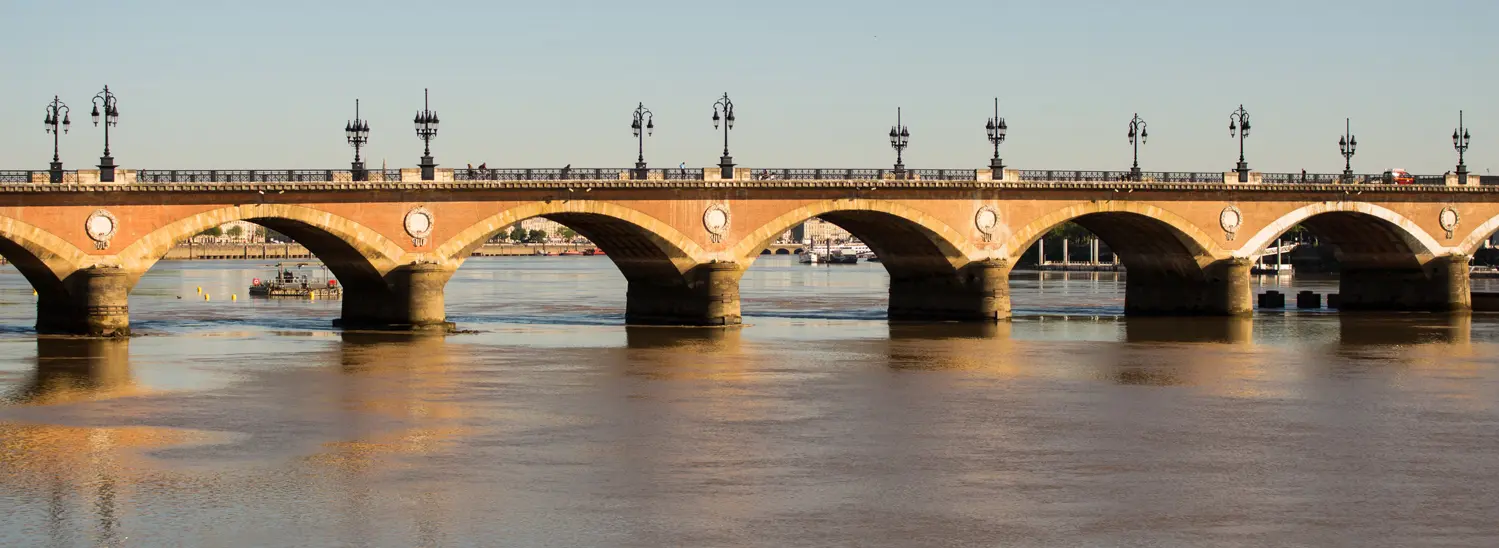
Bordeaux Stone Bridge
Visit Bordeaux's Pont de Pierre in the heart of the cityin the Gironde department, is much more than just a means of crossing; it is a historical and architectural symbol that connects the two banks of the Garonne. This iconic monument, inaugurated in the early 19th century, stands as a testament to the ingenuity and determination of its builders. In this article, we’ll explore the history, architecture, and points of interest surrounding this exceptional bridge.
History of the Pont de Pierre
Background and construction
Construction of the Pont de Pierre began in 1810 under the orders of Napoleon Bonaparte. The goal was to effectively connect the two banks of the Garonne and facilitate commercial and military exchanges. This ambitious project required extensive foundation work due to the river’s strong currents and the geological composition of the soil.
The Inauguration
The Pont de Pierre was inaugurated in 1822 after twelve years of construction. This arch bridge, consisting of seventeen spans, was a technical feat for its time. Its name, «Pont de Pierre,» refers to the stone used in its construction—a noble and durable material.
Milestones
Since its inauguration, the Pont de Pierre has witnessed many historic events. It has seen royal processions, military parades and has been an essential route for Bordeaux commerce. Over the years, it has also undergone several renovations to maintain its robustness and appearance.
Architecture of the Pont de Pierre
Key features
The Pont de Pierre is 487 meters long and 19 meters wide. It consists of seventeen arches, each adorned with a stone medallion depicting the likeness of Napoleon Bonaparte. The bridge piers are fitted with spouts shaped like ship prows, designed to reduce water resistance.
Construction techniques
The engineers used techniques that were advanced for their time, including compressed-air chambers for working underwater. The limestone used came from local quarries, ensuring the bridge’s strength and structural integrity.
Renovation and maintenance
Over the years, the bridge has undergone several renovations. The most recent one, carried out in 2000, included structural reinforcement and the installation of new lighting, which highlights its architecture at night.
Practical information
Bridge access
The Pont de Pierre is easily accessible on foot, by bike or by car. It is also served by Bordeaux's tramway lines, offering optimum convenience for residents and tourists alike.
Opening hours and prices
The bridge is open to the public 24 hours a day, and admission is free. Visitors can enjoy scenic walks at any time of day.
Tips for visitors
For the best experience, we recommend visiting the bridge at sunrise or sunset, when the light sublimates the architectural details and offers spectacular views of the Garonne River.
Places to visit around Pont de Pierre
The Port of the Moon
Listed as a UNESCO World Heritage Site, the Port of the Moon is a must-see attraction. Its classical architecture and lively atmosphere make it an ideal place for a stroll.
Place de la Bourse
Just a few minutes from the bridge, the Place de la Bourse is famous for its reflecting pool, the largest in the world. This historic site is a masterpiece of 18th-century architecture.
The Saint-Pierre district
This historic district offers a glimpse into Bordeaux's medieval past, with its cobbled streets, ancient churches and numerous restaurants and cafés.
Pont de Pierre - FAQ
How long is Bordeaux's Pont de Pierre?
The Pont de Pierre is 487 metres long.
How many arches does the Stone Bridge have?
The bridge has seventeen arches.
When was the Pont de Pierre inaugurated?
The bridge was inaugurated in 1822.
What materials were used to build the Pont de Pierre?
The bridge was built mainly of limestone.
Is the Pont de Pierre accessible to pedestrians?
Yes, the bridge is accessible to pedestrians, cyclists and cars.
Is there a fee to cross the Pont de Pierre?
No, access to the bridge is free.
Pont de Pierre - Conclusion
Visit Bordeaux Stone Bridge is much more than just a passage; it is a silent witness in history in Bordeaux and an architectural gem. Whether you’re a history buff, an architecture enthusiast, or simply out for a stroll, this bridge is well worth a visit. Its enchanting setting and heritage-rich surroundings make it a must-see for anyone visiting Bordeaux.