

Introduction
Visit Puy-de-Dôme is one of the most emblematic natural sites in central France. Located in the Puys chain, this volcano is as fascinating for its history as it is for its spectacular scenery. Whether you're a hiker, a geology enthusiast or simply curious, a visit to this summit is an experience not to be missed in the heart of the Auvergne.
If you'd like to explore the wealth of tourist attractions the country, Discover also this complete guide 👉 https://cparici.com/fr/visiter-la-france-guide-des-regions-et-sites-touristiques
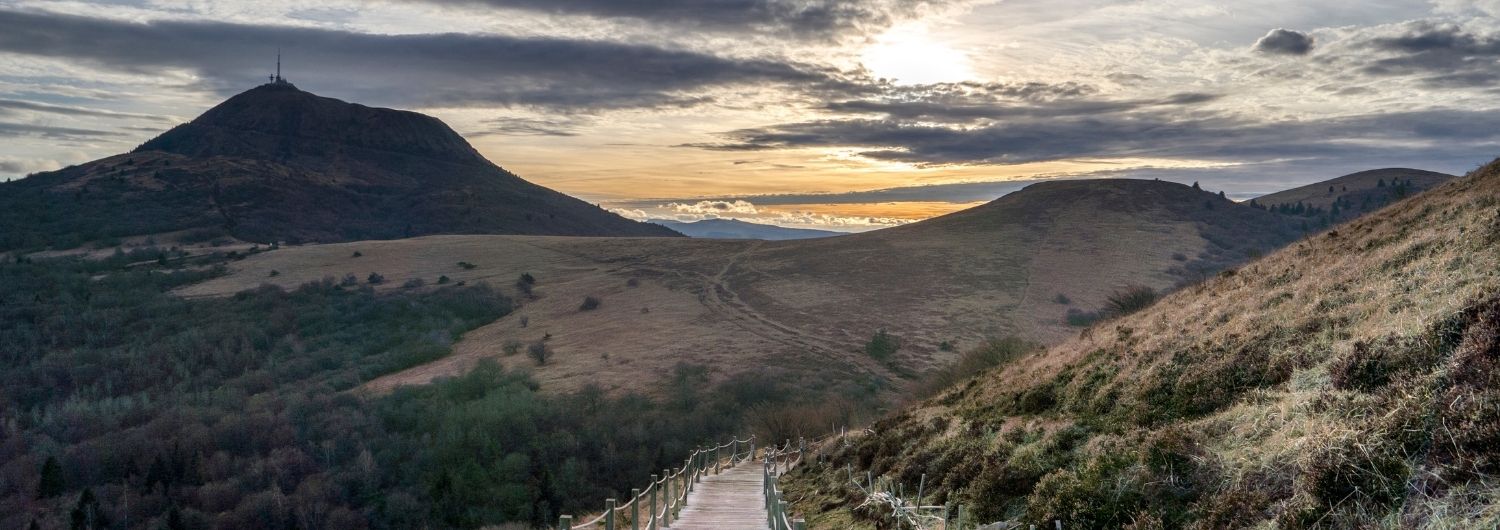
In this article, we'll explore in detail everything you need to know about the Puy-de-Dôme, the volcano Here's where it all began, how to get there, what to do and how to organize your visit.
Find out more about the department du Puy-de-Dôme, read our detailed article here!
What to do in Puy-de-Dôme
Admire the volcano panorama
Visit Puy-de-Dôme is renowned for offering one of the finest panoramic views in France. Once at the summit, visitors can enjoy a 360-degree view of the Chaîne des Puys and the Limagne plain. By definition, a panorama is an expansive view of a landscape, often observed from a high point. Here, the view is particularly impressive due to the unique alignment of volcanoes.
More than 80 volcanoes can be seen from the summit, making it an exceptional site in Europe. This visual experience attracts photographers and nature lovers alike. It's the perfect vantage point from which to understand the organization of the volcanic landscape.
Outdoor activities in the Puy-de-Dôme
Visit Puy-de-Dôme is also an ideal location for outdoor activities. Paragliding is one of the most popular, allowing you to fly over the volcanoes and admire the scenery from a unique angle. Visit paragliding is the aerial activity of flying with a sail, using updrafts.
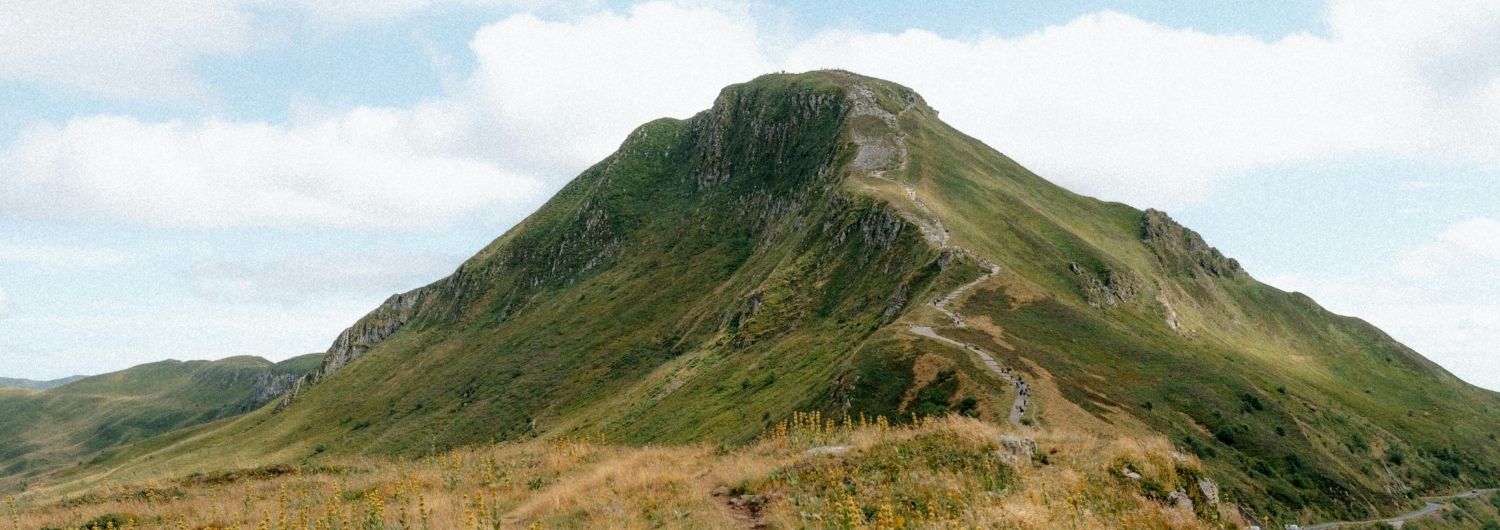
In addition to paragliding, the site offers hiking and trail routes, as well as areas for biodiversity observation. These activities offer an immersive experience in an unspoilt natural environment. The volcano is a must-see destination for sports and adventure enthusiasts.
Explore the volcano's surroundings
The area around Puy-de-Dôme offer a wealth of opportunities for discovery. The Chaîne des Puys is packed with accessible volcanoes, each with different characteristics. By definition, a regional nature park is a protected area designed to preserve landscapes and biodiversity while developing sustainable tourism.
Nearby, the Parc naturel régional des Volcans d'Auvergne is an ideal place to extend the experience. Here, visitors can discover lakes, forests and other iconic peaks. This area becomes the starting point for a wider exploration of the region.
Discover the volcano
Definition of Puy-de-Dôme
Visit Puy-de-Dôme is a volcano in the Massif Central, in the Auvergne region. At an altitude of 1,465 metres, it is the highest point in the Puys chain. By definition, a volcanic dome is a formation created by the accumulation of viscous lava that doesn't flow easily, giving rise to a rounded, massive structure. The volcano is thus distinguished from explosive volcanoes by its regular shape and imposing relief.
Today, this natural site is recognized as one of the symbols of France's geological heritage. The volcano attracts scientists and tourists alike, thanks to its accessibility and educational value. Understanding the volcano means understanding both a volcanic phenomenon and a landmark of French tourism.
Geographical location of Puy-de-Dôme
Visit Puy-de-Dôme is located about 15 kilometers west of Clermont-Ferrand, in the department of the same name, region Auvergne-Rhône-Alpes. It is part of the famous Chaîne des Puys, an alignment of some 80 volcanoes stretching for almost 45 kilometers. This exceptional concentration of volcanic landforms makes the volcano a focal point in a geological complex that is unique in Europe.

Geographically, the summit dominates a vast territory of plateaus, forests and valleys, offering a striking contrast between natural landscapes and urbanized areas. The volcano enjoys a strategic position from which to observe the entire surrounding region. This makes it an ideal place from which to understand the formation of Auvergne's volcanic landscape.
Puy-de-Dôme volcanic formation
The volcano was formed around 11,000 years ago, making it a relatively young volcano on a geological scale. It was formed following an eruption characterized by highly viscous, silica-rich lava that gradually accumulated around the point of emission. This process gave rise to a massive dome, typical of so-called “Pelean” volcanoes.
From a scientific point of view, the volcano is an outstanding example of how volcanic landforms are formed. Geologists use the site to analyze volcanic deposits, understand eruptive dynamics and observe the evolution of landscapes. Now extinct, the volcano is nonetheless a precious testimony to past volcanic activity in France.
History and importance of Puy-de-Dôme
Historical origins of Puy-de-Dôme
Visit Puy-de-Dôme has a rich history dating back to antiquity. As far back as Gallo-Roman times, the summit was considered a sacred site. The Arvernes, a Gallic people settled in the region, already saw the volcano as an important spiritual site due to its dominant position and impressive character. By definition, a ancient cult site is a place used for religious practices, often in connection with remarkable natural features such as mountains.
At the summit, the Romans built a temple dedicated to Mercury, god of trade and travelers. The remains of this sanctuary are still visible today, testifying to the strategic and symbolic importance of the site. Visit puy-de-dôme was not only a natural landmark, but also a major religious center in the region.
Pascal's experience in the puy-de-dôme
Visit puy-de-dôme is also famous for being the site of a major scientific experiment conducted in the 17th century by Blaise Pascal. In 1648, the scientist set out to demonstrate the existence of atmospheric pressure. To this end, he commissioned an experiment to measure the height of a column of mercury at different altitudes, notably at the summit.
This experiment, now known as a milestone in the understanding of fluid physics, is based on the principle that pressure decreases with altitude. The site has thus played a key role in the history of science. This type of experiment illustrates what is known as a empirical scientific demonstration, In other words, observation based on concrete measurements.
puy-de-dôme UNESCO classification
Visit puy-de-dôme is part of the Chaîne des Puys - faille de Limagne, a geological complex that was designated a UNESCO World Heritage Site in 2018. This international recognition underscores the site's exceptional scientific and scenic value. Visit UNESCO site is a place recognized for its universal importance and protected for future generations.
In this context, the volcano represents an outstanding example of volcanic formation and tectonic dynamics. This classification has boosted the site's appeal to tourists, attracting increasing numbers of visitors every year. It has thus become a powerful symbol of France's natural heritage, combining history, science and sustainable tourism.
How to get to puy-de-dôme
Access to puy-de-dôme by car
Visit puy-de-dôme is easily accessible by car from Clermont-Ferrand, some fifteen kilometers away. Road access is mainly via the D941 departmental road, which leads to the Col de Ceyssat, the starting point for the main climbs. By definition, a tourist road access designates an itinerary that provides access to a natural site while facilitating the visitor experience.
However, it is important to note that direct ascent to the summit by car is forbidden in order to preserve the environment. Visitors must park in the parking lots at the foot of the volcano, notably at the Col de Ceyssat. This arrangement limits the impact on the environment, while maintaining a controlled flow of tourists around the site.
Puy-de-Dôme panoramic train
For those who want to avoid the hike, the panoramic train is the ideal way to reach the summit of the Puy-de-Dôme. Commissioned in 2012, this electric rack-and-pinion train climbs the volcano's slopes in around 15 minutes. This type of transport is called rack and pinion, a system adapted to steep inclines thanks to a central rail.
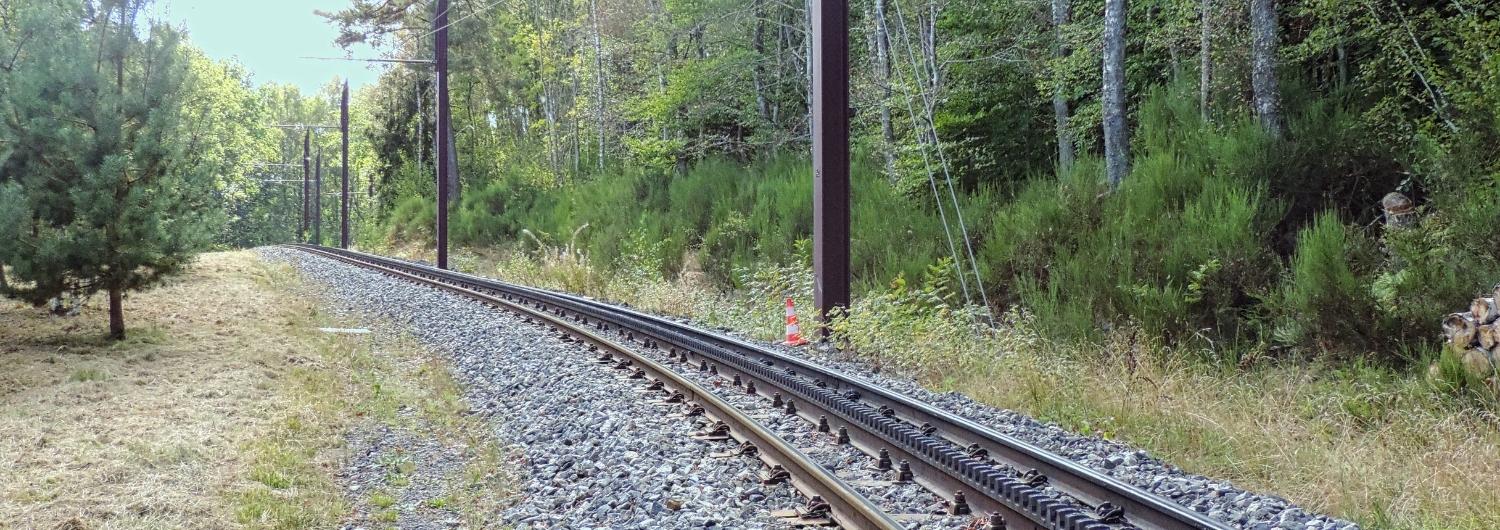
The train offers a comfortable and accessible experience for everyone, including families and people with reduced mobility. Visit Puy-de-Dôme becomes a site open to a wide public, without requiring any major physical effort. In high season, it is advisable to book tickets in advance to avoid waiting times.
Hiking in the puy-de-dôme
Hiking remains one of the most popular ways of reaching the summit of the Puy-de-Dôme. The best-known itinerary is the Chemin des Muletiers, a historic trail once used by merchants. By definition, a hiking trail is a signposted trail for discovering a natural area on foot.
The climb, which takes between 45 minutes and 1h30 depending on your level of fitness, involves a significant difference in altitude, but is accessible to anyone in good physical condition. The volcano offers an immersive experience, allowing you to observe the fauna, flora and volcanic landscapes along the way.
How-to: choose the best access
To organize your ascent to the puy-de-dôme, It's essential to choose the option best suited to your profile:
✔️ If you're an athlete
- go for a hike
- enjoy an immersive experience
✔️ If you are with your family
- opt for the panoramic train
- fast, comfortable solution
✔️ If you're short of time
- choose the train
- quick access to the summit
✔️ Expert advice
- check the weather forecast before going up
- avoid peak hours
Visit Puy-de-Dôme offers several access options, making it a particularly adaptable site for all types of visitor.
Key data for puy-de-dôme
Visitors to puy-de-dôme
Visit puy-de-dôme is one of the most visited tourist sites in the Auvergne. Every year, it welcomes around 500,000 to 600,000 visitors, This makes it a major tourist attraction in the region. By definition tourist numbers corresponds to the number of visitors to a given site over a given period.
This popularity is due to several factors: accessibility, natural wealth and cultural appeal. The volcano also benefits from its proximity to Clermont-Ferrand, which facilitates access. Since the opening of the panoramic train, visitor numbers have risen significantly, making the site even more accessible to the general public.
Technical features of puy-de-dôme
Visit puy-de-dôme has remarkable geological and physical features. Its highest point is 1465 meters above sea level, making it the highest point in the Puys chain. By definition’altitude corresponds to a point's elevation above sea level.
This volcano is a lava dome, formed by an accumulation of viscous magma. It extends over several kilometers and is distinguished by its characteristic rounded shape. These features make the summit a typical example of volcanic geology.
puy-de-dôme summary table
Here is a summary of the main data concerning puy-de-dôme :
| Data | Value |
|---|---|
| Name | Puy-de-Dôme |
| Altitude | 1465 m |
| Location | Auvergne |
| Volcano type | Lava dome |
| Estimated age | ~11,000 years |
| Ranking | UNESCO |
| Annual attendance | 500,000 to 600,000 visitors |
This table provides a quick summary of the essential information relating to this natural site, making it easier for the reader to understand.
Why visit the puy-de-dôme
The assets of puy-de-dôme
Visit puy-de-dôme is a unique destination that combines nature, history and accessibility. This iconic volcano offers a complete experience, accessible to all visitor profiles. By definition, a major tourist site is a place that attracts a large number of visitors because of its natural, cultural or historical interest.
Its main assets include its exceptional panorama, geological wealth and modern infrastructures such as the panoramic train. The site offers visitors the chance to immerse themselves in an unspoilt natural environment, while enjoying easy access. Visit puy-de-dôme also stands out for its ability to offer an educational experience, thanks in particular to explanatory panels and guided tours.
For which type of visitor
Visit puy-de-dôme is aimed at a wide variety of audiences. Families particularly appreciate the site's accessibility and the safety of its facilities. By definition, a family site is a child-friendly facility with safe infrastructures and accessible activities.
Sports enthusiasts will find the volcano ideal for hiking, trail running and paragliding. Nature lovers and photographers will also be seduced by the unique landscapes offered by this summit. Finally, science and history enthusiasts can discover the geological features and significant events associated with the site. It's a versatile destination, capable of meeting a wide range of expectations.
Case study: a day in the puy-de-dôme
Typical itinerary in puy-de-dôme
Spend a day at the puy-de-dôme offers a complete experience combining discovery, physical activity and contemplation. To illustrate a visit in concrete terms, here's an example of an optimized itinerary. By definition, a tourist itinerary is a structured itinerary that allows you to efficiently organize a visit according to the time available.
Morning: climb to the summit
The day usually begins at the Col de Ceyssat, the ideal starting point for accessing the puy-de-dôme. Visitors can choose between hiking or taking the panoramic train, depending on their physical condition. Climbing early allows you to avoid the crowds and take advantage of more favorable weather conditions.
Noon: discovery and panorama
Once at the summit, time is devoted to exploring the site. The volcano offers a spectacular view of the Chaîne des Puys, ideal for taking photos or simply admiring the scenery. The volcano's history and formation are explained on educational panels.
Afternoon: activities and return
Afternoons are ideal for activities such as walking around the summit or observing nature. Some visitors also take the opportunity to try their hand at paragliding or explore the surrounding area. The return journey can be made on foot or by train, depending on the option chosen on the outward journey.
Practical tips for a successful visit
Organize a visit to the Puy-de-Dôme requires a little preparation to get the most out of the experience. By definition, a practical advice is a concrete recommendation for optimizing an activity or trip.
Best period
Spring and summer are the best seasons to discover this summit, with more stable weather and longer days. Autumn also offers superb scenery, but with sometimes more variable conditions.
Recommended equipment
It's advisable to wear shoes suitable for walking, even if you're taking the train up. Water, sun protection and clothing adapted to temperature changes are essential.
Important tip
It's essential to check the weather forecast before setting off, as conditions can change rapidly at altitude. Visit Puy-de-Dôme being exposed to the wind, it's best to plan ahead to avoid any unpleasant surprises.
Frequently asked questions about Puy-de-Dôme
How high is Puy-de-Dôme?
The summit rises to 1465 meters above sea level, making it the highest point in the Puys chain. By definition, altitude is the height of a place in relation to sea level.
Can we get in the car?
Direct access to the summit by car is not possible. Access is regulated to preserve the environment. Visitors must park below and choose between hiking or taking the panoramic train.
How long does it take to climb Puy-de-Dôme?
The climb on foot generally takes between 45 minutes and 1h30 depending on level. The panoramic train takes around 15 minutes to reach the summit.
Is this volcano active?
Today, this volcano is off, formed around 11,000 years ago. By definition, an extinct volcano no longer displays eruptive activity.
How much does the train cost?
Train fares generally vary between 15 € and 20 € return for an adult, with discounts for children.
When is the best time to visit the Puy-de-Dôme?
The best period is between spring and autumn, when weather conditions are most favorable.
Can you paraglide?
Yes, this site is well known for paragliding. The aerological conditions are particularly well-suited to this activity.
Is it suitable for children?
Yes, the site is perfectly suited to families, thanks in particular to the panoramic train and secure infrastructures.
Conclusion on puy-de-dôme
Visit puy-de-dôme is much more than just a volcano: it's an exceptional natural site that combines spectacular scenery, rich history and accessibility. Whether for hiking, scientific discovery or a family outing, this summit offers a complete and memorable experience.
Accessible, educational and impressive, it's a must-see destination in the Auvergne. Visit the volcano, to dive into the heart of a unique natural heritage and enjoy an experience that's both enriching and exotic.
Essential links to visit puy-de-dôme
Puy-de-Dôme panoramic train
🔎 The official website of the cogwheel train to the summit
✔️ Online booking
✔️ Timetables in real time
✔️ Rates and access
puy-de-dôme official website
🔎 Official portal of the department with complete information
✔️ Access
✔️ Activities
✔️ News
Auvergne Volcano Park
🔎 To explore the surrounding area
✔️ Hiking
✔️ Interactive maps
✔️ Biodiversity
Clermont Auvergne Tourist Office
🔎 Complete tourist guide
✔️ Visit ideas
✔️ Accommodation
✔️ Local activities
Hiking around the puy-de-dôme
🔎 Detailed itineraries for climbing
✔️ GPS maps
✔️ Difficulty
✔️ Estimated time
Scientific information and UNESCO
🔎 UNESCO classification of the Puys mountain range
✔️ Universal value
✔️ Scientific data

