

Located in the heart of Morbihan, Ploërdut is a charming rural commune that epitomizes Breton authenticity. Nestled inland, far from the hustle and bustle of the coast, it reveals another facet of tourism. the country, A more intimate, heritage-focused village, also featured in our complete guide. With its remarkable religious heritage, bocage landscapes and deep-rooted traditions, the commune attracts travelers in search of peace and history.
Where is Ploërdut?
The commune of Ploërdut is located in the department of Morbihanin the region Brittany. It belongs to the intercommunalité du pays du Roi Morvan, a rural area renowned for its wooded landscapes and rivers.
Situated around 60 km from Vannes and close to Guémené-sur-Scorff, the commune is part of a hilly environment marked by agriculture and forests. Its altitude varies slightly, offering beautiful panoramic views over the surrounding countryside.
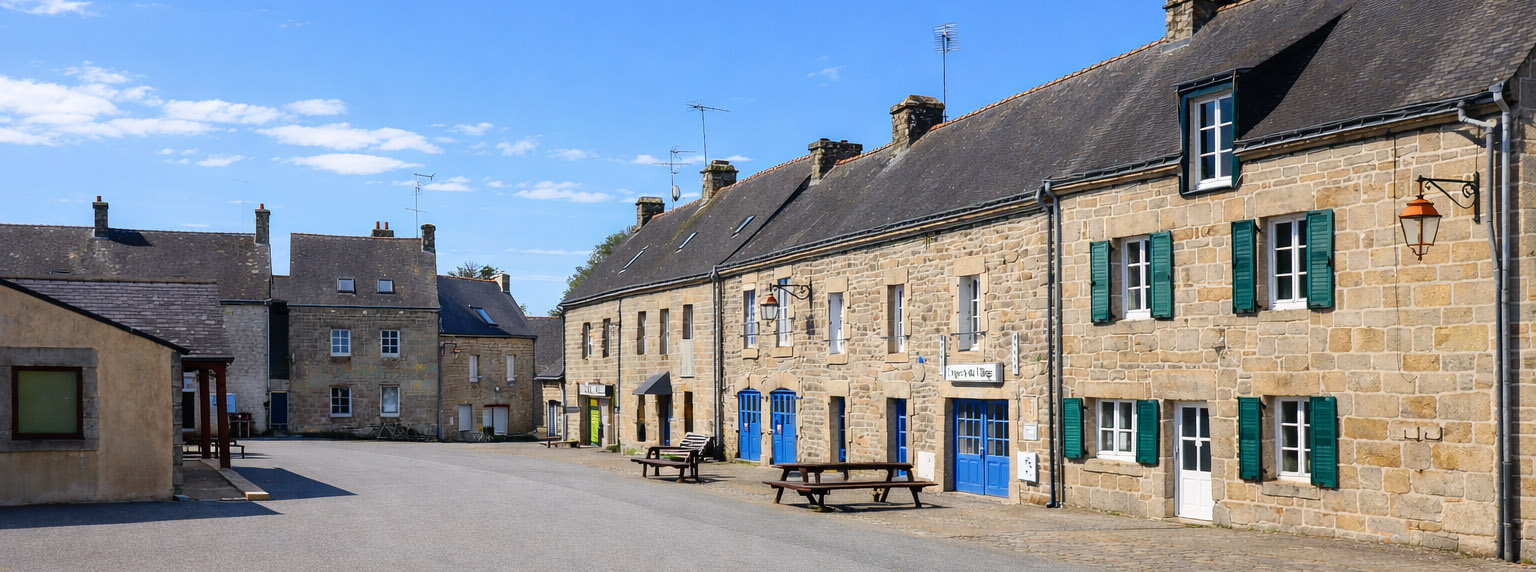
What to do in Ploërdut
Hiking and nature
Ploërdut is an ideal starting point for exploring the signposted trails of the Roi Morvan region.
The routes around Ploërdut cross forests, streams and hedged farmland. These typical landscapes of inland Brittany will appeal to lovers of calm and authenticity.
Cultural tourism
Visiting the commune also means discovering :
Breton pardons (traditional religious festivals)
Road crosses
Sacred fountains
These elements are part of Brittany's historical heritage, which is still very much alive locally.
Outstanding religious heritage in Ploërdut
The architectural wealth of Ploërdut can be seen in its many chapels and parish church, testimony to a faith deeply rooted in inland Brittany. In this rural Morbihan commune, the religious heritage is not just a legacy of the past: it is the historical and cultural backbone of the region.
Chapelle Notre-Dame-de-Crénénan (listed monument)
The Notre-Dame-de-Crénénan chapel is undoubtedly the most emblematic religious building in Ploërdut. Listed as a Historic Monument, it is a remarkable example of 15th and 16th century Breton Gothic architecture.
The Notre-Dame-de-Crénénan chapel is distinguished by its elegant bell tower with spire, its carved porch and, above all, its polychrome wooden rood screen, a rarity in Brittany. The rood screen, an architectural element separating the nave from the choir, is decorated with finely carved religious scenes. This type of work testifies to the religious prosperity of the commune at the end of the Middle Ages.
The preservation of this chapel illustrates the importance of rural sanctuaries in Breton history. Pardons, traditional religious festivals, once drew faithful from all over the Roi Morvan region.
Saint-Yves chapel
The Saint-Yves chapel occupies a special place in the commune's religious heritage, as it is dedicated to Saint Yves, patron saint of lawyers and symbol of justice in Brittany.
Built between the 16th and 17th centuries, the Saint-Yves chapel's architecture is more restrained, but typical of rural Breton buildings. Characteristic features include the bell-wall and pointed-arched openings. The chapel is a reminder of the central role played by religion in the social organization of the Breton countryside.
The gatherings organized around the Saint-Yves chapel contributed to the cohesion of the local community. Through these celebrations, the commune maintained a strong link with regional traditions.
Saint-Pierre-et-Saint-Paul Church
The parish church of Saint-Pierre-et-Saint-Paul is the spiritual heart of Ploërdut. Located in the center of the village, it symbolizes the religious continuity of the commune over the centuries.
The present-day church has undergone several phases of construction and restoration. It blends Gothic and classical architectural elements, reflecting stylistic evolutions over the centuries. Its bell tower dominates the village landscape, once serving as a visual landmark in the surrounding countryside.
Inside, ancient statues, altarpieces and stained glass windows illustrate traditional Christian iconography. The Saint-Pierre-et-Saint-Paul church bears witness to the structuring role of the parish in daily life.
Locmaria chapel
The Locmaria chapel completes the religious ensemble of Ploërdut and contributes to the richness of its spiritual network. Locmaria means «place of Mary» in Breton, indicating a shrine dedicated to the Virgin Mary.
Like many rural chapels in Brittany, Locmaria's is located away from the town center, in a peaceful natural setting. Its location reflects the tradition of sanctuaries built near springs or ancient sacred sites.
In Ploërdut, the Locmaria chapel was a gathering point for Marian pardons, highlights of the local religious calendar. These events combined spirituality, conviviality and the affirmation of Breton identity.
A coherent architectural whole
Together, these buildings give this rural commune a remarkable density of heritage for a town of its size. This concentration of chapels illustrates a phenomenon typical of inland Brittany: the multiplication of places of worship linked to frairies (former parish subdivisions). A frairie was a religious and community subdivision within a parish.
Each frairie maintained its own chapel, reinforcing the sense of local belonging. This organization has shaped the landscape and left a valuable architectural legacy. Today, the promotion of this religious heritage contributes to the cultural and tourist development of the commune.
So the commune's religious heritage is not limited to a few old buildings: it's a veritable thread for understanding the commune's history, identity and evolution over the centuries.
Places to visit around Ploërdut
Staying in Ploërdut makes it easy to explore several major sites in central Morbihan and inland Brittany. This strategic position makes the commune an excellent base from which to discover characterful towns, natural landscapes and a remarkable historical heritage.
Guémené-sur-Scorff
Located just a few kilometers from Ploërdut, Guémené-sur-Scorff is a small town renowned for its architectural heritage and gastronomy.
Former stronghold of the Rohan family, Guémené-sur-Scorff boasts medieval streets, timber-framed houses and remains of fortifications. It's also famous for its andouille sausage. A visit to Guémené-sur-Scorff is the perfect complement to a heritage day at the local market.
Le Faouët
About fifteen minutes from Ploërdut, Le Faouët is famous for its 16th-century covered market and its rich artistic past.
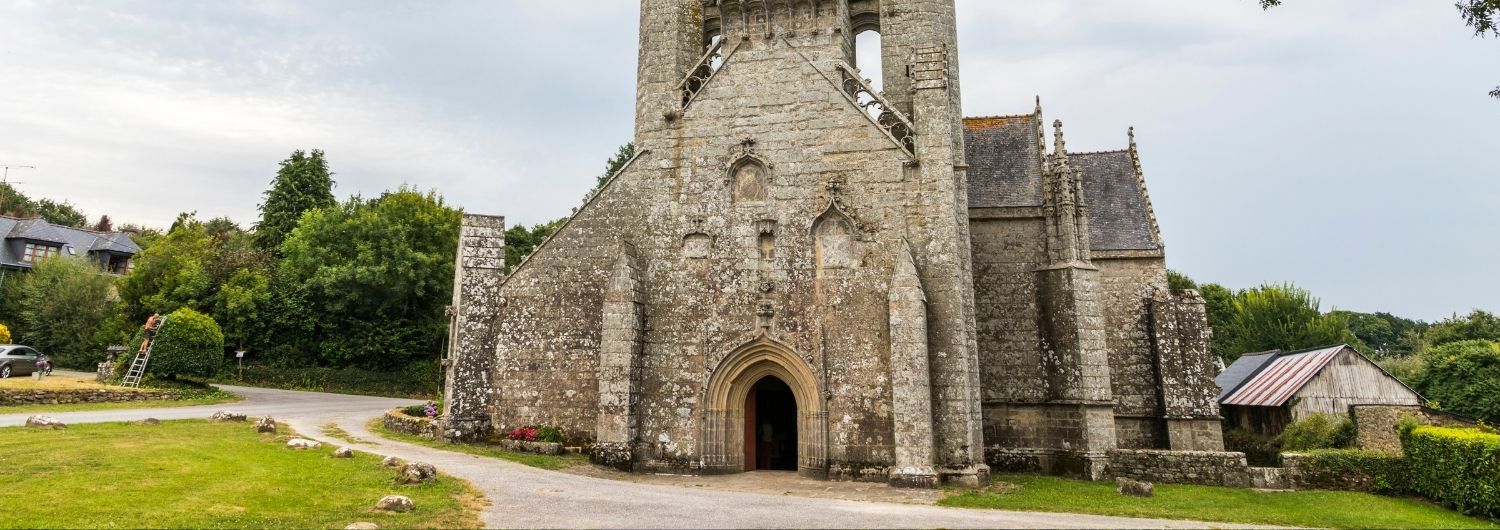
Le Faouët is home to one of Brittany's finest groups of wooden halls. The commune is also famous for its decorated chapels, notably Sainte-Barbe and Saint-Fiacre, perched in spectacular natural settings. For lovers of sacred art, this is a must-see excursion from the commune.
Lake Guerlédan
About 30 kilometers from Ploërdutthe Lake Guerlédan is Brittany's largest man-made lake.
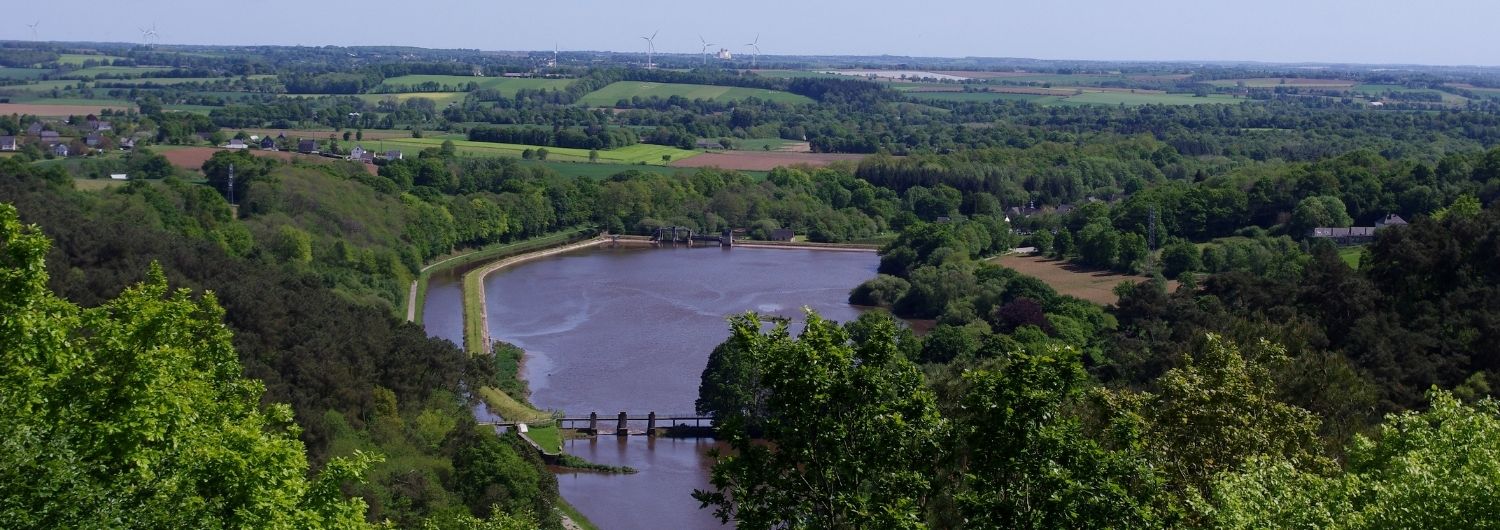
The 12 km-long Lac de Guerlédan offers water sports, hiking trails and exceptional panoramic views. For visitors, it's an ideal alternative to coastal beaches, with swimming, kayaking and forest trails.
Pontivy
A little further north-east of Ploërdut, Pontivy combines medieval heritage and Napoleonic town planning.
Pontivy is famous for both its 15th-century Château des Rohan and its imperial quarter with its straight streets. This architectural duality makes it a major cultural stopover for travelers staying in the town.
Quimperlé
About 40 minutes from Ploërdut, Quimperlé is a city of art and history located at the confluence of several rivers.
Quimperlé's charm lies in its Sainte-Croix abbey, cobbled streets and old houses. From Quimperlé, this tour takes you on a journey of discovery towards Finistère, in the authentic spirit of inland Brittany.
The Black Mountains
Visit Black Mountains in the vicinity of Ploërdut and are an emblematic feature of central Brittany.
Although they do not exceed 300 meters in altitude, they offer extensive panoramic views of the surrounding countryside. Hiking enthusiasts staying in the commune particularly appreciate these hills for their wooded paths and viewpoints.
Why radiate from Ploërdut?
Choose Ploërdut as a base for your stay allows :
Visit several départements (Morbihan and Finistère)
Enjoy quieter, more affordable accommodation
Alternating heritage, nature and gastronomy
Avoid the heavy tourist traffic on the coast
Thanks to its central location, the commune is an excellent base for exploring inland Brittany while enjoying the charm of an authentic rural commune.
Gîte Ploërdut: where to sleep in the heart of inland Brittany
Staying in a gîte in Ploërdut is one of the best ways to discover the commune in total immersion. Between unspoilt nature, religious heritage and rural tranquillity, self-catering accommodation allows you to take full advantage of the authentic charm of the area. Ploërdut.
What is a self-catering cottage?
Simple definition: A gîte is a self-contained furnished accommodation, rented out for short or medium-term stays, usually by the week.
Detailed explanation: In France, the gîte rural is often located in a renovated traditional house. It offers a fully-equipped kitchen, bedrooms, outdoor space and sometimes additional facilities (fireplace, garden, terrace). In Ploërdut, gîtes are generally set in old Breton stone longères, typical of the architecture of the inner Morbihan.
Why choose a gîte in Ploërdut?
Opt for a gîte in Ploërdut offers several advantages:
✔️ Absolute peace and quiet in the countryside
✔️ Close to hiking trails
✔️ Quick access to chapels and local heritage
✔️ More affordable rates than on the coast
Ploërdut, Ploërdut, far from the tourist pressure of Morbihan's coastal areas, offers excellent value for money. On average, a gîte in Ploërdut can cost between €350 and €700 per week, depending on the season and accommodation capacity.
Types of gites available in Ploërdut
À Ploërdut, We offer a wide range of gîtes to suit different traveler profiles:
Family cottages
Sleeps 4 to 8, ideal for vacations with family or friends. These gîtes in the commune often have a large garden and barbecue area.
Charming gites
Housed in restored stone buildings, these accommodations highlight the Breton rural heritage. They appeal to couples looking for authenticity and comfort.
Nature and ecological gîtes
Some Ploërdut homeowners have adopted an environmentally-friendly approach, with solar panels, natural materials and water management.
How can I book a gîte in Ploërdut?
Here are the recommended steps:
Consult specialized platforms (Gîtes de France, Abritel, Airbnb).
Check customer reviews.
Choose off-season periods to benefit from attractive rates.
Contact the owners directly for personalized advice on Ploërdut.
Direct booking allows you to exchange information with the owner without intermediaries.
By booking a gite in Ploërdut directly, you can get valuable information on the best hikes, chapel opening times or local events.
Gîte in Ploërdut or seaside accommodation?
| Criteria | Gîte in Ploërdut | Coastal accommodation |
|---|---|---|
| Calm | Very high | Variable |
| Price | Moderate | Often higher |
| Nature | Woodlands, forests | Beaches, ocean |
| Traffic | Low | Strong in summer |
Choose a gîte in Ploërdut, The serenity and authenticity of the region are more important than the hustle and bustle of the seaside.
Practical tips for a successful stay
Book early in high season (July-August).
A vehicle is essential for exploring the commune and surrounding area.
Take advantage of local markets to discover Breton products.
Combine your stay with visits to chapels and hiking trails.
Why is the gîte ideal for discovering Ploërdut?
The gîte offers total freedom of organization: flexible schedules, autonomy, local immersion. This means you can live to the rhythm of the Breton countryside, attend traditional pardons and enjoy the tranquility of the countryside.
Staying in a B&B in the commune transforms a simple visit into a truly local experience, close to the heritage and identity of inland Brittany.
History and origins of Ploërdut
The name Ploërdut comes from the Breton «ploe» (parish) and an ancient anthroponym, probably linked to a local saint. Like many Breton communes, its origins date back to the early Middle Ages.
Simple definition: Ploërdut's name means «parish of...», reflecting its religious past.
As early as the 6th century, Breton migrations from Great Britain structured the territory, and the commune developed around its parish, which was the social, religious and administrative center.
Case study: heritage enhancement
The commune has undertaken several projects to restore its chapels. For example, the renovation of the Notre-Dame-de-Crénénan chapel has boosted local tourist numbers.
Key figures :
Estimated increase of 15 to 20 % in heritage visits after restoration
Joint financial contribution from the Brittany Region and the département
This strategy illustrates how the commune is banking on cultural tourism to boost its local economy.
How to visit Ploërdut
Practical advice
Drive to Ploërdut (rural access recommended).
Allow a full day to explore.
Consult the town hall for chapel opening times.
Combine with a visit to Guémené-sur-Scorff.
Detailed explanation: To optimize your discovery of the commune, combine religious heritage in the morning and hiking in the afternoon.
To prepare a more extensive stay in Brittany, see also :
Economy and local life
The economy of Ploërdut is based on :
Agriculture
Craftsmanship
Local services
Like many communes in the Morbihan interior, the commune retains a traditional economic structure, reinforced by moderate tourism.
Population and key data
| Indicator | Approximate data |
|---|---|
| Population | ~1,200 inhabitants |
| Area | 75 km² approx. |
| Density | Low |
| Region | Brittany |
| Department | Morbihan |
Simple definition: Density corresponds to the number of inhabitants per km².
Detailed explanation: With a population density well below the national average (around 119 inhabitants/km² in France), the commune offers a sparsely urbanized environment, ideal for green tourism.
Comparison with other rural communities
| Criteria | Ploërdut | Coastal town in Morbihan |
|---|---|---|
| Density | Low | Seasonally high |
| Tourism | Cultural and green | Spa |
| Frame | Rural | Maritime |
| Traffic | Moderate | Strong in summer |
This comparison shows that the commune attracts a different kind of public, in search of authenticity and nature.
Frequently asked questions about Ploërdut
Where is Ploërdut?
Ploërdut is located in Morbihan, inland Brittany.
How many people live in Ploërdut?
Around 1,200 people live in the commune.
What to see in Ploërdut
The Notre-Dame-de-Crénénan chapel is a must-see.
Is Ploërdut suitable for hiking?
Yes, there are several hiking trails to discover the surrounding countryside.
When is the best time to visit Ploërdut?
Spring and summer are ideal for enjoying the scenery.
Conclusion
Ploërdut represents the very essence of rural Brittany. With its listed religious heritage, unspoilt nature and cultural authenticity, the commune offers a different experience from coastal tourism. To visit the commune is to plunge into Breton history and discover a discreet but rich territory.
To deepen your historical knowledge, you can consult the encyclopaedic page dedicated to this Breton commune on Wikipedia : https://fr.wikipedia.org/wiki/Ploërdut.
Useful links to visit Ploërdut
To organize your stay in Ploërdut, Here is a selection of official and practical resources. These links will help you prepare your discovery of the commune and its surroundings.
Corporate information
Official website of the town hall of Ploërdut
👉 https://www.ploerdut.fr
(Local news, events, practical information)Communauté de communes du Pays du Roi Morvan
👉 https://www.paysroimorvan.com
(Cultural calendar, heritage, hiking)Department of Morbihan
👉 https://www.morbihan.fr
(Tourism, heritage, local initiatives)
Tourism and heritage
Pays du Roi Morvan Tourist Office
👉 https://www.tourismepaysroimorvan.com
(Tours, accommodation, activities)Mérimée database - Historical monuments
👉 https://www.pop.culture.gouv.fr
(Official chapel fact sheets)Official website of the region Brittany
👉 https://www.bretagne.bzh
(Regional information, major sites to visit)
Hiking and nature
Visorando
👉 https://www.visorando.com
(Trails)IGN - Géoportail
👉 https://www.geoportail.gouv.fr
(Detailed maps to explore)


