

Introduction
In the current context of tourism and seasonal rental, understand the operation d’Airbnb pour les propriétaires has become essential for all owners wishing to make the most of their property. In 2026, the short-term rental market will be undergoing significant change, with increasing competition and new expectations from travelers, both in France and in the most attractive regions.
This model is based on a seemingly simple system: connecting hosts and travelers via a digital platform. However, behind this simplicity lies a more complex environment integrating visibility algorithms, dynamic pricing rules and automated reservation management.
Today, this rental method attracts many individuals thanks to its ease of access and revenue potential. According to several industry studies, over 60 % of hosts in Europe use Airbnb as their primary booking channel. However, this popularity raises questions about actual profitability, not least because of the associated commissions and fees.
Faced with these challenges, it is essential to analyze the operation of the platform in a neutral and comprehensive way, highlighting both its advantages and limitations. More and more owners are turning to alternative solutions, such as direct booking platforms like cparici.com, to cut costs and regain control over their business.
Understanding how Airbnb works for homeowners
How Airbnb works for homeowners refers to the process by which a private individual rents out a property in short-term rental via an online platform. In practical terms, Airbnb acts as an intermediary, bringing hosts and travelers together, while facilitating booking and payments.
Find out more about how otas work, read our dedicated article here!
This model is based on a collaborative economy, where anyone can offer their property without going through a traditional agency. This accessibility largely explains the platform's success with private individuals.
How the platform works
The system is based on a simple interface, but sophisticated inner workings. Once an ad has been published, it appears in the search results according to several criteria: price, photo quality, customer reviews and availability.
The algorithm plays a central role. It favors the best-performing ads, which means that an owner must regularly optimize his offer to remain visible. This logic is essential when managing a vacation rental.
The main players
The model is based on three players:
- The owner (host) : he offers his home
- The traveler he makes the reservation
- The platform it secures exchanges
This operation relies heavily on the trust. The reviews left after each stay directly influence the reputation and ranking of the ads.
A guest's journey
To rent a property, the owner generally follows several steps:
- Profile creation
- Publication of the advertisement
- Availability management
- Receiving reservations
- Welcoming travellers
- Payment after your stay
This course is designed to be accessible, but requires regular involvement to achieve good results.
Detailed explanation of the model
The Airbnb model is part of the collaborative economy, which enables private individuals to monetize their real estate. According to industry data, several million hosts are active worldwide, with steady growth since 2020.
However, this system also relies on a commission-based business model. The platform takes a percentage of each booking in exchange for services such as visibility, secure payments and customer support.
Today, many owners are complementing this model with solutions from direct booking, to limit costs and improve profitability over the long term.
How to publish an effective ad
Creating a host account
The first step in renting a property is to create an account on the platform. This involves entering personal details, verifying your identity and setting up payment options. This phase is essential, as it guarantees exchange security and boosts the confidence of future travelers.
A well-completed profile plays a decisive role. Ads with a detailed account, complete with photo and clear presentation, inspire greater confidence and generally achieve better results in terms of bookings.
Writing the ad
The quality of the ad is a key factor in the success of a rental. A clear, precise description helps you stand out in a highly competitive environment.
An effective ad includes :
- an attractive title
- a detailed description of the accommodation
- equipment list
- residence rules
We recommend the use of vocabulary related to the seasonal rental to improve visibility in internal search results. Terms like “near beach”, “downtown” or “panoramic view” can make all the difference.
Photos and appeal
Photos are often the first element consulted by travelers. Professional-quality visuals can significantly improve booking rates.
Best practices include :
- natural light
- tidy rooms
- wide angles
- visual consistency
According to several industry studies, well-presented photos can increase revenues by as much as 30 to 40 %. Visual appeal is therefore an essential lever for enhancing the value of a property.
Pricing
Price has a direct influence on visibility and occupancy rates. Appropriate pricing helps attract more travelers while maintaining profitability.
To optimize your rates, we recommend :
- analyze local market prices
- adjust according to seasonality
- anticipating local events
- avoid total dependence on automatic tools
The pricing tools offered by platforms can be useful, but they tend to favor competitive prices. A personalized strategy is therefore preferable.
How to: key steps for optimizing your ad
Here is a summary of the most important steps for publishing a successful ad:
| Step | Action | Impact |
|---|---|---|
| 1 | Create a complete profile | Builds confidence |
| 2 | Write a detailed ad | Improves visibility |
| 3 | Add quality photos | Increases clicks |
| 4 | Adjusting prices | Optimize bookings |
| 5 | Quick answer | Favors ranking |
This table summarizes the most effective practices observed in the best-positioned articles, with a focus on concrete performance optimization.
Alternatives to Airbnb for homeowners
Major competing platforms
Even though Airbnb dominates the short-term rental market, several competing platforms exist and offer different models. These alternatives enable owners to diversify their sources of income.
Among the best-known:
- Booking.com : widely used for tourist rentals, with high international visibility
- Abritel / Vrbo family rentals and long-term stays
- Leboncoin generalist platform with a strong local audience
These solutions generally operate with commissions similar to or slightly lower than those of’Airbnb, but are still based on an intermediate model.
Commission-free platforms
Faced with the limitations of traditional models, new solutions are emerging, based on a fixed subscription fee. In contrast to Airbnb, These platforms do not charge commission on bookings. These include, of course cparici.com, Amivac, PAP vacations, LVP direct, village de gîtes, or pour-les-vacances.com
The principle is simple:
- annual subscription fee
- total freedom on pricing
- no transaction fees
Platforms like cparici.com follow this logic, with affordable rates (around €39/year per ad). This model is attracting more and more owners looking to maximize their profitability.
The advantages of direct booking
Today, direct booking represents a strategic alternative to Airbnb. It allows owners to regain control of their business.
The main advantages are :
- no commission
- direct customer relationship
- loyalty opportunities
- better control of brand image
However, this approach requires a more active strategy, particularly in terms of communication and visibility.
Model comparison
Each solution has its advantages and limitations. Here's a simple summary:
| Model | Benefits | Disadvantages |
|---|---|---|
| Airbnb | High visibility, simplicity | High commissions |
| Classic platforms | Wide audience | Significant costs |
| Direct booking | Maximum profitability | Requires more effort |
This table shows that the choice depends on the owner's objectives: booking volume or margin optimization.
Towards a multi-platform strategy
Today, the most successful owners combine several solutions. Airbnb is often used as an acquisition channel, while other platforms or direct booking help improve profitability.
This strategy has several advantages:
- diversification of revenue sources
- risk reduction
- greater financial stability
It corresponds to new market practices in 2026.
Market trends
The vacation rental market is evolving rapidly. If Airbnb remains a key player, the alternatives are gaining in popularity, not least thanks to their more owner-friendly business model.
The current trend is towards hybrid solutions, combining visibility and independence.
How to book
The booking process
In the airbnb owner operation, The booking process is designed to be fast and secure, for both the owner and the traveler. Once the advert is online, travelers can check availability and make a reservation request or book instantly.
There are two main modes:
- Instant booking the stay is automatically validated
- Booking with validation the owner accepts or refuses
This system allows great flexibility, but also implies a high level of responsiveness on the part of the host.
Request validation
When a traveler sends a request, the owner generally has 24 hours to respond. A rapid response improves the conversion rate and visibility of the ad.
For day-to-day management, we recommend :
- check messages regularly
- respond quickly to requests
- maintain a high acceptance rate
These elements have a direct influence on search rankings.
Calendar management
The calendar is a central tool in rental management. It allows you to define availability, block certain dates and avoid double bookings.
Good calendar management is based on :
- regular updates
- synchronization with other platforms
- anticipation of peak demand periods
Owners using multiple distribution channels need to be particularly vigilant to avoid booking errors.
Communication with travelers
Communication plays an essential role in the customer experience. Before, during and after the stay, communication helps to reassure travelers and anticipate potential problems.
Best practices include :
- send a welcome message
- provide practical information (access, rules, opening hours)
- remain available when needed
Smooth communication improves evaluations and encourages future bookings.
Payment and confirmation
Once the reservation has been confirmed, payment is made via the platform. The owner generally receives the funds 24 hours after the traveler's arrival.
This system offers several advantages:
- secure transactions
- payment control
- easy management
However, it also implies a dependence on the platform for financial management.
Global experience and optimization
The booking process doesn't stop at validation. The overall experience has a direct influence on reviews, and therefore on ad performance.
To optimize results, we recommend :
- deliver the experience as advertised
- keep your home clean and well-equipped
- solicit positive reviews
These elements help to improve visibility and profitability over the long term.
The benefits of Airbnb for homeowners
Immediate international visibility
One of the main advantages of’Airbnb lies in its ability to offer global visibility to property owners. As soon as a property is advertised online, it can be viewed by millions of travelers all over the world.
This international reach significantly increases booking opportunities, especially in tourist areas. For an owner, using Airbnb This means benefiting from an audience that would be difficult to reach on your own, even with a personal site.
A secure payment system
The payment system proposed by Airbnb is often considered a strong point. Transactions are secure, limiting the risk of non-payment or fraud.
Owners generally receive their payment 24 hours after travelers' arrival. This mechanism reassures guests, guaranteeing reliable, centralized financial management.
A powerful notification system
The assessment system is a pillar of the model Airbnb. After each stay, travelers and guests can leave a review.
These assessments play an essential role:
- they boost confidence
- they influence future customers' decisions
- they improve ad visibility
A good score can therefore become a real performance driver.
Integrated insurance and assistance
The platform also offers guarantees for owners, including insurance in the event of damage. This feature, called AirCover, offers a degree of security for guests.
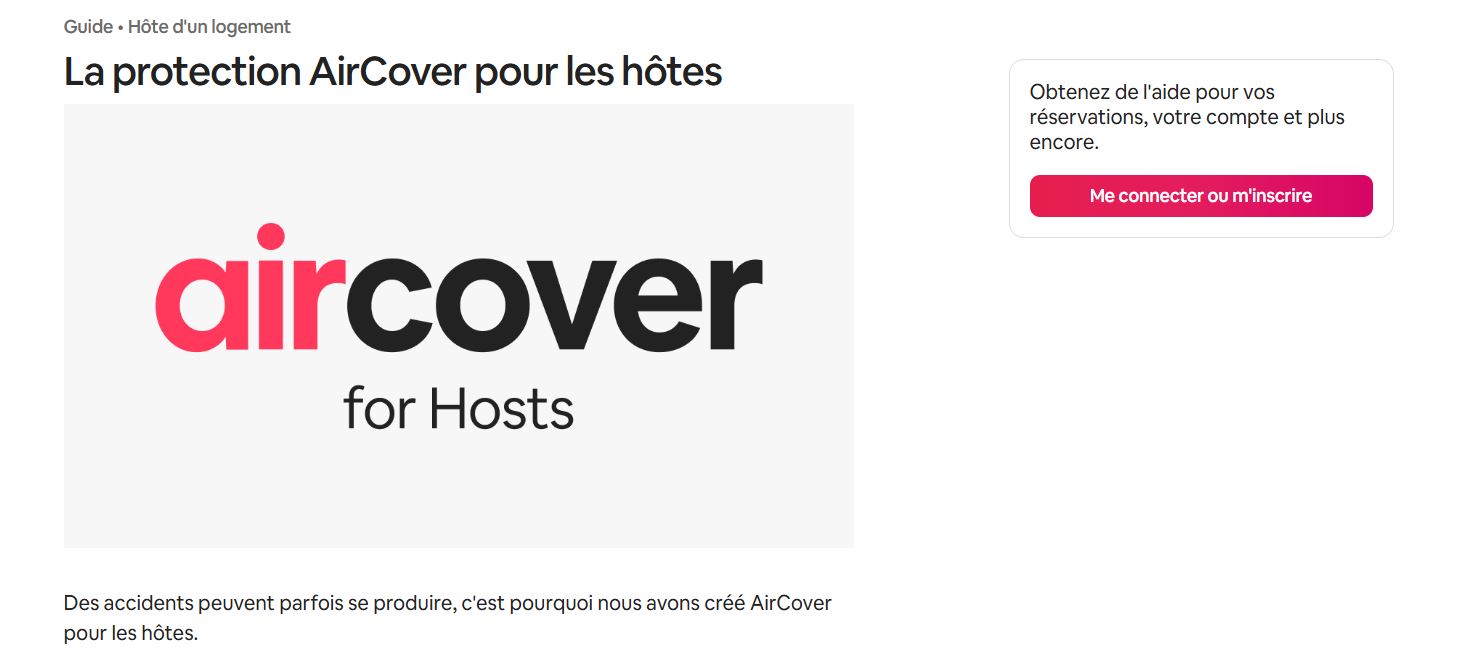
Cependant les avis divergent sur l’assurance d’Airbnb, comme l’explique le site lodgify:
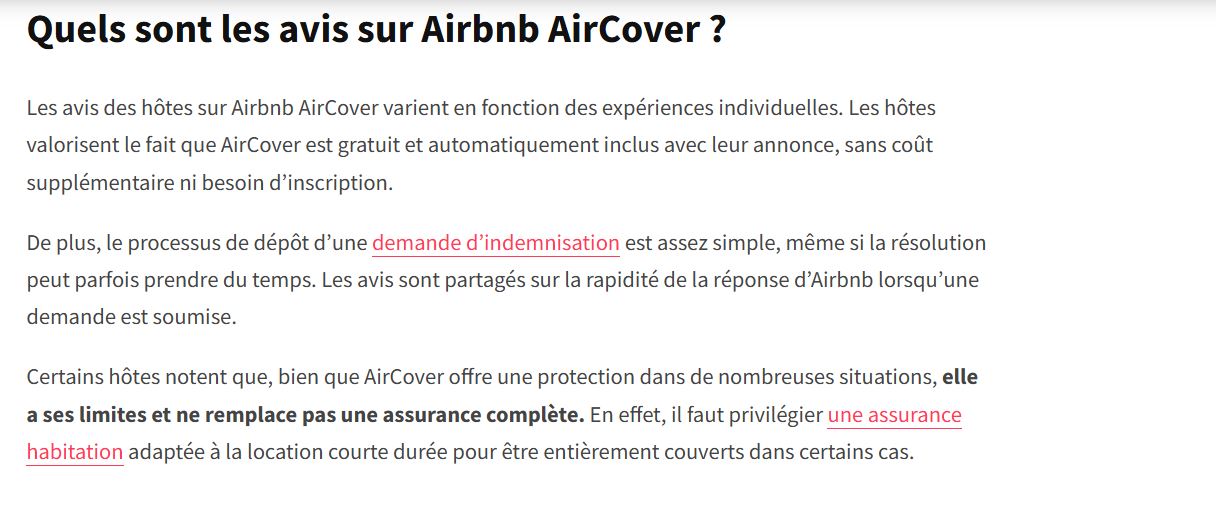
Additional information, Airbnb has a customer service department that can be contacted in the event of a problem, which is a major advantage for first-time owners.
The disadvantages of Airbnb for homeowners
Commissions that reduce profitability
One of the main weaknesses of the Airbnb concerns the fees applied to each booking. Although the platform claims a commission of around 3 % on the host side, the reality is often more complex.
In many cases, overall costs (including those paid by travelers) can reach 15 % to 20 % of the total price of the stay. This has a direct impact on ad competitiveness and overall profitability.
By way of comparison, some direct booking offer a fixed subscription fee, with no commission on bookings. For example, platforms like cparici.com allow you to publish an ad for around €39 per year, which radically changes the cost structure.
Has Airbnb increased its commissions recently?
Model evolution Airbnb raise many questions among homeowners. According to an analysis published by Hostcare France, the platform has gradually modified its fee system, notably with the so-called “simplified fees” model.
“Airbnb tends to transfer a larger share of commissions to hosts in some cases.”
This change means that some owners can now support up to 15 % commission directly, notamment lorsqu’ils utilisent des outils de gestion ou des canaux professionnels. Cette évolution impacte la rentabilité et pousse de plus en plus d’hôtes à s’interroger sur leur stratégie, comme l’explique le site Hostcare France:
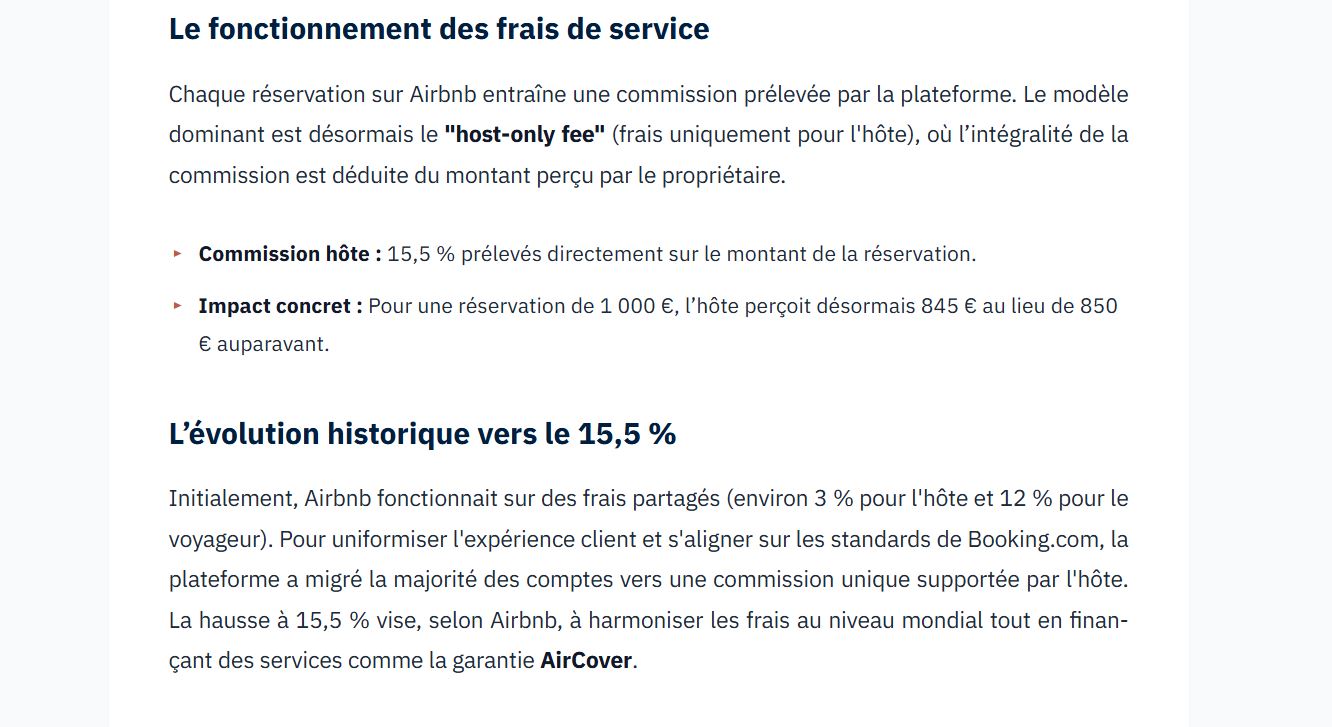
Against this backdrop, many owners continue to use Airbnb for its visibility, while developing alternative solutions such as direct booking to limit the impact of costs.
Platform dependency
Use Airbnb also implies a strong dependence on its ecosystem. Ad visibility depends entirely on the algorithm, which can change without notice.
A change in classification or a drop in performance may result in :
- a decrease in the number of reservations
- loss of income
- difficulty stabilizing your business
This dependence limits the owner's control over his business, unlike strategies that include a personal site or direct channels.
An evolution of the model far from the initial vision?
When Airbnb was launched in San Francisco in 2008, with a simple concept: Brian Chesky and Joe Gebbia rent out inflatable mattresses in their apartments to help travelers find accommodation during a jam-packed conference. The idea, dubbed “Air Bed & Breakfast” at the time, was based on a fundamental principle: to create links between people and make accommodation accessible to all.
Over the years, with the arrival of Nathan Blecharczyk and the rapid growth of the platform, this small-scale model has evolved into a global enterprise. The introduction of structured services, the optimization of algorithms and the increase in the number of investors have gradually led to a more industrial approach.
Today, the operation of’Airbnb seems to be moving away from this initial vision based on sharing. The professionalization of hosts, rising costs and standardization of practices are now bringing the platform closer to the codes of the classic hotel business. This change reflects a natural evolution in the market, but perhaps also highlights a gap between the original spirit and today's reality.
Pressure on prices
Auto-pricing tools often encourage lower prices to maximize bookings. This can lead to price race between hosts.
In this context, some owners are seeing a gradual decline in their revenues, despite a good occupancy rate. Finding the right balance between volume and profitability becomes a major challenge.
Increasing rules and constraints
The use of’Airbnb is also accompanied by increasingly strict regulatory constraints. In many cities, short-term rentals are governed by local regulations:
- limited number of overnight stays
- reporting obligation
- administrative authorizations
These constraints can complicate management and limit revenue potential.
Indirect customer relations
Another disadvantage that is often underestimated is the relationship with travellers.. The platform acts as an intermediary, limiting direct contact.
According to Smoobu, customer details are no longer permitted:
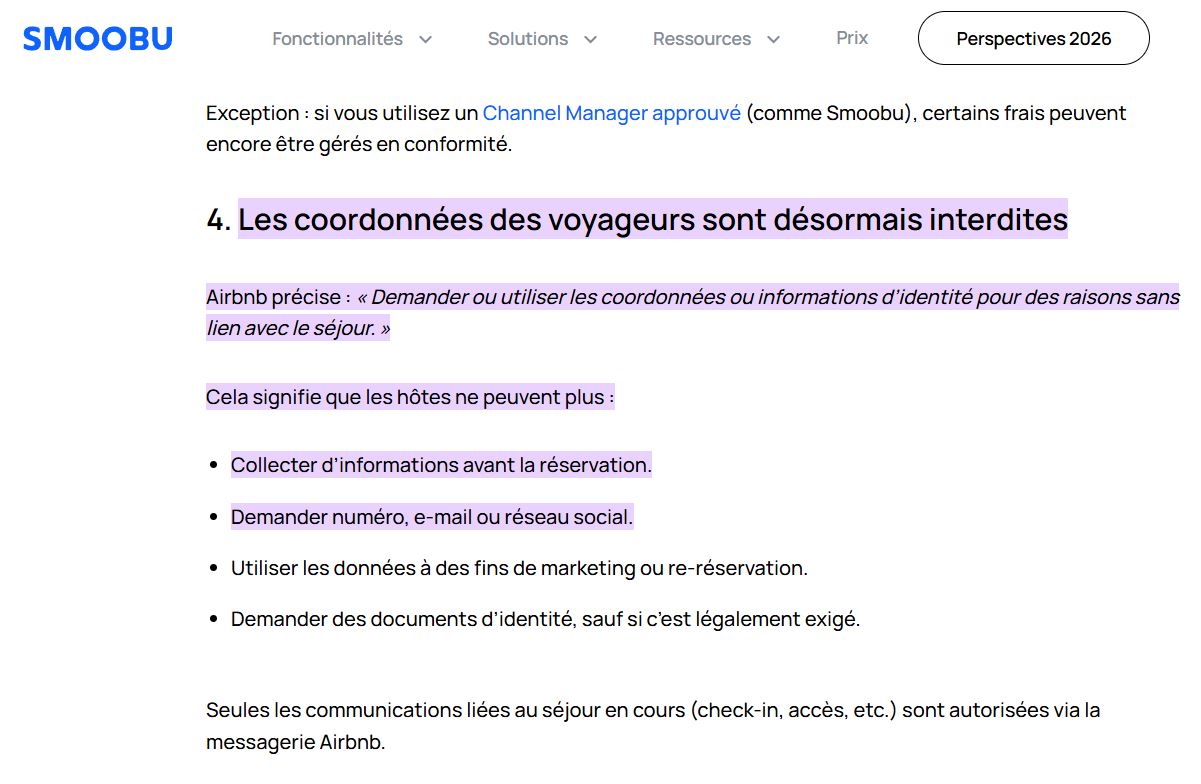
This means that :
- it's hard to build customer loyalty
- exchanges are supervised
- customer data remains controlled by the platform
Conversely, direct booking solutions allow us to create a more personalized relationship, thanks in particular to tools such as the sponsorship or the strategies of social networks.
Towards channel diversification
Faced with these limitations, more and more owners are adopting a hybrid strategy. The aim is to retain the visibility offered by the major platforms while developing alternative channels: cparici.com, personal website, etc.
This approach enables :
- reduce commissions
- increase margins
- secure your business
In this context, commission-free platforms and direct solutions are gaining in popularity, especially among experienced owners.
Commission comparison table
Comparison of the main platforms
To fully understand the economics of vacation rentals, it's essential to compare the fees charged by different platforms. The model Airbnb is based on variable commissions, while other solutions offer more advantageous alternatives.
Here is a clear comparative table based on data observed in the best referenced articles:
| Platform | Type of charge | Total commission | Impact on price |
|---|---|---|---|
| Airbnb | Commission + travel expenses | 15 to 20 % | Higher price for the customer |
| Booking | Single commission | 15 % approx. | Owner-supported |
| Abritel / Vrbo | Commission or subscription | 8 to 12 % | Variable |
| Direct platforms (e.g. cparici) | Annual subscription | ~39 €/year | 0 % commission |
Actual margin analysis
The’Airbnb may seem attractive at first glance, but commissions have a direct impact on profitability. Indeed, the higher the fees, the higher the final price for the traveler, which can reduce the competitiveness of the ad.
Let's take a simple example:
- Price per night : 100 €
- Platform fee: up to €20
- Actual net income: about €80
Conversely, with a commission-free solution, the owner retains the full amount of the booking, which significantly improves the margin.
Impact on long-term profitability
Over several months, the difference becomes considerable. A home generating €20,000 in annual sales can lose up to :
👉 3,000 to €4,000 in commissions
With a system based on a fixed subscription, this cost becomes marginal. That's why many owners are now looking to diversify their booking channels.
Airbnb vs. direct booking
The model Airbnb is still a powerful tool for attracting new customers, thanks in particular to its international visibility. However, it is increasingly used as an acquisition channel rather than a single solution.
Direct booking offers several advantages:
- no commission
- direct customer relationship
- loyalty opportunities
- better price control
Platforms such as cparici.com also offers complementary tools such as :
- a system of sponsorship
- a strategy based on social networks
- targeted visibility
Towards a hybrid model
Today, the trend is towards a mixed strategy. Owners are using Airbnb to generate traffic, then develop direct channels in parallel to improve profitability.
This approach makes it possible to :
- secure reservations
- reduce costs
- optimize revenues
It corresponds to the new practices observed among the best-performing owners in 2026.
Airbnb FAQs for homeowners
How does Airbnb work for a homeowner?
The operation of’Airbnb is based on bringing hosts and travelers together via an online platform. The owner posts an ad, defines his rates and manages his availability. The platform then takes care of booking and payment, in exchange for a commission.
What fees does Airbnb charge?
Fees on Airbnb vary according to the parameters chosen. In general, the platform charges around 3 % on the host side, but overall costs can reach 15 to 20 % including those paid by travelers. These costs have a direct impact on profitability.
Is it profitable to rent on Airbnb in 2026?
Rent on Airbnb can be profitable, especially in tourist areas. However, profitability depends on several factors:
- occupancy rate
- housing quality
- pricing strategy
- commissions
Many owners are now supplementing with commission-free solutions to improve their margins.
Can you avoid Airbnb commissions?
It's hard to avoid charges altogether on Airbnb, They are part of the business model. On the other hand, it is possible to reduce their impact by diversifying channels, notably with direct booking.
What's the best alternative to Airbnb?
There is no single ideal alternative to Airbnb, But there are several options, depending on your objectives:
- classic platforms (Booking, Abritel)
- local solutions
- direct booking
Commission-free platforms, such as cparici.com, are particularly interesting for maximizing revenue.
Should I use several platforms?
Yes, using multiple channels is often recommended. Airbnb peut servir à attirer de nouveaux clients, tandis que d’autres solutions permettent d’optimiser la rentabilité et de réduire les coûts. Par exemple, une bonne stratégie est d’ajouter son annonce sur cparici.com, pour un tarif ultra-accessible 39 euros par an sans engagement.
How can you increase your short-term rental income?
To optimize your income, we recommend :
- improve ad quality
- adjust prices regularly
- get positive reviews
- diversify channels
This strategy means you don't have to rely solely on’Airbnb.

