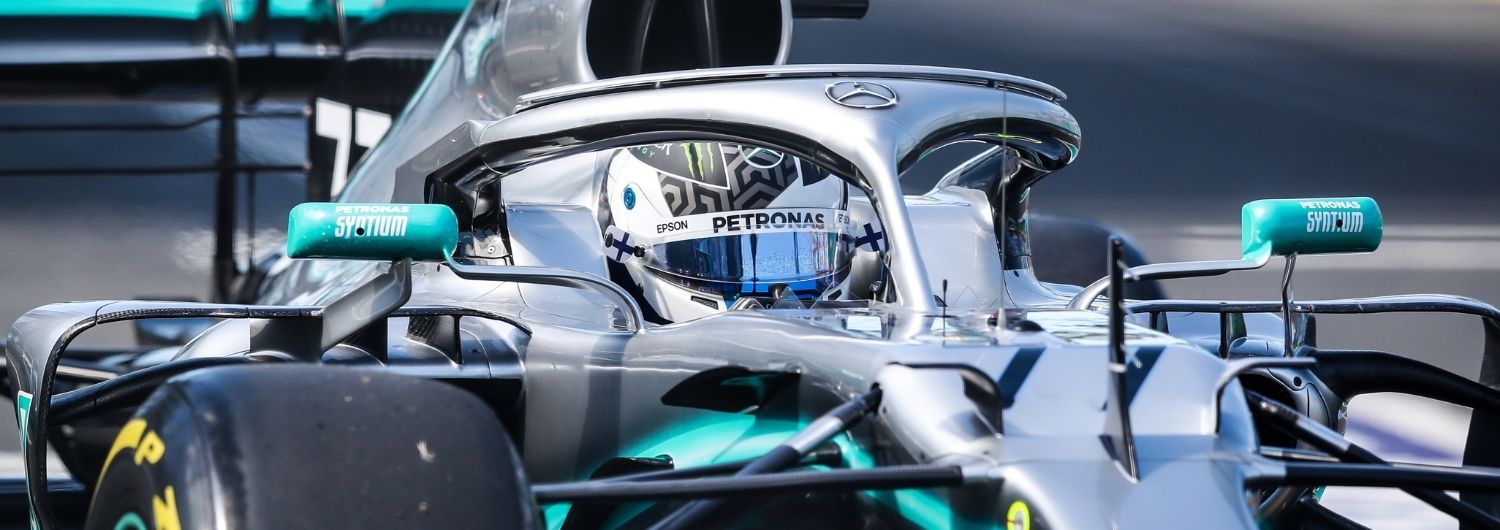
Visit Formula 1 is the ultimate in motorsport a world championship combining speed, strategy, technology and passion. From its very beginnings in 1950, the Formula 1 has captured the hearts of fans and influenced the entire automotive industry. Today, the championship embodies a global spectacle in which every driver and manufacturer competes for victory.
The history of Formula 1
Visit Formula 1often referred to as F1, was born in 1950 under the aegis of the Fédération Internationale de l’Automobile (FIA). The sport quickly became the scene of legendary rivalries, technological breakthroughs and human exploits.
Origins and official birth in 1950
Visit Formula 1 has its roots in the Grand Prix races of the 1920s and 30s, but it was in 1950 that the first world championship was organized, with the first race held at Silverstone. From then on, the foundations were laid: high-performance single-seaters, precise technical regulations, and a championship contested in different countries.
At that time, legendary brands such as Alfa Romeo, Ferrari or Maserati impose their dominance, while pilots like Giuseppe Farina (first world champion) or Juan Manuel Fangio make their mark on the first seasons.
Major technical developments
Since its creation Formula 1 has undergone major changes. The 1960s saw the introduction of rear engines, a revolution signed Lotus. In the 1980s, turbocharged engines exploded in performance, achieving power ratings in excess of 1,000 hp.
The major turning point came in the 2010s with the arrival of the V6 turbo hybrid enginescombining power and energy efficiency. In 2026, a new regulation promises a 50 % reduction in fossil fuel consumption thanks to sustainable fuels.
Milestones in history
1976 duel between Lauda and Hunt, immortalized in the film Rush
1994 Ayrton Senna's tragic death at Imola
2004 Schumacher dominates Ferrari (13 wins in one season)
2021 Epic duel between Verstappen and Hamilton sealed in Abu Dhabi
2024 Verstappen takes his 4ᵉ consecutive title with Red Bull
Each era of the Formula 1 is marked by technical innovations, human tragedies and races that have become legendary.
The greatest Formula 1 drivers
In the world of Formula 1drivers are much more than just drivers. They are elite athletes, endowed with extraordinary reflexes, extraordinary mental strength and sharp strategic instincts. Their talent has forged the legend of the discipline.
Legends of the discipline
Among the mythical figures of the Formula 1three names dominate the story:
Michael Schumacherwith its 7 world titlesdominated the 2000s with Ferrari. His rigor, consistency and racing intelligence remain an absolute benchmark.
Ayrton Sennathree-time world champion, is considered by many to be the greatest driver of all time. His flamboyant style, his commitment in the rain, and his rivalry with Alain Prost in the 80s and 90s.
Alain Prostnicknamed "The Professor", won 4 titles thanks to his methodical approach and exemplary race management.
The stars of the current generation
Lewis Hamilton equalled Schumacher with 7 world titlesall won with McLaren and then Mercedes. His commitment to diversity and his longevity make him an emblematic figure.
Max Verstappencrowned in 2021, 2022, 2023 and 2024, dominates the modern era with Red Bull. At just 27, he has already racked up over 60 victories, and remains the favourite for 2025.
Fernando Alonsoa two-time world champion, still impresses in 2025 with his longevity and ability to compete at over 40 years of age.
Records and honours
Here are a few emblematic Formula 1 :
Record
Driver
Global titles
Schumacher, Hamilton (7)
Grand Prix victories
Hamilton (103)
Pole positions
Hamilton (104)
Best lap
Schumacher (77)
Early starts
Verstappen (17)
Each generation of drivers has shaped the history of the Formula 1 through exceptional performances, legendary duels and a constant quest for perfection.
Formula 1: Buy tickets Formula 1 on the official website
To watch a Grand Prix live, it is essential to purchase Formula 1 tickets via the official website Formula1.comon the F1® Ticket Store. This is the only reliable channel for buying authentic tickets, with secure payment, customer support and a variety of welcome options, in compliance with the formal terms of sale..
Why book via the official website?
Tickets sold via unauthorized platforms entail risks of fraud or disability. The organizers advise against unofficial resale sites that do not respect the conditions of sale, exposing you to complications..
Formula 1:Ticket prices and types
On the official website, you can choose between :
General Admission (free access): perfect economical options for exploring the circuit.
Grandstand seating : located in prime locations such as start/finish, Becketts or Luffield.
Hospitality and Paddock Club™ packages (via F1 Experiences): VIP access, top-of-the-range catering, paddock, bringing you closer to the drivers and teams.
Concrete examples of rates
For the British Grand Prix at Silverstone (July 4-6, 2025), tickets start at ~£179 (Friday or Saturday) and go up to £349 for the complete package, depending on stand position.
Visit Miami GPbasic tickets start at around 65 $and campus passes are available from 350 $ for three days.
À Las Vegaspacks 3 days start at around 834 $ (GA) or 1115 $ (tribune), while hospitality goes up to 2827 $.
Tips for ticket buyers
Buy as soon as possibleWe're always on the lookout for new ideas, as places often sell out in a matter of hours.
Choose official ticket offices such as Formula1.comor authorized distributors such as Grand Prix Events or Tickets.GPguaranteeing reliability and secure delivery.
Avoid uncertified resales to guarantee access on the big day.
Iconic teams and manufacturers
Visit Formula 1 would be nothing without its legendary stablesEach team embodies a technical philosophy, a unique history and a perpetual quest for performance. Each team embodies a technical philosophy, a unique history and a perpetual quest for performance.
Ferrari, McLaren, Mercedes: the great dynasties
Scuderia Ferrarifounded in 1950, has been the only team present since the first season of Formula 1. With 243 victoriesWith 16 constructors' titles and legends like Schumacher, Lauda and Vettel, Ferrari is an absolute symbol of the sport.
McLarenthe second most successful team, dominated the 1980-90s with Senna, Prost and Hakkinen. Its historic partnership with Hondathen Mercedeshas marked many technical eras.
Mercedes-AMG Petronasonce again a dominant force from 2014, revolutionized hybrid F1 with Hamilton and Rosberg, winning 8 manufacturers' titles in a row between 2014 and 2021.
Modern challengers: Red Bull, Aston Martin, Alpine
Red Bull Racingborn in 2005, turned the hierarchy on its head with Sebastian Vettel (2010-2013), then Max Verstappen. Thanks to its advanced aerodynamics designed by Adrian NeweyIt dominates the current era.
Aston Martinformerly Racing Point, has been on the rise since the arrival of Fernando Alonso. Their ambitious project is backed by a new high-tech factory and the support of Lawrence Stroll.
Alpine F1 TeamRenault heiress, represents France in Formula 1. It aims to consolidate its position at the top before the engine reform for 2026where hybrid power units will be redesigned around electrification and sustainable fuels.
Future challenges and plateau development
In 2026, new teams like Audi will make their entrance, marking a ecological and technological transition major. The engine rules will evolve towards a greener motorization, with 50 % of electric power and the introduction of sustainable biofuels 100 %.
In addition, the capped costs imposed by the FIA since 2021 tend to rebalance the gridThis has made it possible for mid-table teams such as Haas, Williams or Sauber (future Audi) to regain their competitive edge.
The legendary Formula 1 circuits
Each Formula 1 tells a story. Whether winding through the streets of a principality or stretching out on vast, high-speed straights, these circuits are the very DNA of the championship. Some have become emblematic, blending tradition, danger and prestige.
Monaco, Monza, Silverstone: the temples of speed
Monaco is without doubt the most famous Grand Prix. Raced through the narrow streets of Monte Carlo since 1929, the course demands the utmost precision. Winning here is a technical and strategic feat, and confers a unique prestige.
MonzaItaly, is the "temple of speed". This historic circuit, which has been in operation since 1950, is famous for its long straights, where single-seaters brush up against 360 km/h. It's also the sacred garden of the Ferrari tifosi.
Silverstonethe birthplace of F1, hosted the very first world championship race. It's a fast, technical circuit, a symbol of the past and future of racing. Formula 1.
The French Grand Prix and the Paul Ricard circuit
Visit French Grand Prixwhich has been absent from the calendar several times, is back in the spotlight between 2018 and 2022. circuit Paul Ricardlocated in Le Castellet. Despite its technical layout, it has sometimes been criticized for its lack of spectacle.
Today, France is no longer on the 2025 calendar, but discussions about a return (notably to Magny-Cours) are still ongoing. This circuit remains a national icon motorsport.
A global and geopolitical calendar
The current Formula 1 includes 24 races on every continent. Recent tours include Jeddah (Saudi Arabia), Miami or Las Vegas are evidence of the internationalization of the sport. Behind this expansion lies a political and business strategy Strengthen F1's presence in emerging markets.
Some countries even use Formula 1 as a tool to promote their economy. soft power (such as Qatar or Azerbaijan), sparking controversy over the ethics of geographical choices.
Formula 1 rankings: rules and regulations (2025 season)
Visit Formula 1 ranking is based entirely on a points system awarded at each Grand Prix and Sprint. Since 2010, F1 has followed a well-established scale, updated for the 2025 season to improve fairness and commitment at all levels of the field.
Grand Prix points scale
In the main events, the Top 10 ranked drivers receive points according to this scale: 1ᵉʳ = 25, 2ᵉ = 18, 3ᵉ = 15, 4ᵉ = 12, 5ᵉ = 10, 6ᵉ = 8, 7ᵉ = 6, 8ᵉ = 4, 9ᵉ = 2and 10ᵉ = 1 point. Please note: the bonus point for best lap has been abolished in 2025, potentially removing 24 points total over a 24-race season.
F1 Sprint scale
During weekends with a Sprintthe Top 8 drivers score points in the following order: 1ᵉʳ = 8, 2ᵉ = 7, 3ᵉ = 6, 4ᵉ = 5, 5ᵉ = 4, 6ᵉ = 3, 7ᵉ = 2 and 8ᵉ = 1 point.
Major scale changes for 2025
A significant reform now allows classified drivers to 11ᵉ and 12ᵉ get points : 11ᵉ = 2 points, 12ᵉ = 1 point. The scale for places 8 to 10 has also changed: 8ᵉ = 5, 9ᵉ = 4, 10ᵉ = 3 points. This change is intended to encourage greater competitiveness for medium-sized teams and drivers outside the top five.
Regulatory details and bonus point elimination
Removing the point for best lap is motivated by ethical and strategic concerns: some drivers resorted to this tactic even when not racing for the podium, disrupting races and rankings.. Eliminating this point makes the classification more transparent and reduces artificial manoeuvres at the end of the race.
Final ranking and tie-breaking
The drivers' championship is decided by adding up the points earned throughout the season. In the event of a tie, the driver with the most victories wins; if the number is the same, podium places (second, third, etc.) are compared until the tie is broken.. The ranking of manufacturers adds up the points of each team's two drivers.
Concrete example (2025 season)
The 2025 season includes 24 Grand Prix and 6 Sprints to the calendar. Without the bonus point, the maximum possible score for a driver is lower than in previous seasons: previously a dominant driver could score 43 points in a weekend (25+8+1), but now the ceiling is 33 points (25 + 8).
Why is this system relevant?
It rewards regularity over the whole season.
It also encourages Sprint performancenow valued.
It helps to balance the impact of mid-table teams by widening the distribution of points up to 12ᵉ place.
Last but not least, it makes the ranking clearer by eliminating tactical bonuses.
In short, the Formula 1 ranking in 2025 combines a classic Grand Prix scale (top 10), Sprint points (top 8) and an avant-garde extension to 12ᵉ place for main races. The removal of the bonus point and the broadening of points reinforce the fairness and universality of the stakes, while preserving the spectacle.
Formula 1 race operation and strategies
A race of Formula 1 is much more than a simple clash of speeds. It's based on a structured weekend, meticulous resource management and strategic reading of every moment. Engineering, weather, psychology and regulations all play a key role.
The format of a Grand Prix weekend
Each Grand Prix takes place over three days:
Friday Two free practice sessions (FP1 and FP2) to test set-up, tires and track conditions.
Saturday final practice session (FP3), followed by the qualifications. These determine the starting grid with a three-phase format (Q1, Q2, Q3), gradually eliminating the slowest drivers.
Sunday the race usually between 300 and 305 km (approx. 1h30-2h running time). The standing start is a crucial strategic moment.
Tire and stop strategy
Visit Pirelli tires are at the heart of the strategy. Each weekend, teams choose between three types of rubber (soft, medium and hard), identified by colors: red (C5-C3), yellow and white.
The rule requires the use of two different compounds during the race, hence at least a mandatory stop. Choosing the right time and type of tire is crucial:
A undercut (stop before a competitor to get out in front)
A overcut (delay stop and take advantage of warm tires)
The entry of a safety car can upset these plans
Technical and sports regulations
The rules are strict to ensure safety, fairness and innovation. Some key examples:
DRS (Drag Reduction System) The rear wing flap: authorized in certain zones, it opens a flap on the rear wing to increase top speed when overtaking.
ERS (Energy Recovery System) Energy recovery: recovers energy during braking and injects it into the electric boost.
Minimum weightevery detail is regulated.
Since 2022, single-seaters have adopted a ground effect modernized, encouraging overtaking and reducing dirty air, for a more intense show.
The business and media impact of Formula 1
Visit Formula 1 is much more than a sport: it's a global industry worth billions of euros. Behind each team, each Grand Prix, lies a complex business model made up of TV rights, sponsors, technological partnerships and digital strategies.
A sport managed like a global enterprise
Since 2017, the Formula 1 is owned by Liberty Mediaan American group that has profoundly modernized the discipline. Thanks to a innovative marketing visionIt has conquered new audiences, especially the younger generations, via social networks and series such as Drive to Survive on Netflix.
F1 generates :
More 2.5 billion dollars annual revenue
TV contracts with over 150 countries
A cumulative audience of 1.5 billion viewers a year
Sponsorship and brand influence
Each stable builds strategic partnerships with major brands. Giants such as Petronas, Red Bull, Shell, Ineos, Oracle inject hundreds of millions of euros into their teams. These partnerships are not just financial: they also enable technology transfer to consumer products.
Brands benefit from worldwide exposure and values associated with F1 performance, innovation, excellence.
Growing media influence
The arrival of Drive to Survive in 2019 marked a turning point. This immersive documentary series humanized the pilots, created new narrative rivalries, and attracted an unprecedented audience, particularly in the United States.
In addition, pilots have become true global influencers Verstappen, Hamilton and Leclerc each have several million followers on Instagram, and their images have a direct impact on the audience for the Formula 1.
Finally, platforms such as YouTube, Twitch (via commentators such as Jean Alesi and Julien Fébreau) or TikTok contribute to the democratization of sport.
Major technological innovations in Formula 1
Visit Formula 1 is a rolling laboratory. Every season, it pushes back the boundaries of science, engineering and performance. Numerous F1 technologies were then transferred to production cars, making the discipline as innovative as it was influential.
From aerodynamics to ground effect
L'aerodynamics is at the heart of single-seater development. Since the introduction of fins in the 60s, engineers optimized air flow to generate heat.support without compromising top speed. In 2022, the return of theground effectThe sculpted flat-bottom design reduced turbulence and facilitated overtaking.
This innovation radically altered the design of the cars, with redesigned suspensions and a more stable chassis at high speeds.
Hybrid, ERS and MGU-K
Since 2014, the engines have been V6 turbo hybrids combining thermal combustion and electrical energy. The system ERS (Energy Recovery System) integrates two modules:
MGU-K recovers kinetic energy during braking.
MGU-H converts turbo heat into electrical energy (discontinued in 2026).
These elements enable Formula 1 to be a leader in energy efficiencywith blocks consuming up to 30 % less fuel than 10 years ago, for equivalent performance.
Ultra-light materials and safety
Visit carbon fiberused since the 1980s, offers exceptional lightness and maximum rigidity. The chassis is designed as a survival cellresistant to shocks of several tens of G.
Other devices such as the HALO (introduced in 2018), the HANS (anti-whiplash system), or 6-point harnesses guarantee maximum safety.
Transfers to road cars
Visit Formula 1 has a strong influence on the automotive sector:
Brakes in carbon-ceramic
Sequential gearboxes
Advanced hybrid systems
Battery thermal management
Constructors use F1 to experiment with new tomorrow's technologies in an extreme setting.
2025 season - Official calendar (24 Grands Prix, according to the Formula 1 website)
Based on sources from Formula 1.com and others, the season kicks off in Australia from March 14 to 16, 2025 and will end at Abu Dhabi from December 5 to 7, 2025.
N°
Grand Prix
Circuit
Dates (2025)
1
Australia
Melbourne (Albert Park)
March 14-16
2
China
Shanghai
March 21-23
3
Japan
Suzuka
April 4-6
4
Bahrain
Sakhir
April 11-13
5
Saudi Arabia
Jeddah
April 18-20
6
Miami (USA)
Miami International Speedway
May 2-4
7
Emilia-Romagna (Imola)
Imola
May 16-18
8
Monaco
Monaco
May 23-25
9
Spain
Barcelona (Circuit de Catalunya)
May 30 - June 1
10
Canada
Montreal (Gilles Villeneuve)
June 13-15
11
Austria
Spielberg (Red Bull Ring)
June 27-29
12
Great Britain
Silverstone
July 4-6
13
Belgium
Spa-Francorchamps
July 25-27
14
Hungary
Budapest (Hungaroring)
August 1-3
15
Netherlands
Zandvoort
August 29-31
16
Italy
Monza (Monza Circuit)
September 5-7
17
Azerbaijan
Baku
September 19-21
18
Singapore
Marina Bay
October 3-5
19
United States (COTA)
Austin
October 17-19
20
Mexico
Mexico City
October 24-26
21
Brazil
São Paulo (Interlagos)
November 7-9
22
Las Vegas (USA)
Las Vegas Strip Circuit
November 20-22
23
Qatar
Lusail
November 28-30
24
Abu Dhabi
Yas Marina
December 5-7
This season includes six Sprint weekends (in China, Miami, USA in Austin, Brazil, Qatar and Belgium).
Season 2026 - Planned calendar (24 Grands Prix, announced on June 10, 2025)
The championship begins in Australia in early March 2026 and ends in Abu Dhabi on December 4-6, 2026
N°
Grand Prix
Circuit
Dates (2026)
1
Australia
Melbourne
March 6-8
2
China
Shanghai
March 13-15
3
Japan
Suzuka
March 27-29
4
Bahrain
Sakhir
April 10-12
5
Saudi Arabia
Jeddah
April 17-19
6
United States (Miami)
Miami Gardens
May 1-3
7
Canada
Montréal
May 22-24
8
Monaco
Monte Carlo
June 5-7
9
Spain (Barcelona)
Catalunya
June 12-14
10
Austria
Spielberg
June 26-28
11
Great Britain
Silverstone
July 3-5
12
Belgium
Spa-Francorchamps
July 17-19
13
Hungary
Budapest (Hungaroring)
July 24-26
14
Netherlands
Zandvoort
August 21-23
15
Italy
Monza
September 4-6
16
Spain (Madrid - new)
Madring" urban circuit
September 11-13
17
Azerbaijan
Baku
September 25-27
18
Singapore
Marina Bay
October 9-11
19
United States (Austin)
Circuit of the Americas
October 23-25
20
Mexico
Mexico City
Oct 30 - Nov 1
21
Brazil
São Paulo (Interlagos)
November 6-8
22
Las Vegas (USA)
Las Vegas Strip
November 19-21
23
Qatar
Lusail
November 27-29
24
Abu Dhabi
Yas Marina
December 4-6
The Grand Prix of Imola (Emilia-Romagna) is withdrawn from the 2026 calendar, while Madrid makes its debut as a second Spanish round.
Summary
2025 24 GP, March 14 to December 7, six Sprint weekends, Imola present.
2026 also 24 GP, but with Madring in MadridImola withdrawn, start March 6, end December 6, and a second race in Spain.
Frequently Asked Questions about Formula 1
What is the maximum speed in Formula 1?
The single-seaters from Formula 1 can reach speeds in excess of 370 km/h. The unofficial record was set by Valtteri Bottas at 378 km/h on the Baku circuit. However, speeds vary from circuit to circuit, due to the settings of theaerodynamic support.
How many horses does a Formula 1 car have?
Current hybrid engines develop approximately 1000 horsepowercombining a 1.6-liter turbocharged V6 engine and an electric drive system (ERS). This power-to-weight ratio is unrivalled in motor sport.
How much does a Formula 1 car cost?
On average, a single-seater costs between 12 and 18 million eurosThis does not include development costs, testing and personnel. Visit motor only is worth nearly 5 million euros, and each front wing can cost more than 200,000 euros.
What is the schedule for the 2025 Formula 1 season?
The 2025 season includes 24 Grand Prix. Notable circuits include Monaco, Monza, Silverstone, Spa, Singapore, and newcomers such as Las Vegas and Qatar. The season runs from March to December.
Who has the most Formula 1 titles?
Michael Schumacher and Lewis Hamilton share the record with 7 world titles each. Schumacher dominated the 2000s with Ferrari, while Hamilton marked the hybrid era with Mercedes.
How much does a Formula 1 driver earn?
Salaries vary considerably. In the year 2025, Max Verstappen is the highest paid with around 55 million euros per yearfollowed by Lewis Hamilton (45 M€). Young rookie drivers sometimes earn less than €1 million per season.
What are the criteria for becoming an F1 driver?
You have to work your way up the motor sport ladder (karting, F4, F3, F2), get an FIA super-licenceand attract the attention of a racing team through talent and sponsorship. Experience, consistency and media involvement are also essential.
What is DRS used for in Formula 1?
Visit DRS (Drag Reduction System) opens part of the rear wing to reduce drag and increase top speed, making overtaking easier. It is only authorized in certain zones and under certain conditions.
Why are there safety cars?
Visit Safety Car is deployed in the event of an incident to neutralize the race. It enables marshals to clear the track in complete safety. Since 2015, the Virtual Safety Car allows cars to be slowed down without physical interruption.
Is Formula 1 environmentally friendly?
F1 is moving towards a sustainable transition hybrid engines, biofuels and optimized logistics. From 2026, engines will be more electric, with fuels 100 % durableand a carbon neutrality by 2030.
Introducing our Cookies!
On Cparici.com , we use cookies to measure our audience, maintain our relationship with you and detect design problems in order to help those working on the site to offer a better experience.
They also allow you to view maps on our site (and there are many, it would be a shame to miss them!).
We'd like them to accompany you, is that OK with you?
Functional
Always active
Storage or technical access is strictly necessary for the legitimate purpose of enabling the use of a specific service explicitly requested by the subscriber or user, or for the sole purpose of transmitting a communication over an electronic communications network.
Preferences
Storage or technical access is necessary for the legitimate purpose of storing preferences not requested by the subscriber or user.
Statistics
Storage or technical access used exclusively for statistical purposes.Storage or technical access which is used exclusively for anonymous statistical purposes. In the absence of a subpoena, voluntary compliance by your Internet service provider or additional third-party records, information stored or retrieved for this sole purpose generally cannot be used to identify you.
Marketing
Storage or technical access is necessary to create user profiles in order to send advertisements, or to track the user on a website or on several websites with similar marketing purposes.