

Montélimar: what to see, what to do in the capital of nougat
Located between the Rhône valley and hills of the Drôme provençale, Montélimar is much more than just a stopover on the way to your vacation destination. Known throughout France - and beyond - for its legendary nougat, this town combines medieval heritage, authentic gastronomy, generous natureand quality of life in Provence.
From his imposing Château des Adhémar to its colorful marketsthrough to its museumsits charming alleyways and its soft, sunny atmosphere, Montélimar attracts visitors in search of a local experience unique. It's an ideal destination for strolling, tasting, discovering and getting away from it all, in the heart of the city. the country.
In this comprehensive guide, discover Montélimarwith its hidden treasures, must-sees and unforgettable flavours.
What to do in Montélimar The 10 must-sees
1. Visit the Château des Adhémar
Visit Château des Adhémar is unquestionably the Montélimar's most emblematic monument. Built in the XIIᵉ century by the powerful Adhémar de Monteil family, this château-palais is a perfect example of southern Romanesque architecture.
-
A visit to the château reveals its access ramps, ramparts, Romanesque chapel, vaulted hallsand above all a panoramic view on the city and its surroundings.
-
Today, it also houses a contemporary art centercreating a striking contrast between medieval heritage and current artistic creation.
It's a plunge into the history of Montélimarideal for architecture and history enthusiasts.

2. Discover the Nougat Museum - Arnaud Soubeyran
Founded in 1837 Arnaud Soubeyran House is the oldest nougat factory still in operation in Montélimar. Its nougat museum offers a sensory and historical journey:
-
We learn about origins of nougatthe production stages and you can observe the vintage machines still in operation.
-
The tour ends with a free tastingwith the possibility of buying artisanal nougats varied.
A gourmet, cultural and typically Montilian experience.
3. Explore the European Fighter Aviation Museum
For aviation enthusiasts and the curious, the European Fighter Aviation Museum is a must-see in Montélimar:
-
It exhibits over 60 military aircraft - fighters, bombers, prototypes - on a former air base.
-
You can see Mirage III, Jaguars, Soviet MigsWe also have a number of models, simulators and a recreation of a military base.
An original, technical tour, perfect for families and enthusiasts.
4. Fun at the Candy and Nougat Palace
On the borderline between theme park and interactive museum, the Candy and Nougat Palace is a fun, family-friendly attraction.
-
We discover several universes: world of toys, history of sweets, giant models, Provence Museumand, of course, a large section devoted to nougat.
-
Suitable for children and adults alike, this venue offers a visual toura unique sound and smell experience in Montélimar.
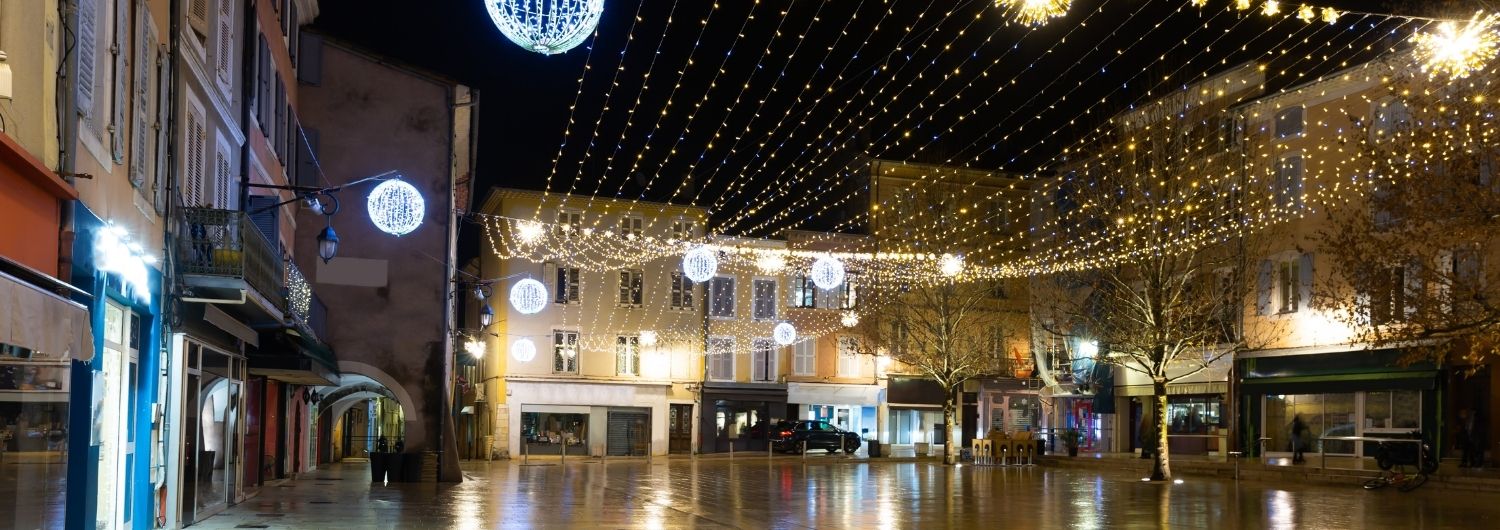
5. Stroll through the old town
The historic center of Montélimar retains the soul of a medieval Provencal town. Take a stroll and you'll discover :
-
From cobbled streetsand shaded plotsand old town housesand art galleries and small craft stores.
-
Discreet but superb religious buildings, ancient fountains and the warm atmosphere of the South.
A perfect place for strollEnjoy a coffee on the terrace or discover local produce.
6. Entering the Collégiale Sainte-Croix
Located in the heart of old Montélimar, the collegiate church of Sainte-Croix is a major religious building.
-
Built in the XVIIIᵉ century, it features a baroque architecture and a bright interiorwith stained glass windows, organ and remarkable altarpieces.
-
Still an active place of worship, it is also home to classical concerts and cultural events.
It fits perfectly into a cultural tour of Montélimar.
7. Relax in Montélimar's Jardin Public
This city park located not far from the center, is a haven of greenery appreciated by families, couples and solo strollers alike.
-
It is home to mighty treesand play areasa small lake and blooming spaces well-maintained.
-
Perfect for a picnic, reading break or relaxing after a day's sightseeing.
A bubble of freshness in the heart of the city.
8. Stroll along the Allées Provençales
Visit Allées Provençales form Montélimar's grand central promenade, lined with plane treesof cafésof stores and often enlivened by markets and events.
-
You can feel the real atmosphere southernThe result is a unique combination of laughter, the scent of cuisine and street music.
-
In summer, they are particularly pleasant at the end of the day, in the shade and on the terrace.
An essential part of life montilienne.
9. Discover the Chapelle Notre-Dame de la Rose
Small and discreet, this Romanesque chapel from the XIIᵉ century is one of Montélimar's hidden treasures.
-
Carefully restored, it retains sober, elegant architecturewith typical Romanesque elements.
-
A place of silence and spirituality, it also appeals to lovers of sacred art and history.
Often open during Heritage DaysIt's a complementary visit not to be missed.
10. Experience the Provencal market
Every Wednesday morning (and a reduced version on Saturdays), the Montélimar market transforms the city center into a veritable festival of the senses.
-
Stands for ripe fruit, colorful vegetables, spices, cheeses, artisanal charcuterie, olives, lavenderand of course, nougat.
-
Producers from the Drôme come to share their products, their accents and their generosity.
One moment user-friendly, genuineand perfect for discover the soul of Montélimar.
Museums and cultural venues: what to see
Beyond its historic monuments, Montélimar offers a cultural diversityThis is the perfect place for those with a passion for art, tradition, military history and local know-how. Several museums and cultural venues allow you to discover the city and the region in greater depth.
The Centre d'Art Contemporain at the Château des Adhémar
Since the 2000s, the Château des Adhémar is now equipped with a contemporary art center recognized on a regional scale. In addition to its architectural tour, the château hosts several exhibitions of national and international contemporary artists each year.
-
Art installations, sculptures, videos and multimedia works take over the château's historic spaces.
-
The contrast between modern art and medieval surroundings creates a unique sensory experience.
This living museum, which regularly changes its programming, shows that Montélimar knows how to conjugate heritage and contemporary creation.
The European Fighter Aviation Museum
Located just a few minutes from downtown, this original museum is set on the former Montélimar-Ancône air base.
-
It houses an impressive collection of more than 60 fighter aircraftsome of which are rare in Europe (Mirage III, Soviet Mig, Dassault Etendard...).
-
The museum also features flight simulators, exhibitions on the history of military aviation, and activities for children.
It's particularly popular with families, aeronautics enthusiasts and those looking for a fun visit to Montélimar.
Le Musée du Nougat - Arnaud Soubeyran's factory
Impossible to talk about Montélimar without mentioning its flagship product: the nougat. And to understand its history, manufacture and secrets, the Arnaud Soubeyran factory offers an interactive museum dedicated to this specialty.
-
The tour explains the ingredients, ancient and modern techniques, and nougat processing stages.
-
Showcases display vintage packaging, period photos and traditional molds.
-
The factory is still in operation, and a tasting session is offered at the end.
It's a gourmet and instructive experience, ideal for families or fans of regional gastronomy.
Art galleries and exhibition spaces
Montélimar also has private art galleries and municipal exhibition hallsparticularly in :
-
Le centre culturel « Le Calepin »,
-
L’espace « Saint‑Martin »,
-
The Maurice Pic intercommunal media library, which regularly hosts photographic, artistic and historical exhibitions.
These venues promote access to culture for all, and show that Montélimar is committed to the dissemination of the arts.
Cultural events and meetings
Throughout the year, the town organizes or hosts major artistic and cultural events:
-
Visit Éclats" festival dedicated to contemporary theater, dance and performance.
-
Classical and modern concerts at Collégiale Sainte-Croix or to Montélimar Theatre.
-
Visit Heritage DaysThese are special opportunities to discover places that are usually closed to the public.
-
Visit Les Templiers cinema, classé « Art et Essai », qui propose une programmation riche et alternative.
Montélimar nougat: history, production, tasting
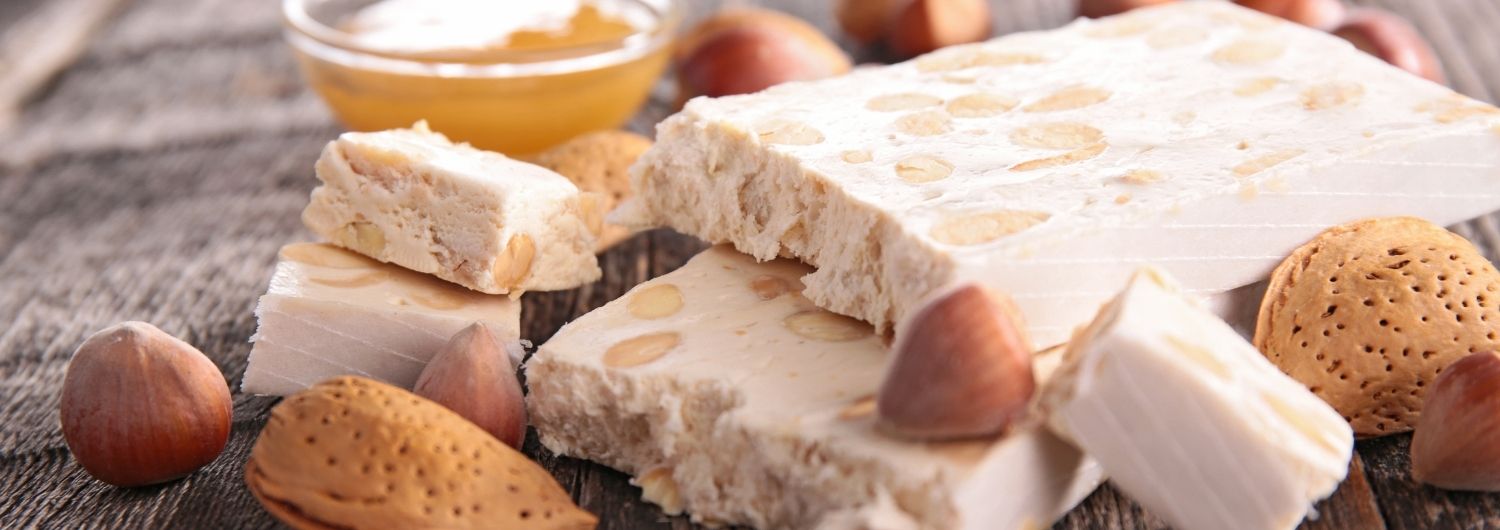
Impossible to mention Montélimar without immediately thinking of its emblematic product: the nougat. This creamy confection, based on honey, almonds, egg whites and sugarhas become a veritable gastronomic symbol known far beyond France's borders.
An ancient specialty with Mediterranean roots
The history of nougat goes back to Antiquity: the Romans already consumed a preparation made from honey and walnuts. But the white nougatas we know it today in Montélimar, appeared around the XVIIᵉ century, influenced by Eastern traditions.
C’est en 1701 que le mot « nougat » est officiellement associé à la ville : lors du passage du duc de Bourgogne et du duc de Berry à Montélimar, les autorités locales offrent 15 kg de nougat pour leur voyage. Le geste est diplomatique, mais il marque le début d’une renommée qui ne cessera de croître.
The role of Olivier de Serres
This development is also linked to Olivier de Serresa local agronomist from the XVIᵉ century, who encouraged the cultivation of thealmond tree in the region. The almond then became a central ingredient in the manufacture of local nougat, giving it a special flavour. unique identitydifferent from that of Provence or Spain.
A protected and regulated appellation
The real Montélimar nougat is distinguished by a codified recipe:
-
It contains minimum 30 % almonds (or 28 % almonds and 2 % pistachios) ;
-
It is made with lavender or mountain honeylocally produced ;
-
It does not contain no artificial colouring or flavouring ;
-
The texture is supple and melt-in-the-mouthunlike hard nougat from other regions.
Since 1993, a Protected Geographical Indication (PGI) is in demand, but has not yet been officially recognized. Nevertheless, local craftsmen adhere to strict specifications, which guarantee the authenticity of the product.
Manufacturing: between craftsmanship and handed-down know-how
The making of nougat is a delicate artwhich requires precision, patience and care. Steps include :
-
Cooking honey and sugar temperature-controlled ;
-
Slow incorporation of stiffly beaten egg whitesfor lightness and volume;
-
Adding whole almonds roasted, just at the end to preserve the crunch ;
-
Cooling in wooden moldswith unleavened bread sheets ;
-
Manual or semi-automated cutting, depending on format.
This is often done by handThe nougat is a traditional product. Each nougat house develops its own subtleties: more or less honey, vanilla, a blend of almonds and pistachios, a softer or denser texture.
Where to taste and buy real Montélimar nougat
The city is full of craft factories and specialized storesYou can not only buy, but also watch craftsmen at work. The most famous include :
-
Arnaud Soubeyran Founded in 1837, this is Montélimar's oldest nougat factory, with a museum, store and tearoom.
-
Chabert & Guillot Another great historic house, offering tours and a wide range of nougats.
-
Maison des Trois Abeilles, Savimand many others, often family-run, working in a spirit of excellence and tradition.
From production workshops, guided tastings and guided tours are offered in several of these locations, making nougat a immersive experience for visitors.
A specialty to take away... and to give as a gift
Montélimar nougat comes in :
-
Traditional bars,
-
Decorated metal boxes,
-
Sachets of bites or cut cubes,
-
Sometimes even in bio, no added sugaror flavored (orange blossom, lemon, lavender).
To give a gift of Montélimar nougat is to give a gift of part of Drôme provençalean authentic product steeped in history.
Markets, producers, Provencal cuisine
Montélimar is much more than a nougat town. It's also a land of flavoursculinary traditions, and local produce that are a credit to Drôme provençale. Here, the local marketsthe passionate producers and the Provencal cuisine come together to offer visitors an authentic gourmet experience.
Markets: weekly rendezvous with flavours
The beating heart of local life in Montélimar is its provencal marketswhere producers, craftspeople and local residents come together.
-
Visit Wednesday market morning, the most emblematic, takes place around the Allées Provençalesthe Place du Marchéand adjacent streets.
-
There is an abundance of seasonal fruit and vegetables, black olives from Nyons, goat cheese, artisanal charcuterie, aromatic herbs, honeys, sourdough bread, lavenderand, of course, nougats and local sweets.
-
Visit Saturday morning marketis appreciated for its family atmosphere and close proximity.
These markets reflect the rhythm of the seasonof Provence, and are ideal for discovering the region's rich and varied heritage. of Montélimar.
Local producers: short circuits and a passion for the land
Around Montélimar, a myriad of artisanal producers are working to promote the Drôme terroir. Visiting these farms or farm stores, you'll discover :
-
From organic market gardenerswho sell directly on markets or at the entrance to their farms;
-
From olive growerswhich produce exceptional local olive oil (in particular at La Bégude-de-Mazenc or Puygiron) ;
-
From beekeeperswho harvest lavender or acacia honey, typical of the Mediterranean climate of Montilien;
-
From breeders of goats producing picodons (Drôme PDO cheese);
-
From winegrowersparticularly in the north towards Grignan-les-Adhémarwhich offer fruity red wines and floral whites.
Some of these farms open their doors for special events. visitsand workshopsor tastingsto create a gourmet and sustainable tourism.
Provençal cuisine: on the menu of Montilian restaurants
Montélimar a large number of restaurants that pay tribute to the region's cuisine, often creatively revisited.
-
Typical dishes include tapenadethe codfish brandadethe Provençal stuffingthe caillette drômoiseand the famous daube provençale.
-
Visit Provence herbs, l'local olive oil, l'garlicthe tomato and zucchinis dominate the preparations.
-
Desserts such as fig tartthe candied fruit d'Apt, or the earphones (fine sugar doughnuts) are often served at the end of a meal.
Montélimar's restaurants range from family bistro to the gourmet tablesome focusing on the biothe local or the culinary creativity. Many offer market menusThese are renewed every week according to new arrivals.
Gourmet festivals and culinary events
Throughout the year, Montélimar celebrates its gastronomic culture through :
-
Visit Nougat Festival (July), with demonstrations, tastings, concerts and a craft market;
-
Visit gourmet markets lively and festive summer evenings;
-
Visit gastronomy fair (autumn), with guest chefs, competitions and entertainment;
-
From cooking workshops organized by local schools and associations.
The town's origins and history
The story of Montélimar is deeply rooted in the successive layers of civilization that have crossed the Rhone Valley. Situated at a strategic crossroads between the north and south of France, the town has always played an important role in the region's geopolitical landscape.
An ancient and strategic origin
Traces of occupation date back to the prehistoryBut it was above all in Gallo-Roman times that the site developed. Montélimar was located near the famous Via Agrippaa major Roman road linking Lyon to Arles. Montélimar's advantageous geographical position, at the junction of the Vercors foothills and the plains of Provence, made it a favored point of passage for merchants, soldiers and travelers.
The town's name comes from « Montilium Aemarii », un toponyme latin signifiant « la petite montagne d’Aymar » — en référence probable à Aymar de Poitiersancestor of the powerful Adhémar de Monteilwhich left a lasting mark on the town's identity.
The Middle Ages: feudal apogee and domination of the Adhemar family
It was in the XIᵉ century that the town took its medieval rise with the construction of a motte castrale on the hill overlooking the plain. This motte gradually became a fortified castlea center of power for the local lords.
Visit Adhémaran influential lineage in the region, transformed the defensive fortress into a medieval palace refined. Visit Château des Adhémaras it can still be visited today, bears witness to this power. It's a rare example of medieval residential palace surviving in the Rhône-Alpes region.
During this period, Montélimar became a prosperous seigneuryThe town also benefited from tolls on the Rhône and market taxes. The town surrounded itself with ramparts, built monasteries and chapels, and developed an embryonic municipal organization.
Centuries of conflict and change
From the XIVᵉ century onwards, Montélimar experienced troubled times: the Hundred Years' War, plague epidemics and later the Wars of Religion marked its development. Protestant for several periods, it was taken over by Catholic troops, and several religious buildings were destroyed or converted.
The city gradually came under counts of Valentinoisthen became part of the French crown in the 15th century. It then lost its feudal autonomy and became a administrative sub-prefecturea role it still plays today.
Modern times: reconversion, trade and nougat
With the French Revolutionthe château was transformed into a prisonIt remained so until 1926. Town planning changed, the ramparts were partially demolished and the town opened up to the outside world.
The XIXᵉ century marked a turning point: with the arrival of the railway and infrastructure modernization, Montélimar became a dynamic economic center. This was also the time when the town specialized in the manufacture of nougatwhich became its sweet emblem throughout France.
The XXᵉ century saw the explosion of road tourism thanks to the Nationale 7immortalized by Charles Trenet. Montélimar has become an essential stopover on your vacation to the south.
Contemporary heritage
Today, Montélimar is a dynamic medium-sized townproud of its past, and has been able to maintain rich architectural heritage castle, old stones, bourgeois houses, medieval alleyways. This past lives on in street names, local traditions, heritage festivals and tourist trails that invite visitors to discover the strata of a past that is still very much alive today. millennium.
Frequently asked questions (FAQ)
Why is Montélimar famous?
Montélimar is famous for its nougat old town and its medieval heritage, including the Château des Adhémar.
What can you do in Montélimar in a day?
Visit the castle, stroll through the historic center, taste the nougat, stroll along the Provencal alleys and enjoy a good local meal.
Is Montélimar nougat still made on site?
Yes, several craft factories continue the tradition, with tours and tastings on offer.
Where to stay in Montélimar?
The city offers hotels, bed & breakfast, campsites and cottages. Some establishments offer immersion in Drôme provençale.
Is Montélimar family-friendly?
Exactly. Numerous fun activities, parks, interactive museums and natural areas welcome young and old alike.
When is the best time to visit Montélimar?
Visit spring and thefall offer a pleasant climate. Summer is lively but hotter.
Can you visit Montélimar without a car?
Yes, thanks to SNCF stationto public transport and easy access on foot or by bike.
What events are not to be missed in Montélimar?
Visit Montélimar Agglo summer festivalProvencal markets, exhibitions at the Château des Adhémarand nougat festival.
Is Montélimar an eco-friendly town?
It is developing more and more green initiatives: soft mobility, green spaces, renewable energiesand local agriculture.
Which villages to visit around Montélimar?
Marsanne, La Laupie, Puygiron or Sauzet are Drôme gems just a few minutes away, perfect for a nature getaway.
Conclusion
Enter medieval heritage, gourmet pleasures, Provencal atmosphere and authentic quality of life, Montélimar is the perfect embodiment of the art of living in the South of France. Whether you're passionate about history, curious about sweet traditions, a lover of fine produce, or simply in search of calm and beauty, this town will seduce you.
Strolling through its narrow streets, tasting a nougat still warm from the cauldron, admiring the ramparts of the Château des Adhémar or exchanging a few words on the market, you'll enjoy a unique experience. rich, human and tasty.
Don't miss out again: Montélimar deserves much more than a stop, it's a a destination in its own rightto discover and enjoy without moderation.
And to explore even more treasures the countryfind out more about our guide to France's regions and tourist attractions.
Find out more about Montélimar, it's over here!
