
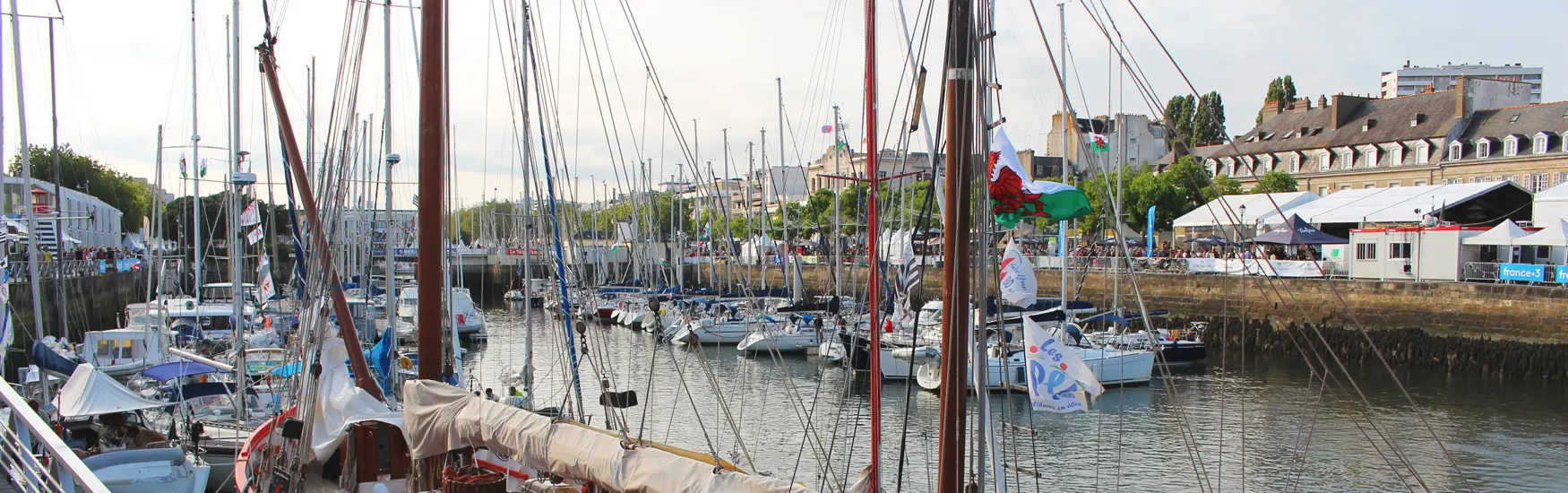
Le Morbihan est la destination idéale, que vous soyez passionné de nature, de culture, de sports ou simplement en quête de détente. Vous y découvrirez une parfaite harmonie entre terre et mer, des sites impressionnants, des panoramas à couper le souffle, un riche heritage historique et culturel, et une variété d’activités et de loisirs.
Ce guide a pour vocation de vous faire découvrir le Morbihan à travers ses attraits touristiques principaux, tout en vous fournissant conseils et astuces pour planifier votre visite. Vous allez explorer les beautés naturelles et les landscapes, le riche héritage culturel et historique, ainsi que les nombreuses possibilités d’activités et de divertissements que ce département unique a à offrir.
So, are you ready to set sail for Morbihan? Let us guide you!
Explore the natural wonders of Morbihan
Morbihan, a French department, near Finistèreoffers a wealth of natural wonders to discover and admire. Between sea, countryside and historic sites, this diverse region will charm every visitor.
Three key destinations are a must for any stay in Morbihan.
The Gulf of Morbihan: a must between land and sea
The Gulf du Morbihan, reconnu comme l’une des plus belles baies au monde, est une mer intérieure ponctuée d’îles et dont le nom breton signifie « petite mer ». Ce site d’exception en Bretagne est parfait pour pratiquer des activités nautiques telles que la voile, le kayak ou encore la pêche, et découvrir les îles environNantes comme Belle-Île-en-Mer.

Le golfe se caractérise également par ses paysages variés, mêlant côtes sauvages, beaches, marais et villages pittoresques. Des itineraries comme le sentier côtier de la presqu’île de Rhuys ou une balade à vélo autour des marais salants sont parfaits pour l’explorer.
The islands of the Gulf, such as l'île aux Moines and l'île d'Arz, offer precious authenticity and tranquility, not to mention remarkable sites such as the Château de Suscinio and the town of Vannes.
The Carnac alignments: a journey through time
The alignments of Carnac, un ensemble de près de 3000 menhirs datant du Néolithique, sont un témoignage fascinant de la culture mégalithique en Europe. Ces monuments historiques, candidats à la liste du patrimoine mondial de l’UNESCO, demeurent un mystère quant à leur fonction originale.
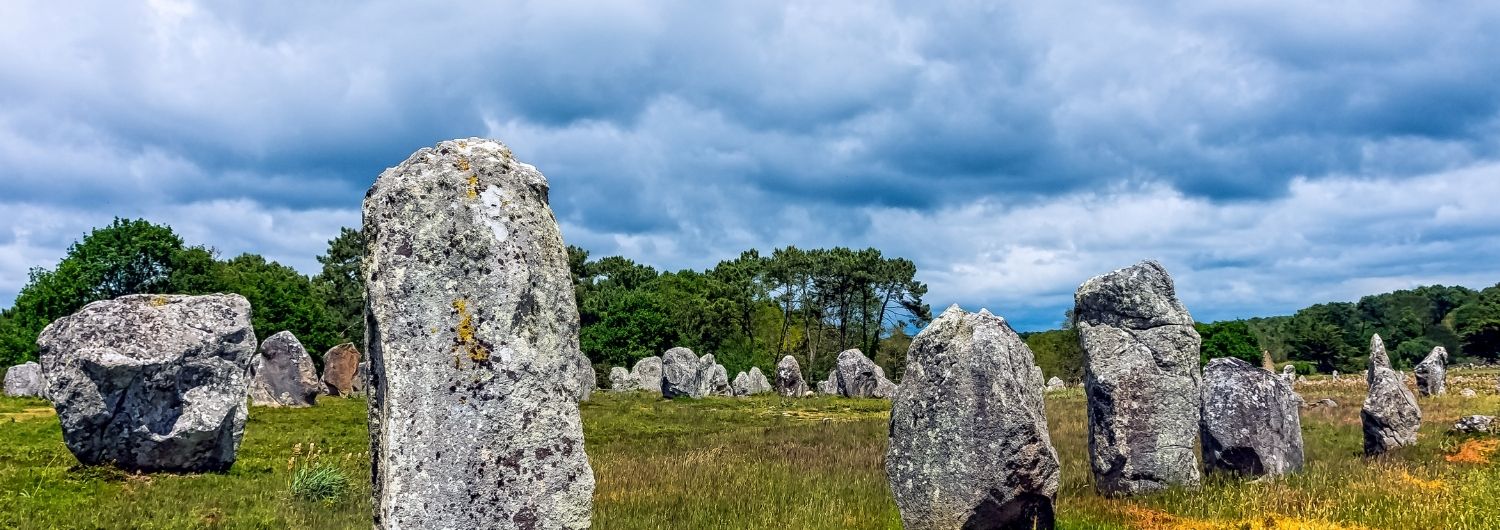
A visit to the prehistory museum will enrich your understanding of the site, while guided tours allow you to explore the various sites. A fun alternative is to admire them on board the little tourist train offering a panoramic view.
The Quiberon peninsula: wild beauty and sea breezes
The Presqu'île de Quiberon, avec ses 14 km de long, jouit d’un contraste saisissant entre sa côte sauvage à l’ouest et la baie de Quiberon à l’est. Elle est une destination de choix pour les amoureux de nature, d’activités sportives et de gastronomy.

The peninsula can be explored via the wild coast road, dotted with impressive viewpoints and ideal for water sports activities on its beaches. The seaside resort of Quiberon also offers a wide beach, a fishing port and local delicacies, promising authentic moments of pleasure.
Visit Morbihan - Discover its historical and cultural heritage
Morbihan is a region rich in historical and cultural treasures, offering a captivating glimpse into its rich and varied past. Whether your interest lies in the Middle Ages, the Renaissance, the French Revolution or ancient legends, Morbihan promises fascinating discoveries for everyone. Explore three of Morbihan's most remarkable historic sites during your visit.
The medieval city of Vannes
Vannes, capitale du Morbihan, est une ville d’art et d’histoire célèbre pour son patrimoine architectural exceptionnel. Cette cité médiévale se distingue par ses magnifiques remparts, sa cathedral imposante, les charmantes maisons à pans de bois et les somptueux hôtels particuliers.
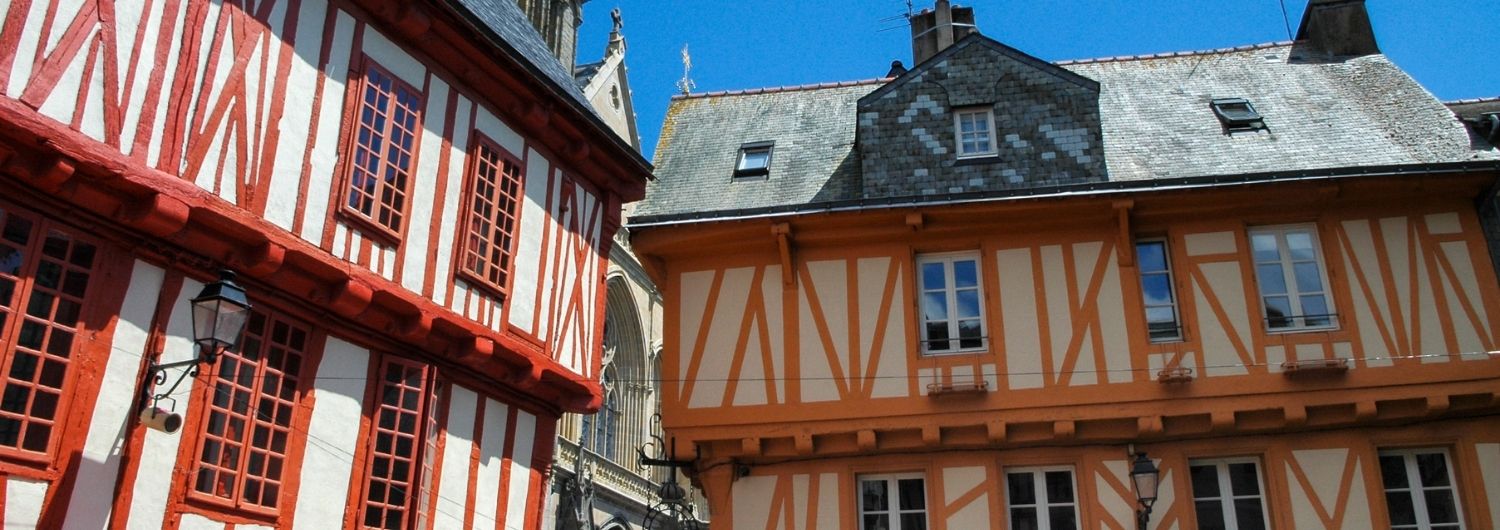
You'll also discover the Château Gaillard, home to the Vannes Museum of History and Archaeology. Vannes, with its millennia-old history beginning in Roman times as Darioritum, evolved into an episcopal see thanks to Saint Patern, then a fortified city influenced by the Dukes of Brittany.
The site of the 1532 treaty of union between Brittany and France, Vannes has undergone significant economic and cultural development. Today, the city is dynamic, offering numerous events and festivities.
To immerse yourself in the history of Vannes, stroll through the historic center, admire monuments and statues, explore the marina, or embark on a discovery tour of the Gulf of Morbihan by boat or coastal path.
Château de Suscinio: a plunge into the history of the Duchy of Brittany
Le château de Suscinio, situé à Sarzeau près de l’Atlantique, est une ancienne forteresse du XIIIe siècle, résidence préférée des ducs de Bretagne. Il offre une architecture remarquable avec son donjon, sa tour neuve, ses douves et ses bâtiments annexes, situés dans un domaine de 120 hectares comprenant chapelle, colombier, forêt et plage.
This fortress has witnessed important historical events such as the War of the Breton Succession and the Bonnet Rouge uprising. After several reconstructions, the Morbihan department took possession of it in the 20th century and restored it.
The castle's scenographic tour reveals life in the Middle Ages, construction secrets, the importance of ducal power and more. The estate also offers hiking and swimming opportunities, and hosts a variety of cultural events.
Rochefort-en-Terre: a village full of charm
Classified as one of France's most beautiful villages, Rochefort-en-Terre stands on a rocky promontory and charms visitors with its authenticity. The cobbled streets, flower-decked houses, craft stores and castle all contribute to its unique atmosphere.
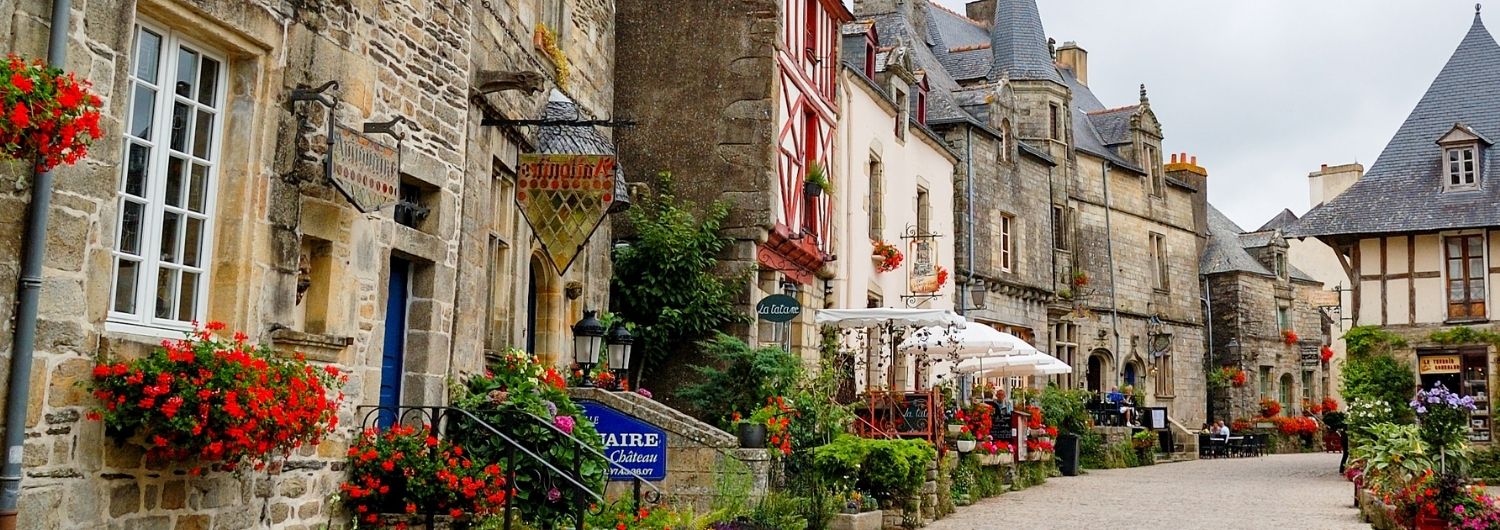
With a rich religious heritage and a history dating back to the 11th century, the village thrived on the linen, leather and paper trade and was influenced by the American painter Alfred Klots, who transformed the castle into an artistic meeting point.
Today, the castle, now a museum and cultural center thanks to Klots, offers art and history collections and temporary exhibitions, while the village comes alive with markets, concerts and traditional festivals.
Activities and leisure: what to do in Morbihan?
The Morbihan department is full of possibilities for those seeking adventure on land or at sea. Offering a wide spectrum of activities, from thrills and relaxation to culture and immersion in nature, this varied region is sure to satisfy all your desires. Discover three suggestions for activities not to be missed during your visit to Morbihan.
Sailing the Morbihan islands
With over 300 islands and islets, a visit to Morbihan is a unique opportunity to discover Brittany. From Île aux Moines to Belle-Île-en-Mer, via Groix, Houat and Hoëdic, not forgetting wild islands such as Gavrinis and Ilur, every visit by boat, whether by shuttle, cruise or private charter, promises an unforgettable experience.
The seascapes range from secret coves and sandy beaches to towering cliffs and dense forests, providing a natural habitat for a rich fauna and flora, including protected species such as seals and dolphins. It's also a plunge into history, with megaliths, fortifications and other evidence of the island's past. Other magnificent islands to visit include les Glénanin Finistère.
Visit Morbihan - Hiking and discovering the local flora and fauna
Morbihan is a hiker's paradise, with 5,000 km of marked trails to suit all levels. Explore the coastline, hinterland, forests or marshes and discover a wide variety of fauna, from roe deer to otters and rare or endangered bird species. Botany enthusiasts will be enchanted by the diversity of the flora, from typical gorse to rare orchids. These hikes are an ideal opportunity to admire nature while respecting the principles of conservation.
Guided tours and water sports
Visiter le Morbihan offre une gamme variée de visites guidées et d’activités nautiques, pour ceux qui souhaitent explorer les eaux turquoise du lagon tout en s’amusant. Kayak, paddle, jet-ski ou voile, il y en a pour tous les goûts. Les visites guidées permettent de dévoiler les mystères du lagon avec des explications fournies par des experts. Pratiquer des activités nautiques telles que le ski nautique ou le kitesurf promet des sensations fortes, tout en promouvant le respect de l’environnement et des principes éco-responsables.
Discover more confidential villages
Ploërdut, is a small commune in Finistère, in the heart of inland Brittany. Surrounded by lush green landscapes, it boasts a peaceful setting and a rich rural heritage. With its ancient chapels, hiking trails and local traditions, Ploërdut offers an authentic glimpse of Breton life, far from the hustle and bustle of the big cities.
Weather Morbihan
Visit Morbihan climate is emblematic of a gentle terroir, generously influenced by the Atlantic Ocean. Classified in the temperate oceanic climateThe region benefits from a mild climate all year round, thanks to the effect of the Gulf Stream and regular Atlantic disturbances..

 14°C | °F
Temperatures: mild and moderate
Visit average annual temperature ranged from 10.9°C to 12.6°C depending on the sector. On the coast and islands, such as Belle-Île, temperatures are even milder, with a low daily temperature range (around 5°C), compared to inland areas where it can reach 9°C..
Winter : frosts are rare, especially on the coast; only 8 to 48 days a year are affected, depending on location .
Summer : heat remains moderate, with averages around 18-23°C; records, though rare, can rise to 41°C during exceptional episodes (July 2022 at Arzal or Guer).
From a recent climate point of view, the average has risen from 12.1°C in 1999 to 12.8°C in 2024, indicating a slight local warming..
Météo Morbihan, Precipitation and seasonal distribution
Between 650 mm and 1,200 mm annual precipitation The most watered areas are the ridges and inner bangs, while the coastline, particularly Belle-Île, remains drier (~650 mm)..
Annual distribution : slightly higher rainfall in autumn-winter, with a peak in December-January, and a drier period from July to August.
Rainy days : between 110 and 150 days a year with at least 1 mm of rain, almost twice as many as in Mediterranean regions.
The islands and coastal strip record fewer rainy days (around 128 days in Vannes/Golfe)..
Sunshine and coastal microclimate
Visit Morbihan enjoys a high level of sunshine, especially near the coast:
Belle-Île and Golfe du Morbihan exceed 2,000 hours of sunshine a year.
The south coast enjoys almost 2,055 hours of sunshine a year and only 128 days of rain..
This sharp contrast between inland and seaside is due to the microclimates created by the local geography: gentle relief, sea breezes and the protected area of the Landes de Lanvaux..
Climate variability and extremes
Although the climate is mild overall, there are some records:
Extreme minimums : -14.5°C at Ploërmel (February 1986), -14°C on the coast (Brest station).
Extreme maxima : up to 41.1°C (Arzal, July 2022), 41°C in Guer in August 2003.
These anomalies are nevertheless rare and one-off.
Seasonal use and tips
Ideal period : May to October, with temperate summers, pleasant seas and limited rainfall.
Dry season : from late February to late September, particularly August, with less than 5 days of rain on average in Vannes.
Visit Morbihan climate combines mild Atlantic weather, generous coastal sunshine and well-distributed rainfall. This unique blend makes Brittany a particularly pleasant destination for both outdoor activities and tourism.
Ouest France Morbihan
Ouest France Morbihan is the local section of the leading regional daily Ouest-Francededicated to news from the Morbihan department in southern Brittany. Every day, the site offers a selection of articles covering the region's political, economic, cultural, sporting and environmental events. It has established itself as a benchmark for Morbihan residents, with its unique proximity and on-the-ground information.

On the "Ouest France Morbihan" page, you'll find concrete information such as reports on recent events - for example, an apartment fire in Lanester reported on July 10, 2025, where the interaction between residents and police forces illustrates the strength of local information..
Ouest France Morbihan - Features
The weather section allows readers to follow the weather conditions specific to Brittany. Thanks to Météo-France, Ouest-France Morbihan provides information on the day's trends, with bulletins on rising temperatures in the West, numerous clouds in the morning and a risk of thunderstorms in the afternoon.. This local weather is particularly valuable for farmers, boaters and holidaymakers.
On the cultural and heritage front, Ouest France Morbihan regularly features articles on the department's riches: dolmens, megalithic alignments, literary events and festivals. The link with the printed daily is reflected in a mix of seasonal recipes, maritime heritage and support for local development. Coverage of summer festivals, eco-citizen initiatives and agglomeration projects helps to nurture social ties and inform on local dynamics.
In a nutshell, Ouest France Morbihan is the department's main source of in-depth, comprehensive information. A veritable crossroads for breaking news, weather, culture and local life, it's an indispensable tool for residents and visitors alike who want to keep up to date with life in Morbihan.
Morbihan Prefecture
Visit Morbihan prefecture is the central body of the State administration in the department, located in Vannes. It is home to the current prefect, in office since May 7, 2025. Located at the 10 place du Général-de-GaulleIt is open from Monday to Friday (8:30am-12:00pm), with Tuesday afternoons (1:30pm-4:00pm)..
The building, constructed in 1865 on the foundations of a former Jacobin convent, boasts a Louis XIII style embellished with imperial and Breton symbols, and is protected as a historical monument since october 29, 1975. It is also surrounded by a five-hectare park, combining English and French gardens..
Its missions cover the coordination of government services, public safety, the issuing of permits (passports, vehicle registration documents), crisis management and the implementation of public policies. The General Secretariat, based at 24 place de la Républiqueis also responsible for this administrative organization.
In line with local news, it is often the prefecture that issues risk-related decrees, such as forest fire restrictions (July 11-15, 2025)..
Map of Morbihan
The map du Morbihan (department 56 in Brittany) offers a complete view of its territory: 3 boroughs (Vannes, Lorient, Pontivy), 42 cantons and some 250 communes. You can clearly see the jagged coastline, from the Quiberon peninsula to the Morbihan Gulf, ainsi que les principales voies de communication : N24 (Rennes–Lorient), N165/E60 (Nantes–Brest), N166 (Vannes–Ploërmel).
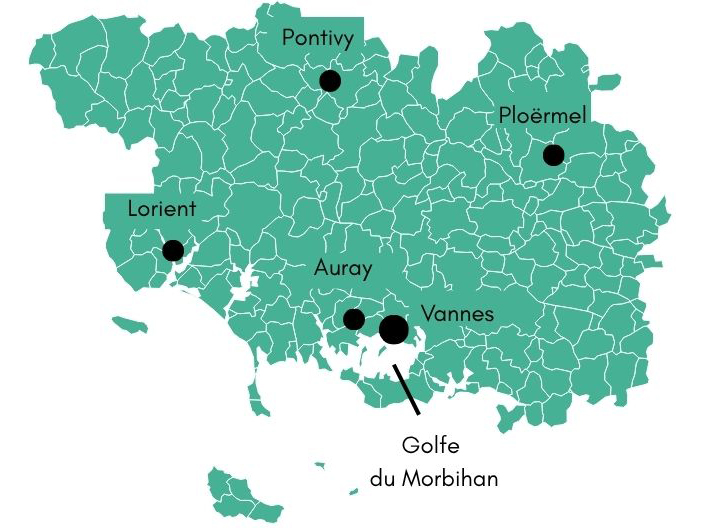
On the map, flagship cities such as Lorient, Vannes, Pontivy, Hennebont or Auray are easily identifiable, with symbols indicating their size (Lorient & Vannes may have more than 50,000 inhabitants).. The topography reveals a contrasted geography: Atlantic coastline with islands and rias, gentle relief inland, notably near the Landes de Lanvaux.
Road maps (such as Michelin's) also show local roads - departmental and communal - and can be used to plan an itinerary or locate points of tourist interest. Gifex. In addition, interactive versions are available online: they allow you to filter by municipalities, intercommunalities or websites (tourist offices, hotels, restaurants).
Finally, thematic representations - administrative, road, physical or satellite - offer a complete overview according to your needs: visualize railroad lines, protected areas (Natura 2000 network like the Gulf), or agricultural and forestry features .
Conclusion
Morbihan, with its wealth of landscapes, culture, sporting activities and moments of relaxation, is a destination of choice for everyone. The region's diverse attractions promise visitors an unforgettable experience.
Explore regional gems such as the majestic Gulf of Morbihan, the mysterious Carnac alignments, the captivating Quiberon peninsula, the historic town of Vannes, the imposing Château de Suscinio, or the enchanting village of Rochefort-en-Terre. What's more, a multitude of activities await you: sailing, hiking, guided tours or water sports will enrich your stay.
Don't delay - plan your trip to Morbihan today!. A memorable adventure awaits you!
FAQ
What's the most beautiful town in Morbihan?
Choosing the most beautiful town when visiting Morbihan is a matter of personal preference, but according to a recent ranking, Locmiquélic shines at the top for communes with 3,500 to 5,000 inhabitants. Other gems include Vannes, Auray, Carnac, La Gacilly and Rochefort-en-Terre, each offering its own unique charm.
What is there to visit in the Gulf of Morbihan?
The Gulf of Morbihan, with its abundance of natural and cultural treasures, invites discovery. Explore Vannes and its medieval heritage, sail to islands such as Ile aux Moines and Ile d'Arz, discover the Rhuys peninsula, visit the Gavrinis cairn and enjoy the tranquility of the port of Le Bono.
Where to go in Morbihan?
Morbihan abounds in diverse landscapes for memorable walks. Coastal paths offer breathtaking views and archaeological discoveries at Locmariaquer, island escapades on Île aux Moines or Belle-Île, the enigmatic Alignements de Kerzerho and the wild Côte de Quiberon. Other walks await you, if you wish to visit Morbihan, at the Ria d'Etel, the Pointe d'Arzon, the Ile d'Arz, and plunge into legend at the Val sans Retour in the Brocéliande forest.
How do I get around the Golfe du Morbihan?
There are many ways to explore the Golfe du Morbihan: opt for a cruise with stopovers on islands, take a shuttle bus for an island-to-island adventure, go hiking on the GR34 trail, or explore by kayak or paddle for a more intimate experience of the Golfe.


