

Lakes of France
Visit France is a country rich in diverse natural landscapes, including lakes and ponds occupent une place particulière. Ces étendues d’eau, qu’elles soient naturelles ou artificielles, offrent des lieux de détente, de loisirs, et d’émerveillement pour les amateurs de nature. Leur diversité et leur beauté attirent chaque année de nombreux visiteurs, qu’ils soient passionnés de pêche, de sports nautiques ou simplement en quête de tranquillité.
If you want to discover French coastlineor the mountain ranges of France, read our related articles.
Introduction to French lakes - how they differ from ponds
Definition of lake and pond
Qu’est-ce qu’un lac ?
A lake is une grande étendue d’eau douce ou salée, généralement formée par des processus naturels tels que l’activité glaciaire, volcanique ou tectonique. Les lacs peuvent être alimentés par des rivières, des sources souterraines, ou des précipitations. Ils sont souvent profonds et leurs eaux sont renouvelées lentement, comme par exemple le Lake Montriondnear des Gets at Upper Savoy.
Qu’est-ce qu’un étang ?
A pond, on the other hand, is une étendue d’eau plus petite et peu profonde, souvent créée artificiellement par l’homme pour des usages spécifiques comme la pisciculture, l’irrigation, ou simplement comme réserve d’eau. Les étangs peuvent également être naturels, formés par l’accumulation d’eau de pluie ou le débordement de rivières et de ruisseaux.
Differences between lake and pond
Les principales différences entre un lac et un étang résident dans leur taille et leur profondeur. Les lacs sont généralement plus grands et plus profonds, tandis que les étangs sont plus petits et peu profonds. De plus, les lacs sont souvent alimentés par des sources d’eau permanentes, contrairement aux étangs qui peuvent dépendre des précipitations saisonnières.
Cartographie lacs de France - map of the most beautiful lakes in France

Types of lakes in France
Glacial lakes
Les lacs glaciaires sont formés par l’action des glaciers qui ont creusé des vallées profondes dans les montagnes. En fondant, ces glaciers ont laissé des dépressions remplies d’eau, comme c’est le cas pour le Lac d’Annecy ou le Lac Léman.
Volcanic lakes
Volcanic lakes are found in the craters of extinct volcanoes. These lakes, often circular and deep, offer spectacular scenery, such as Lac Pavin in the Massif Central.
Dam lakes
Les lacs de barrage sont créés par la construction de barrages sur des cours d’eau. Ces lacs artificiels sont souvent utilisés pour la production d’électricité, comme le Lac de Serre-Ponçon, ou pour l’irrigation et les loisirs.
Lowland lakes
Lowland lakes are found in low-lying areas. They are often shallow and wide, like the Lac de Grand-Lieu in Loire-Atlantique, renowned for its biodiversity.
Types d’étangs en France
Natural ponds
Les étangs naturels se forment généralement dans des dépressions du sol où l’eau de pluie s’accumule. Ces étangs peuvent également être alimentés par des sources souterraines ou des rivières temporaires.
Artificial ponds
Les étangs artificiels sont créés par l’homme, souvent pour des raisons agricoles ou piscicoles. Ils peuvent également servir de réservoirs d’eau pour l’irrigation ou comme espaces récréatifs.
France's most beautiful lakes
Lake Geneva
Situé à la frontière entre la France et la Suisse, le Lac Léman est le plus grand lac alpin d’Europe occidentale. Il est célèbre pour ses eaux claires, ses villes pittoresques comme Évian-les-Bains, et ses nombreuses activités nautiques.

It offers a majestic landscape dominated by the Alps and terraced vineyards, particularly in the Chablais region. French towns such as Évian-les-Bains and Thonon-les-Bains are renowned for their spas and waterside walks. The lake boasts well-maintained beaches and marinas, as well as numerous water sports activities. The surrounding mountains, notably the Lake Geneva Alps, offer spectacular panoramic views. The lake is also a major economic and tourism axis, linking several major cities and attracting visitors from all over the world.
Lac d’Annecy
Considéré comme l’un des lacs les plus purs d’Europe, le Lac d’Annecy is surrounded by mountains and breathtaking scenery.
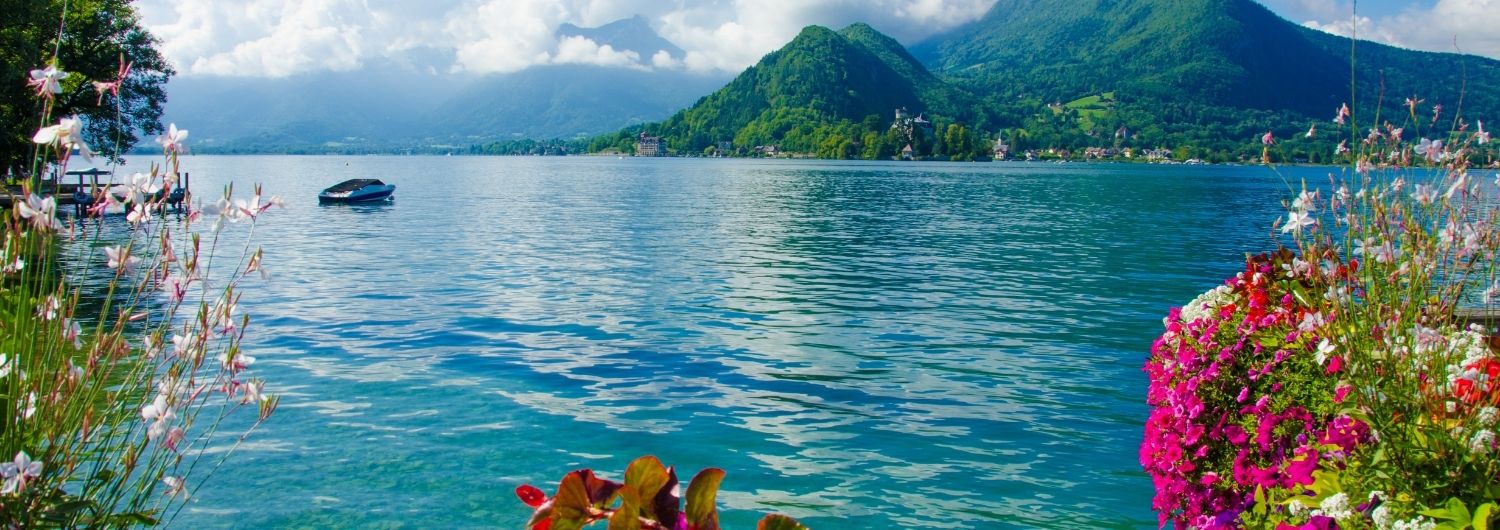
Visit Lake Annecy is located in Haute-Savoie, in the Auvergne-Rhône-Alpes region, and is one of France's most beautiful lakes, thanks to its crystal-clear waters and spectacular mountain scenery. Surrounded by the Bauges and Bornes massifs, it offers a rich Alpine landscape, combining verdant mountains and craggy peaks. The town of Annecy, nicknamed the “Venice of the Alps”, borders the northern shore and is a major tourist gateway. The lake boasts numerous beaches, including those at Albigny, Impérial and Talloires. The surrounding villages, such as Menthon-Saint-Bernard and Duingt, add to its charm. The lake's water sports activities, cycle path and panoramic views make it an unmissable destination.
Lac du Bourget
Le Lac du Bourget, le plus grand lac naturel d’origine glaciaire en France, est situé en Savoie.
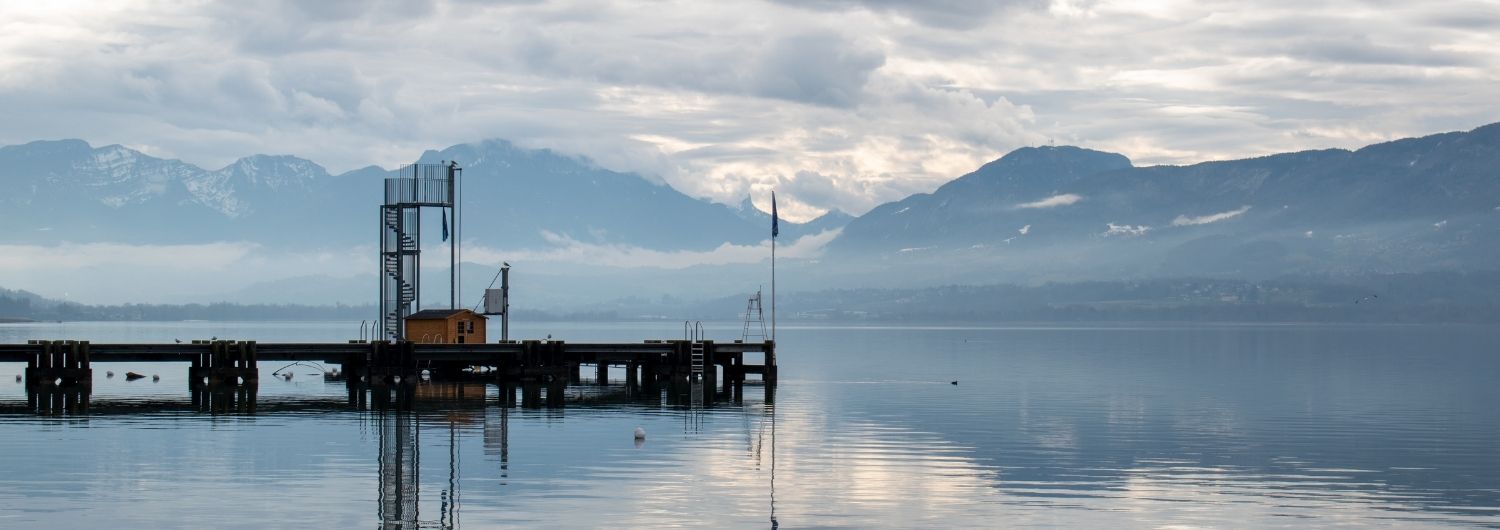
It lies at the foot of the Chaîne de l'Épine and the Massif des Bauges, offering a landscape of contrasts between steep relief and gentler shores. The spa town of’Aix-les-Bains lies on its eastern shore and is a major tourist center, renowned for its thermal baths and marina. The lake is bordered by beaches such as Bourget-du-Lac and Brison-Saint-Innocent. It is also rich in biodiversity, with protected areas such as the Bout-du-Lac nature reserve. Its depth and size make it an ideal place for sailing and cruising.
Il est connu pour ses eaux profondes et ses rives escarpées, ainsi que pour l’Abbaye d’Hautecombe qui le surplombe.
Lake Sainte-Croix
Lac de Sainte-Croix is an artificial lake created by a dam on the Verdon River. It is famous for its turquoise waters and impressive gorges, offering an ideal setting for water sports and hiking.

It is famous for the turquoise waters of the nearby Gorges du Verdon. The landscape is marked by Provencal hills, limestone cliffs and Mediterranean vegetation. The villages of Moustiers-Sainte-Marie, Bauduen and Sainte-Croix-du-Verdon border the lake, offering exceptional panoramic views. Numerous natural and landscaped beaches are ideal for swimming. Activities such as pedal-boating, kayaking and paddle-boating are also very popular. This artificial lake, created by a dam, is now one of the most popular tourist sites in the south of France.
Lac de Serre-Ponçon: a monumental artificial lake
Visit Lake Serre-Ponçon, located in the Hautes-Alpes and Alpes-de-Haute-Provence, is one of Europe's largest man-made lakes. It is surrounded by imposing mountains, offering a spectacular landscape between water and Alpine peaks. Towns and villages such as Embrun, Savines-le-Lac and Chorges line its shores. The lake boasts numerous beaches, often with pebbles or sand, ideal for families. The lake is also famous for its emblematic Saint-Michel chapel, located on an islet. Water sports activities are well developed here, including sailing, kitesurfing and swimming. Its sunny climate and natural setting make it an ideal destination for summer vacations.
Lake Gérardmer: the pearl of the Vosges
Visit Lake Gérardmer is located in the department of Vosges, in the Grand Est region of France. Of glacial origin, it is surrounded by dense forests and rounded mountains typical of the Vosges massif. The town of Gérardmer, a well-known tourist resort, lies in the immediate vicinity of the lake. The lake is equipped with beaches, particularly on its western shore, as well as supervised bathing areas. The landscape changes with the seasons, offering spectacular colors in autumn and a snowy backdrop in winter. The lake offers a wide range of activities, including pedal boating, canoeing, hiking and nearby skiing. The lake is a popular place to recharge your batteries in the heart of nature.
Lac d'Aiguebelette: a peaceful, unspoilt lake
Visit Lake Aiguebelette, is renowned for its unspoilt environment and some of the warmest water in France. Surrounded by green hills and forests, it offers a soothing landscape, far from the hustle and bustle of tourism. Villages such as Lépin-le-Lac and Aiguebelette-le-Lac line its shores. An important feature is that motorboats are not allowed on the lake, guaranteeing exceptional calm and water quality. The lake has both private and public beaches, many of them well-maintained. It's ideal for swimming, paddling or canoeing. Its peaceful atmosphere makes it an ideal destination for lovers of nature and tranquillity.
Lac de Paladru: the blue lake of Isère
Visit Lac de Paladru is located in the Isère department, in the Auvergne-Rhône-Alpes region. Nicknamed the “blue lake” because of the color of its waters, it is surrounded by rolling hills and rural landscapes. The communes of Charavines and Paladru border the lake, and offer suitable tourist infrastructures. The lake has several beaches, some of which are supervised in summer. It is also known for its major archaeological discoveries, including remains from the Neolithic and Middle Ages. Water sports, swimming and fishing are all very popular. Its natural and historic setting makes it unique in France.
Lac de Biscarrosse: a large lake in the Landes region
Visit lake of Biscarrosse, located in the Landes region of France, is one of the great lakes of the Atlantic coast. Surrounded by vast pine forests, it offers a landscape typical of south-western France. The towns of Biscarrosse, Sanguinet and Parentis-en-Born line its shores. The lake is renowned for its fine sandy beaches, ideal for families and water sports. Its calm, shallow waters make for safe swimming. Numerous water sports centers offer sailing, water skiing and paddle boarding. The lake is a very popular summer destination, not least because of its pleasant climate.
Lac de Vouglans: a wild Jura lake
Visit Lac de Vouglans, located in the Jura department in the Bourgogne-Franche-Comté region, is the third largest man-made lake in France. Stretching over 35 kilometers, it offers a wild landscape characterized by emerald-green waters and wooded cliffs. Villages such as Orgelet and Moirans-en-Montagne are within easy reach. The lake boasts a number of beaches, notably at Vouglans and Bellecin, some of which are suitable for swimming. Less crowded than other large lakes, the lake's charm lies in its calm and authenticity. Water sports, hiking and fishing are well developed here, in an unspoilt natural setting.
France's best-known ponds
Etang de Berre
L’Étang de Berre, situé près de Marseille, est le plus grand étang salé d’Europe. Il est utilisé pour la navigation de plaisance, la pêche et les activités industrielles.

Dombes ponds
La région de la Dombes, dans l’Ain, est célèbre pour ses milliers d’étangs artificiels créés au Moyen Âge pour la pisciculture. Ces étangs sont aujourd’hui un paradis pour les ornithologues et les amoureux de la nature.
Lake activities in France
Nautical activities
Les lacs en France offrent une multitude d’activités nautiques, telles que la voile, le canoë-kayak, le paddle et la planche à voile. Des lacs comme ceux d’Annecy et du Bourget sont particulièrement populaires pour ces sports.
Hiking and walking
The shores of lakes and ponds are often lined with hiking and walking trails that allow you to discover the beauty of the surrounding landscape. These paths offer breathtaking views and moments of tranquillity in the midst of nature.
Fishing
La pêche est une activité très prisée autour des lacs et des étangs en France. Que ce soit pour la pêche sportive ou la pêche de loisir, ces plans d’eau abritent une grande diversité de poissons, tels que les truites, les carpes et les brochets.
Wildlife observation
Les lacs et les étangs sont des écosystèmes riches en biodiversité. Ils offrent des habitats pour de nombreuses espèces animales et végétales. L’observation des oiseaux, en particulier, est une activité populaire dans des régions comme la Dombes ou le Lac de Grand-Lieu.
Lake events in France
Festivals and cultural events
De nombreux lacs et étangs en France sont le théâtre de festivals et d’événements culturels tout au long de l’année. Par exemple, le Festival du Lac à Annecy attire des milliers de visiteurs avec ses feux d’artifice et ses animations.
Sports competitions
Sports competitions, such as sailing regattas, triathlons and swimming marathons, are commonplace around France's great lakes. These events attract athletes and spectators from all over the world.
Lacs de France - Conclusion
The lakes and ponds in France are natural gems qui offrent une multitude d’activités et d’événements pour tous les goûts. Que vous soyez amateur de sports nautiques, passionné de pêche, ou simplement en quête de paysages à couper le souffle, les lacs et étangs français sauront vous émerveiller.
French lakes FAQ
What are the top 10 lakes in France?
France, with its geographical diversity, is home to many lakes, each with its own particular charm. Here are the top 10 to help you discover these natural gems:
1. Lac d’Annecy (Haute-Savoie)
Surnommé le « Lac bleu », il est réputé pour la pureté de ses eaux. Entouré de montagnes, c’est un lieu idéal pour la baignade, la voile et les sports nautiques.
2. Lac du Bourget (Savoie)
Le plus grand lac naturel d’origine glaciaire de France. Ses rives sont bordées de villages pittoresques et il offre de nombreuses activités nautiques.
3. Lake Sainte-Croix (Var)
Located in the Gorges du Verdon, this turquoise-water lake is a paradise for swimmers, canyoneers and hikers.
4. Lake Geneva (Haute-Savoie)
Partagé entre la France et la Suisse, le Léman est le plus grand lac d’Europe occidentale. Il offre de magnifiques paysages et de nombreuses activités nautiques.
5. Lac d’Oô (Haute-Garonne)
Niché à 1500 mètres d’altitude, ce lac de montagne offre un panorama exceptionnel. C’est un lieu idéal pour la randonnée et la baignade en pleine nature.
6. Lake Serre-Ponçon (Hautes-Alpes)
Created by a dam, this artificial lake is the largest in France. Surrounded by mountains, it offers a wide range of water sports.
7. Lake Gérardmer (Vosges)
Situé au cœur des Vosges, ce lac est une destination prisée pour les amateurs de sports d’hiver et de randonnée.
8. Salagou lake (Hérault)
This artificial lake with its red water is unique in France. Its natural setting, with its red rocks, offers spectacular scenery.
9. Lake Pavin (Puy-de-Dôme)
This volcanic lake, located in the heart of the Chaîne des Puys, is known for its deep, dark waters.
10. Lake Grand-Lieu (Loire-Atlantique)
Le plus grand lac naturel de France métropolitaine. Il abrite une faune et une flore très riches et est un lieu privilégié pour l’observation des oiseaux.
What's the difference between a lake and a pond?
The main difference lies in size and depth. Lakes are generally larger and deeper than ponds.
Which are the deepest lakes in France?
Les lacs les plus profonds incluent le Lac du Bourget et le Lac d’Annecy.
Is it safe to swim in ponds in France?
Yes, but it's important to check local conditions and regulations.
What animal species can be seen in French lakes?
French lakes are home to many species, including fish, birds and amphibians.
Where are the best places to fish in France?
Les lacs d’Annecy, du Bourget, et de Serre-Ponçon sont réputés pour la pêche.
How are volcanic lakes formed?
Les lacs volcaniques se forment dans les cratères de volcans éteints lorsque l’eau de pluie ou les sources souterraines s’accumulent.

