
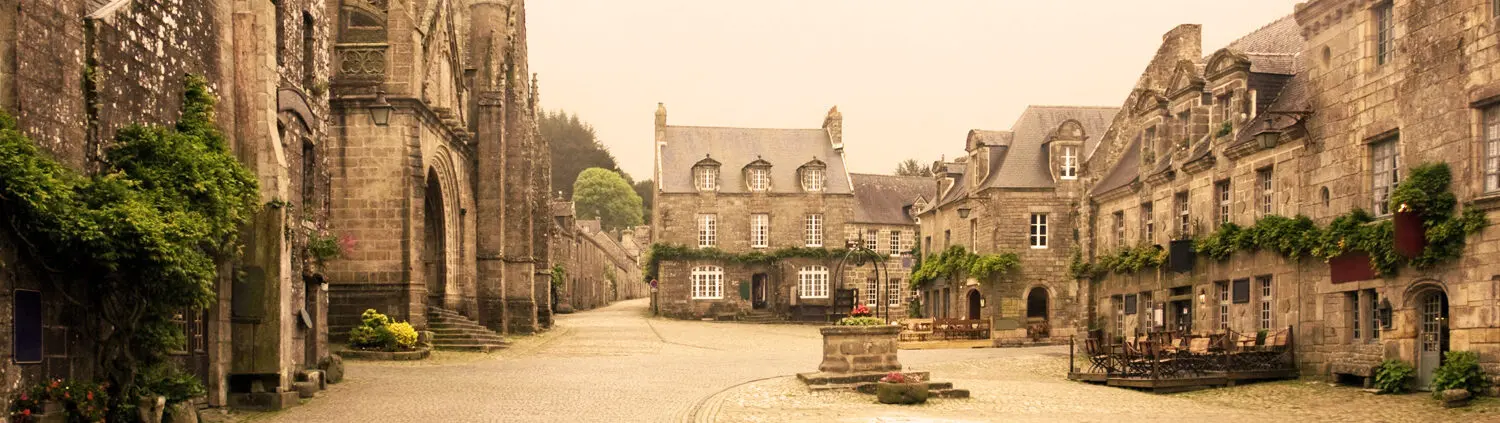
Locronan, Brittany: complete village guide
Looking for a hidden gem for your vacation in Brittany ? Look no further! Discover Locronan, this enchanting village in Finistère. Considered one of the most beautiful villages in France and designated a “Petite Cité de Caractère,” Locronan offers charm, a captivating history, and a rich cultural heritage.
A true spiritual heartland, Locronan comes alive every six years during the Grande Troménie, a major religious festival that draws crowds of pilgrims and curious visitors. Get ready to explore Locronan with this guide, which will reveal all its secrets. So, follow us!
The Fascinating History of Locronan
Locronan, a picturesque Breton village located in FINISTERE, carefully preserves the vestiges of its rich past and centuries-old traditions. The origins of this place date back to Saint Ronan, a 7th-century Irish monk, who established a hermitage in the ancient forest of Névet, a site once dedicated to Druidic worship.
The name "Locronan" comes from "lok", a Breton term for "holy place", associated with Ronan, the village's patron saint.
From Celtic origins to the granite city
As early as the Iron Age, people inhabited the site of Locronan, particularly on the Montagne du Prieuré, where a Celtic oppidum is located. In medieval times, Locronan flourished as a priory under the authority of Landévennec Abbey, enjoying ecclesiastical autonomy. The heart of the village is centered around the Church of Saint Ronan, built in the 12th century and housing the saint’s tomb, marked by a recumbent statue.
The village also has a chapel, Notre-Dame-de-Bonne-Nouvelle, a place of pilgrimage for devotees of the Virgin Mary. A surrounding wall, pierced by three gates, protects Locronan, which is embellished by elegant granite mansions that reflect the prosperity of its inhabitants.
The prosperity of hemp and its architectural influence
From the 14th century through the Renaissance, Locronan prospered thanks to the locally grown hemp industry, which was essential for the production of sailcloth sought after by sailors and shipowners. This thriving trade with major maritime fleets—notably the Compagnie des Indes—enriched the village and transformed it. Renaissance architecture embellished the homes, featuring sculptures, mullioned windows, and sophisticated dormer windows.
The village square is paved and features a central well. The Church of Saint-Ronan was expanded and adorned with a slender bell tower, an imposing porch, a carved wooden rood screen, and colorful stained-glass windows. Thus, Locronan was transformed into a granite town, now recognized as one of the most beautiful villages in France.
The Troménies: a historical and contemporary pilgrimage
Locronan is also famous for its Troménies, centuries-old pilgrimages that continue to attract thousands of people. The Grande Troménie, celebrated every six years, traces a possibly Celtic heritage dating back to the 10th or 11th century. It consists of a 12-kilometer procession around the minihi, the priory’s sacred enclosure, marked by 12 granite crosses. The relics of Saint Ronan, along with statues of the saints, are carried with devotion throughout the pilgrimage.
Between the major editions of the Grande Troménie, a more modest Petite Troménie is held every second Sunday in July, offering devotees a 6-kilometre route around Locronan, strengthening the community and spiritual bond between participants.
Things to see and do in Locronan
Locronan is much more than just a museum village. It’s a vibrant place where you can enjoy a wide variety of activities, ranging from cultural and sporting events to fun and recreational pursuits. Discover what Locronan has to offer during your visit.
Stroll through the medieval town: a journey into the past
There's nothing like strolling through Locronan's cobbled streets, framed by granite houses dating from the 16th and 17th centuries, to discover this charming town. Admire the richly decorated facades, mullioned windows and sophisticated dormer windows, as well as the ornate porte cochere and period signs.
A tour of the historic center will allow you to delve into the village’s fascinating history, from its Celtic origins to the present day, as you explore the history of hemp and the Grande Troménie. For a fun-filled exploration, join a treasure hunt or photo scavenger hunt organized by the Archi Kurieux—a playful way to discover Locronan with friends or family.
Must-See: Saint-Ronan Church and Chapelle N-D de Bonne-Nouvelle
Locronan is a key site of Christianity, centered on the veneration of its founding saint, Ronan. The Church of Saint Ronan, which stands prominently on the main square, is a must-see. Built in the 12th century and expanded in the 16th and 17th centuries, it houses the tomb of Saint Ronan and an exceptional wooden rood screen, among other artistic treasures.
Just a short walk away, the 15th-century Notre-Dame-de-Bonne-Nouvelle Chapel draws pilgrims devoted to the Virgin Mary to its peaceful setting, which features a washhouse and a bucolic garden.
Cultural activities and local crafts
In Locronan, Brittany, culture and crafts play a prominent role. The Charles Daniélou Museum of Art and History displays an impressive collection of Breton art, while the Daniélou Foundation showcases contemporary artists in the Pénity Chapel.
Explore the shops offering local products: the must-try kouign-amann, cider, and other Breton pastries, as well as crafts such as pottery and jewelry. Don’t miss the many cultural events that celebrate the richness of Breton culture through concerts, dance performances, and film screenings.
Preparing your visit to Locronan
Ready to explore Locronan, a pearl of Breton heritage? Follow our practical advice for a memorable stay in this exceptional place.
When to visit: festivals and events not to be missed
Locronan, in Brittany, remains a charming village year-round, but it really comes alive at certain times. If you love traditions, don’t miss the Grande Troménie, a centuries-old celebration held every six years in July during odd-numbered years divisible by three. The next one is scheduled for 2025. It attracts thousands of pilgrims for a 12-kilometer sacred pilgrimage around Locronan. Each station, marked by a granite cross, is part of this unique procession filled with fervor and joy.
La Petite Troménie, on the other hand, takes place every second Sunday in July, offering a shorter version of this tradition around the village. For a magical atmosphere, visit Locronan in December when the lights transform the village into a fairy-tale world. Since 2014, a sound-and-light show has illuminated the façade of Saint-Ronan Church, telling the story of the local history, accompanied by a cozy Christmas market, brimming with local products and children’s activities.
Accommodation in Locronan, Brittany: options for all budgets
Locronan offers a wide range of accommodations to suit all tastes and budgets, including hotels, bed-and-breakfasts, guesthouses, campgrounds, and vacation rentals. In the heart of the village, the Hôtel Le Prieuré, housed in a former 18th-century convent, and the Ti-Laouenek guesthouse, with its flower-filled garden, promise charming stays. For a more peaceful setting, the Rodaven campground and the Kergoat vacation rental offer plenty of space and views of Douarnenez Bay. Many rentals are also available on specialized websites such as Airbnb and Booking.
Travel tips: gastronomy and sights to discover
Locronan will also delight food lovers with its Breton delicacies, especially its crêpes and galettes, which are best enjoyed with Cornouaille cider. Explore the local crêperies or treat yourself to a kouign-amann at one of the traditional bakeries. For the curious, Montagne du Prieuré offers breathtaking views, and the film museum reveals Locronan’s rich cinematic history, highlighted by famous films shot against this unique backdrop.
Conclusion
Locronan is a must-see for lovers of history, culture, nature, and fine dining. A gem of Breton heritage, it will enchant you with its harmonious architecture, captivating history, diverse culture, and delicious culinary specialties.
The village is also known for its pilgrimage, the Grande Troménie, a festive and unique event that attracts thousands of visitors every six years. In December, Locronan lights up, inviting you to a magical and authentic Christmas market.
Don't miss a visit to Locronan. Book your stay now and discover this Breton treasure!
FAQ
What are the main attractions in Locronan?
Locronan must-sees include:
- Locronan Historical CentreThe village is listed as one of France's most beautiful, with its granite facades, craft stores and picturesque medieval Grande Place.
- The Church of Saint RonanThis 15th-century building houses the Pénity chapel, where the saint's tomb lies. Its stained-glass windows and sculptures are remarkable.
How do I get to Locronan from Brittany's major cities?
Various transport options are available:
- From Brest : Take the N702 bus to Quimper, then transfer to line 10 toward Locronan. Travel time: about 2 hours and 41 minutes; cost: €3 to €5.
- From Quimper Line 10 takes you directly to Locronan in 22 minutes for €2.
- From Rennes : Take the train to Quimper, then take Line 10 to Locronan. Travel time: about 3 hours and 30 minutes; cost: €30 to €60.
When is the best time to visit Locronan and enjoy its charm?
Spring or summer are ideal times to visit Locronan, when you can enjoy the mild weather and the blooming flowers. The village also retains its charm in winter, with its distinctive architecture.
What cultural and festive events are not to be missed in Locronan, Brittany?
Not-to-be-missed events in Locronan include:
- La Fête des Brodeuses, a biennial event held in July that celebrates the art of embroidery with fashion shows, exhibitions, and activities.
- The Cornouaille FestivalThis annual July event in Quimper, 20 km from Locronan, showcases Breton culture through music, dance, theater, local food tastings and costume contests.
This article was written by Alex Arts, photographer, content creatorand level 6 local guide on Google Maps

Alex Arts
Photographer, content creator, and local guide
