
Uzès in a Nutshell
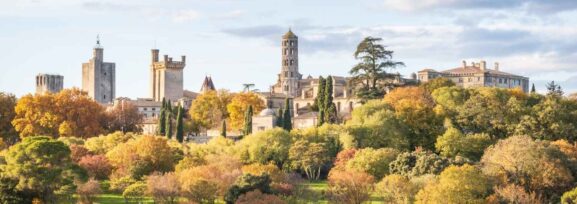
Uzès is a small town in southern France located in the department of Gardin the region Occitanie. Nestled between the Cévennes and Provence, the town sits on a promontory overlooking the Eure Valley. Its historic center features light-colored stone houses, vaulted passageways, mansions, and shaded squares. This concentration of historic sites makes the town easy to explore on foot and an ideal destination for a day trip or weekend getaway.
In this article
Where is Uzès located?
Uzès is located in the eastern part of the Gard department, in the heart of a region traditionally known as the Uzège or the Pays d’Uzès. According to INSEE, the town is officially part of the Occitanie region, the Gard department, and the Nîmes district. The town is located about 25 kilometers from Nîmes and, together with Avignon, Alès, and the Pont du Gard, forms a tourist destination that is easy to include in a tour of southern France. A car remains the most flexible way to explore the surrounding villages and natural sites.
For a first visit, the most convenient place to go is the Destination Pays d’Uzès Pont du Gard Tourist Office, 16 Place Albert-Ier, Chapelle des Capucins, 30700 Uzès. Visitors can pick up a map there, check the opening hours of the monuments, and get information about markets or transportation. The historic center begins just a few minutes’ walk away, around Place aux Herbes and the Duché. Since the town is compact, it’s generally unnecessary to drive between the main attractions.
Why visit Uzès?
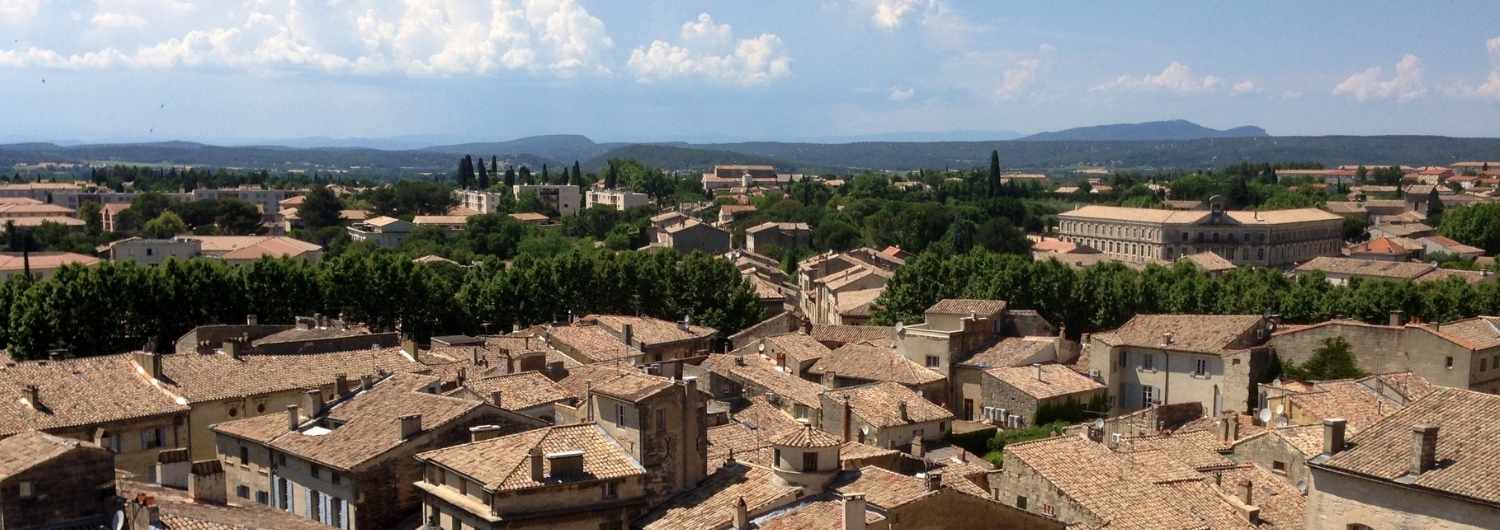
Uzès is worth a visit for the variety of experiences it offers in a small area. Visitors can admire the Duchy, take in the circular silhouette of the Fenestrelle Tower, and step inside the cathedral Saint-Théodorit: explore the Medieval Garden, then head down toward the Eure Valley. The market set up around Place aux Herbes adds a culinary dimension with olives, cheeses, fruits, wines, and products from the garrigue. The tourist office also promotes the destination as a “City of Art and History” located at the gateway to the Cévennes and Provence.
The town also offers a different atmosphere from the major destinations nearby. Its center is small enough to explore without a complicated itinerary, yet rich enough to keep you busy for a full day. Between one monument and the next, the terraces, galleries, artisan shops, and streets lined with historic facades invite you to slow down. For lunch in the town center, Le Zanelli, located at 3 Place aux Herbes, 30700 Uzès, serves Italian cuisine on a terrace overlooking the’church Saint-Étienne. Please check the hours and days of operation before visiting.
Why do we refer to it as the first duchy of France?
Uzès is often described as the first duchy in France. This expression does not mean that the town was the first French territory to be transformed into a duchy. Rather, it refers to the order of precedence among the nobility: the Duke of Uzès attained a special place in the hierarchy beginning in the 16th century. The Duchy, located at Place du Duché, 30700 Uzès, remains today the monument most directly associated with this history. The privately owned property is open to visitors according to a seasonal schedule.
However, this ducal identity does not fully capture the essence of the town. The “City of Art and History” designation, awarded in November 2008 according to the official municipal website, acknowledges a heritage a broader urban landscape, ranging from ancient ruins to religious buildings and mansions. According to INSEE, Uzès had a population of 8,519 in 2023, a figure that helps convey its human scale. The town thus combines the cultural richness of a heritage destination with the laid-back pace of a small southern town.
What are the must-see sights in Uzès?
Uzès’s main monuments are concentrated in an historic center compact enough to explore on foot. A first visit can follow a straightforward route between Place aux Herbes, the Duché, Saint-Théodorit Cathedral, and the Medieval Garden. This route offers insight into the city’s evolution, from its ancient foundations to the transformations of the Renaissance and the modern era. Allow about three hours to view the exteriors and a full day to explore several sites at a leisurely pace.
Saint-Théodorit Cathedral
Saint-Théodorit Cathedral is located on Rue du Docteur-Blanchard, just a few minutes from Place aux Herbes. The current building was rebuilt after the Wars of Religion, while its medieval bell tower survived the destruction. Inside, visitors can admire the 17th-century organ, notable for its preserved painted shutters. The tour is generally brief, but it helps visitors understand Uzès’s historical religious significance.
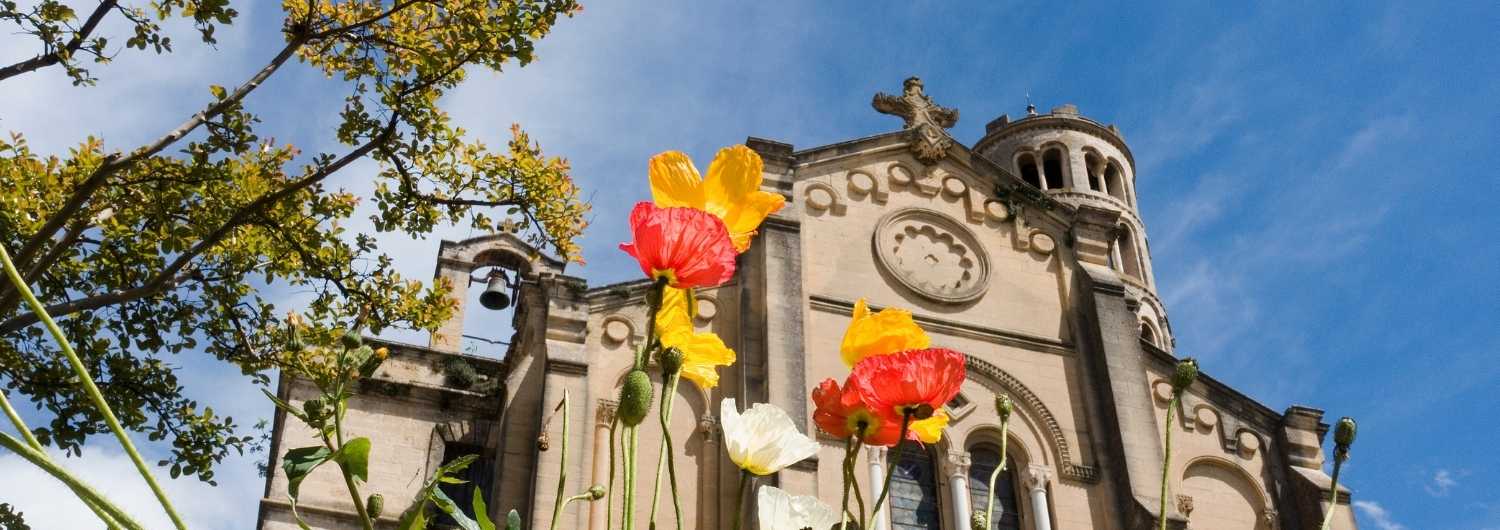
When entering the cathedral, please be respectful of the services being held and maintain silence. Appropriate attire and no flash photography are recommended. Opening hours may be subject to change during ceremonies. The heritage brochure published by the City of Uzès places the cathedral, the Fenestrelle Tower, and the bishop's palace within the same historical context.
The Fenestrelle Tower
Adjacent to the cathedral, the Fenestrelle Tower is Uzès’s most distinctive landmark. This Romanesque bell tower, with its circular plan, features stacked windows that give it a light silhouette, despite its massive masonry. The city describes it as the only known round bell tower in France from this period. Its architecture is reminiscent of certain Italian towers, which clearly sets it apart from the square bell towers of Languedoc.
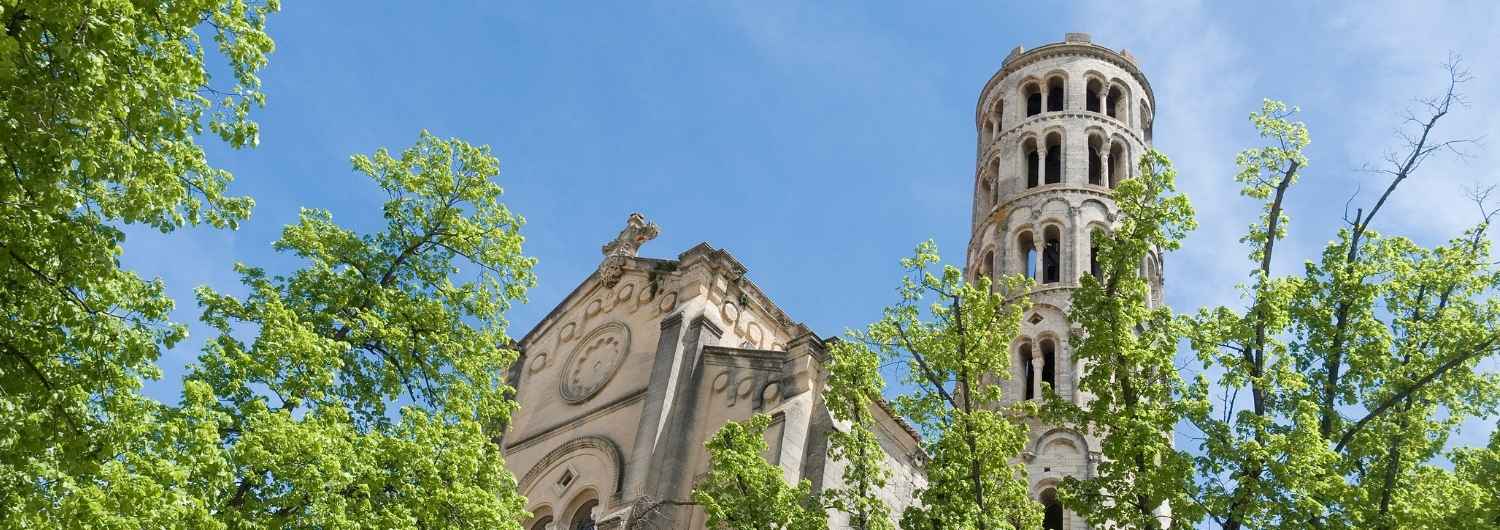
The best view is from the area in front of the cathedral, and then from the nearby streets to enjoy different perspectives. The tower is not always open to the public. Special openings or guided tours may be offered during heritage events. It is therefore advisable to check with the tourist office rather than automatically planning to go up the tower.
The Medieval Garden
The Medieval Garden of Uzès is located within a former fortified complex at 1 Impasse Port-Royal, 30700 Uzès. It combines a botanical garden, the King’s Tower and the Bishop’s Tower, exhibition spaces, and a panoramic view of the city. Approximately 450 plants—including medicinal, edible, dye, textile, and culinary varieties—are on display, along with information on their traditional uses. The stroll offers a pleasant transition between the history of the stone structures and the history of plant-related knowledge.
The tour involves walking through the garden’s various sections, reading the botanical labels, exploring the temporary exhibits, and climbing the hundred steps of the King’s Tower. According to the official launch of the website, the summit offers a panoramic view over the rooftops of Uzès. Allow about an hour for the visit. The gardens are more accessible than the towers, whose narrow staircases require a good level of mobility. In the summer, visiting in the morning helps limit exposure to the heat.
The Former Bishop's Palace and the Georges-Borias Museum
The former episcopal palace is located at Place de l’Évêché, 30700 Uzès, near the cathedral. It houses heritage exhibitions and the Georges-Borias Municipal Museum. The collections offer insights into local archaeology, the city’s history, regional traditions, and notable figures associated with the area. This stop is a useful complement to the outdoor tour, especially on rainy days or when the heat makes walking the streets less comfortable.
In 2026, the former bishop’s palace will also host an exhibition dedicated to urban transformation and the city’s history, according to Destination Pays d’Uzès Pont du Gard. Dates, admission prices, and access requirements should be checked before your visit, as the schedule is subject to change. Allow between 45 minutes and 1 hour and 30 minutes, depending on your interest in the collections.
The Racine Pavilion
The Racine Pavilion, located on the Promenade des Marronniers, commemorates playwright Jean Racine’s stay in the town during the 17th century. The young writer came to visit his uncle, a canon at the cathedral, and described the landscapes, the locals, and the customs of the south in his letters. The small building doesn’t take long to visit, but it makes for an interesting stop during a walk.
From this area, visitors can take in the view of the Eure Valley before following the paths that lead down to the river. This transition allows visitors to move from the urban landscape to nature without having to get back in the car. In Uzès, the appeal lies precisely in this proximity between monuments, lively squares, gardens, and trails. This variety makes Uzès a particularly pleasant destination to explore on foot.
The Duchy of Uzès
The Duchy of Uzès is the city’s most iconic landmark. Built on the site of an ancient castrum, this privately owned complex combines medieval, Renaissance, and classical architectural elements. The Bermonde Tower is its oldest part, and its summit offers a sweeping panoramic view of the rooftops, bell towers, and landscapes of the Uzège region. The main courtyard, the facades, the cellars, and the apartments tell the story of the Crussol family, which remains closely tied to this estate.
The tour involves exploring the areas open to the public, observing the successive architectural styles, and, when access is available, climbing the tower. The site is located at Place du Duché, 30700 Uzès. The tourist office describes this ducal castle as a testament to more than a thousand years of history and notes its location in the heart of downtown. Since opening hours and admission prices vary by season, it is best to check the Duchy's official website Before your visit. The stairs and historic areas may be difficult for visitors with limited mobility.
Place aux Herbes
Place aux Herbes is the social heart of Uzès. Surrounded by arcaded houses, terraces, and shops, its atmosphere changes throughout the day. In the morning, market stalls fill the square on Wednesdays and Saturdays. Once they’re gone, the fountain, the plane trees, and the building facades take center stage again. It’s pleasant to stroll slowly around the square, admire the covered walkways, and then head out into the neighboring streets.
To enjoy the setting with fewer crowds, it’s best to arrive before 9 a.m. or come back in the late afternoon. Saturdays are generally the busiest days. For a break, the restaurant Le Zanelli is located at 3 Place aux Herbes, 30700 Uzès. This restaurant serves Italian cuisine and features a terrace facing Saint-Étienne Church. It’s a good idea to make a reservation on weekends and market days. Check opening hours directly with the restaurant.
Explore the historic center of Uzès
Exploring the historic center of Uzès is less about following a series of monuments than about discovering the city through its details. The vaulted passageways, restored facades, ancient doorways, and winding streets reveal an urban fabric shaped by the Middle Ages, the Renaissance, and periods of commercial prosperity. The city notes that the historic preservation district was established in 1965 and that restoration efforts have, in particular, brought to light classical and Renaissance-era decorative elements on several buildings. Allow about two hours for this walk, or longer if you include breaks, sightseeing, or lunch.
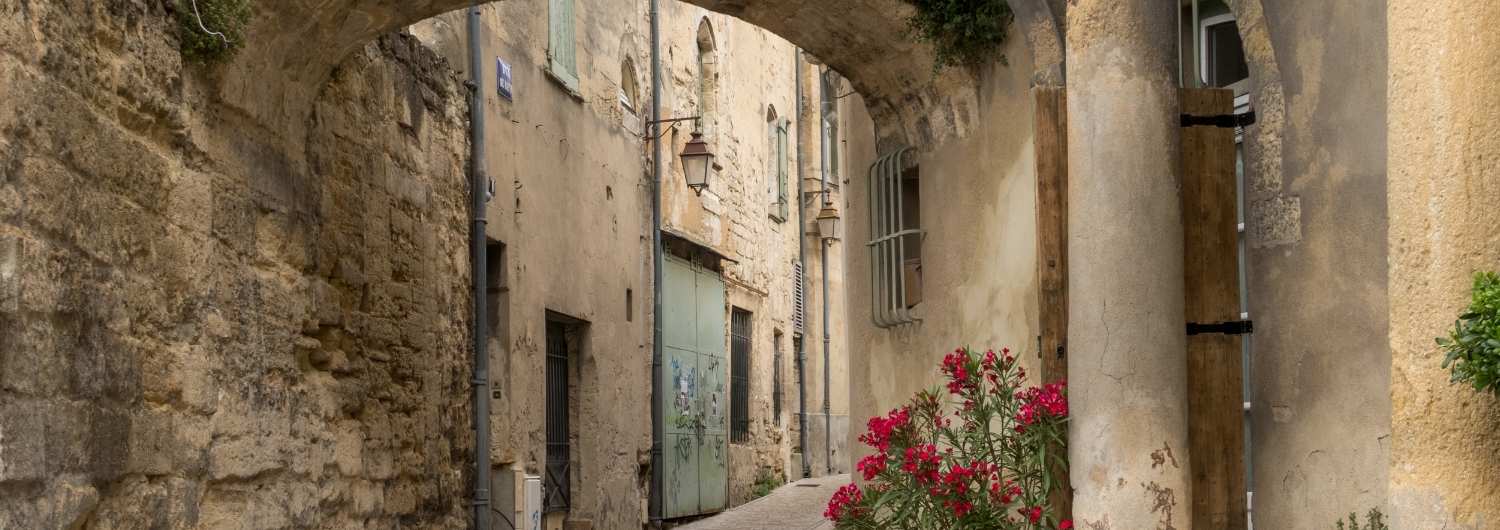
Strolling through the old streets
The tour can begin at the Tourist Office, 16 Place Albert-Ier, 30700 Uzès, and then continue to Place aux Herbes via the pedestrian streets. After a stroll under the arcades, take Rue Jacques-d’Uzès toward Place du Duché. This short stretch is lined with shops, galleries, and stone facades. It also leads to several side streets where the atmosphere becomes quieter as you move away from the central square.
From the Duchy, continue on to Rue du Docteur-Blanchard to reach Saint-Théodorit Cathedral and the Fenestrelle Tower. Then return via Rue Port-Royal, the city’s former main thoroughfare before the ramparts were demolished. The City of Uzès heritage guide explains that this street was once called Rue de la Monnaie. It also highlights the role of the narrow streets, spiral staircases, and cellars carved into the rock in understanding the city’s medieval past. This loop thus allows you to get a feel for Uzès without covering too many kilometers.
Admire the facades and mansions
The historic center of Uzès owes much of its character to its mansions. Several merchant families amassed their fortunes through the wool, cloth, and later silk trades, before commissioning the construction or renovation of grand urban residences. While their facades are sometimes unadorned, the carved doors, wrought-ironwork, mullioned windows, and inner courtyards reveal the quality of the decorative details. Some of these properties remain private; therefore, they should be viewed from public areas, and visitors must respect any closed entrances.
Place Dampmartin is worth a detour for its more intimate scale and historic facades. Continue on to Place d’Austerlitz and the adjacent streets, where the views alternate between narrow passageways and vistas of the towers. In Uzès, the pleasure comes as much from the architectural details as from the major monuments. Look up to spot cornices, sundials, window frames, and traces of successive renovations.
For a gourmet break in the heart of the route, Terroirs is located at 5 Place aux Herbes, 30700 Uzès. The restaurant combines dining, regional products, and a selection of wines, with a terrace under the arcades. On market days, it’s best to make a reservation or visit at an off-peak time. Practical information and updated hours are available on Terroirs’ official listing.
For a more gourmet experience, La Table d’Uzès is located at La Maison d’Uzès, 18 rue du Docteur-Blanchard, 30700 Uzès. The restaurant showcases ingredients from the South of France and was awarded a Michelin star in 2026, according to the tourist office. Please check the menus, hours, and days when the restaurant is closed on La Table d’Uzès’s listing before visiting.
Hiking a Loop Trail
A simple loop through Uzès is about two to three kilometers long, depending on which side streets you take. Starting from the tourist office, head to Place aux Herbes, Place du Duché, the cathedral, the Medieval Garden, and then the Promenade des Marronniers. Return via Rue Port-Royal and the Esplanade. This route connects the main attractions while also taking you through less-traveled neighborhoods. It’s ideal for visitors with half a day to spare, provided they limit their visits to the interiors of the buildings.
Cobblestones, stairs, and some slopes make sturdy shoes preferable. People with mobility issues will find it best to stay in the upper part of the town center, where distances are short, and then ask the tourist office for the most accessible routes. In the summer, start early, bring water, and use the arcades to walk in the shade. On market days, arriving before 9 a.m. also helps you avoid the heaviest traffic around Uzès.
Take a guided tour
A guided tour provides explanations that observation alone does not always make clear. Tour guides place the squares, mansions, religious buildings, and historic neighborhoods within the context of the city’s evolution. The city brochure states that the heritage department works with certified guides and offers tours throughout the year. Since schedules vary by season, reservations must be made through the tourist office.
This tour is particularly useful for first-time visitors to the city, as it ensures you don’t walk past an important building without understanding its history. A tour typically lasts between an hour and a half and two hours, but be sure to check the schedule and prices. After the tour, set aside some time to revisit on your own the streets or squares that interested you the most. It’s often on this second visit that the ducal city reveals its most subtle details.
Explore the Uzès Market
The Uzès market is one of the most popular events in this ducal city. Set up mainly around the Place aux Herbes, it features food products, regional specialties, crafts, and a southern French atmosphere. The square fills up early in the morning, under the arcades and around the fountain, and then the stalls spill out into the neighboring streets during the big Saturday market. To enjoy this experience without dealing with the crowds, choose a day based on your priorities, arrive early, and plan your parking before entering the historic center.
On what day is the market held?
In Uzès, two weekly markets cater to different tastes. Wednesday mornings are dedicated to local producers. You’ll find seasonal fruits and vegetables, olive oils, cheeses, honey, wines, breads, fougasses, and various farm products. The tourist office promotes this market as a special opportunity to meet producers and support local, short-chain supply chains. It takes place on Place aux Herbes, generally from 7:30 a.m. to 1:00 p.m. or 2:00 p.m., according to information published by local organizations.

On Saturdays, the market in Uzès expands significantly. The city estimates there are about 200 vendors, compared to about 60 on Wednesdays. The stalls are set up on Place aux Herbes, the boulevards, and Rue Jacques-d’Uzès.
In Uzès, Wednesday is best for travelers looking for a local, food-focused, and relatively quiet atmosphere. Saturday is the best day to explore a large Provençal market, shop for clothing or crafts, and soak up the town’s lively atmosphere. On the downside, it’s much more crowded, outdoor seating fills up quickly, and parking becomes more difficult.
What can you find on the market stalls?
At the Uzès market, you can buy products typical of the Gard and Uzège regions. Depending on the season, the food stalls offer tomatoes, melons, peaches, apricots, herbs, olives, tapenade, olive oils, honey, goat cheese, cured meats, bread, and wine. In winter, black truffles take center stage among the local offerings. The tourist office also announces a truffle season running from December through March, with events held on Wednesday and Saturday mornings.
In Uzès, on Saturdays, the market offers not only food but also clothing, accessories, home decor, soaps, fabrics, and handmade crafts. The selection varies from week to week. It’s therefore best to treat your visit as a chance to explore rather than to come looking for a specific item.
How can you avoid the crowds?
To visit Uzès on a Saturday, it’s best to arrive between 7:30 a.m. and 8:30 a.m. At that time, the stalls are set up, temperatures remain pleasant in the summer, and the walkways are still easy to navigate. After 10 a.m., Place aux Herbes gets much more crowded. Those wishing to take photographs of the arcades and the fountain should return after the stalls have been taken down, when the square regains its usual appearance.
Where should we eat after the market?
After visiting the Uzès market, there are several options right around Place aux Herbes. Terroirs, located at 5 Place aux Herbes, 30700 Uzès, combines a restaurant, a terrace, wines, and local products. This establishment lets you extend your culinary experience without leaving the city center. Its official listing confirms its location under the arcades and its role as a shop specializing in regional specialties.
For a quiet escape from the hustle and bustle, the Hostellerie Provençale is located at 1-3 rue de la Grande-Bourgade, 30700 Uzès, about a two-minute walk from the square. The hotel is located on a pedestrian street in the historic center and features a restaurant. On days when the restaurant is open, be sure to check the menus and hours directly before your visit.
An economical option is to buy lunch from the market stalls and walk to the Promenade des Marronniers or the Eure Valley. This option offers a more peaceful experience, but it requires respecting the area, taking your trash with you, and checking for any local restrictions. The Uzès market thus becomes the starting point for a full day of food tasting, exploring the local heritage, and strolling.
What to Do in Uzès in One Day?
Visiting Uzès in a single day requires following a compact and realistic itinerary. The historic center, Place aux Herbes, the Duché, the cathedral, and the Medieval Garden are all close to one another, while the Eure Valley is within walking distance from the upper part of the town. The itinerary below highlights the must-see sights, a culinary stop, and a nature walk. However, be sure to check opening hours before you go, as some sites have seasonal schedules.
Start the morning at the center
To explore Uzès at your leisure, arrive between 8:30 a.m. and 9:00 a.m. Start at the Destination Pays d’Uzès Pont du Gard Tourist Office, located at 16 Place Albert-Ier, 30700 Uzès, to pick up a map and confirm which tours are available. For example, on Thursdays and Fridays in July 2026, the office announced guided tours of the historic center from 9:45 a.m. to 11:45 a.m., by reservation only. The Official Calendar for July 2026 listed a price of 8 euros, with a discount to 5 euros and free admission for children under 15.
Next, head to Place aux Herbes. On Wednesdays and Saturdays, spend about forty-five minutes at the market; on other days, take in the arcades, the fountain, and the facades before continuing on to Rue Jacques-d’Uzès. If you arrive early, you’ll enjoy softer light and a still-unhurried flow of pedestrians. This first loop immediately gives you a clear picture of the ducal city.
Visit the Duchy and the cathedral
Around 10 a.m., head to the Duché, Place du Duché, 30700 Uzès. Allow one to one and a half hours to explore the courtyard, the apartments open to the public, and, if you wish, to climb the Bermonde Tower. Opening hours and accessible areas vary by season; please make a reservation and check the conditions at the Duchy's official website avoid unnecessary travel.
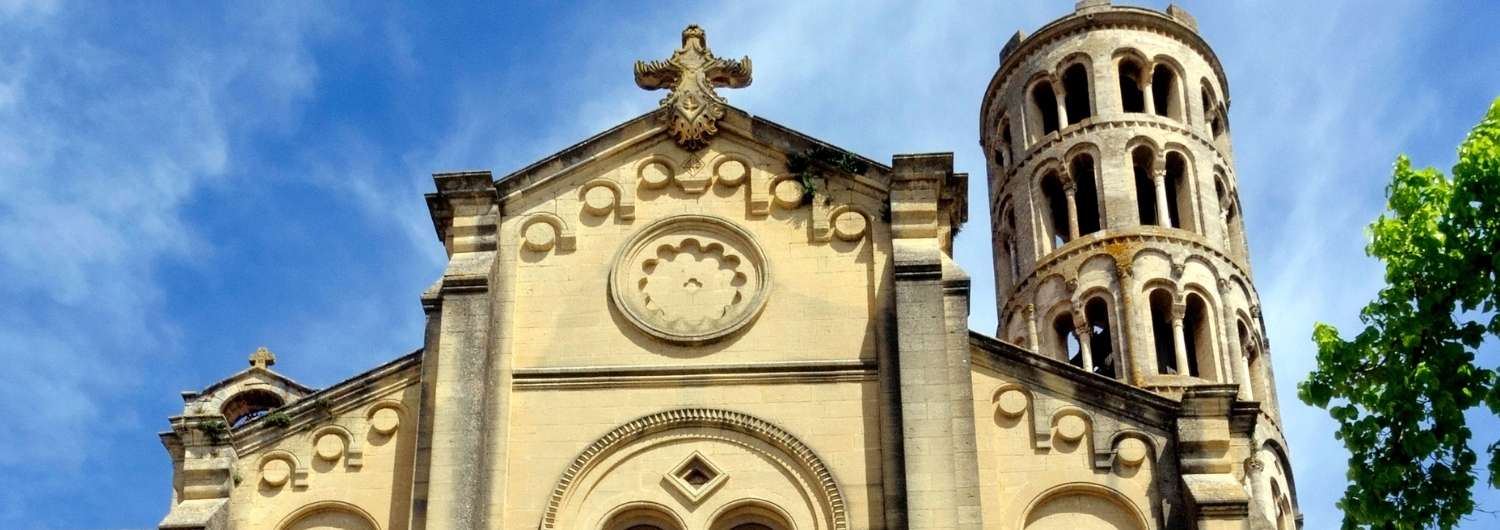
After this visit, walk to Saint-Théodorit Cathedral on Rue du Docteur-Blanchard. It takes about thirty minutes to tour the interior of the cathedral and view the Fenestrelle Tower. The round tower is not open to the public year-round, but its architecture is clearly visible from the cathedral grounds. This stop allows you to connect the ducal power and the religious heritage of Uzès without extending your route.
Lunch near Place aux Herbes
For lunch in the heart of Uzès, Magari is located at 6 Place aux Herbes, 30700 Uzès. The restaurant serves Mediterranean and Italian cuisine. Its official tourist information page states that as of 2026, it will be open Wednesday through Sunday from 12 p.m. to 2 p.m. and from 7 p.m. to 9 p.m.; please double-check these hours on the day of your visit.
Terroirs, located at 5 Place aux Herbes, is another option for home-style cuisine with a Southern French flair, tapas, and regional products—which are also sold in the shop. The tourist office confirms that it is located under the arcades of the square. On market days, reserve a table or have lunch after 1:30 p.m. to avoid the rush.
Explore the Medieval Garden
Around 2:00 p.m., head to the Medieval Garden, 1 Impasse Port-Royal, 30700 Uzès. Allow about an hour to explore the plants, exhibits, and towers. The climb requires a bit of extra effort, but it offers a sweeping view of the town’s rooftops. In the summer, it’s best to visit earlier in the day to avoid the heat.
The Medieval Garden offers insight into the culinary, medicinal, dyeing, and artisanal uses of plants. It thus complements the stone monuments by providing a more hands-on look at daily life in the past. Before you go, check the hours and admission prices published by the site or the tourist office, as opening times vary throughout the year.
Head down into the Eure Valley
Starting at 3:30 or 4:00 p.m., head to the Promenade des Marronniers and then walk down toward the Eure Valley. Located at the foot of Uzès, this green space features a river, meadows, trails, ancient ruins, and hiking trailheads. The city highlights, in particular, a regulating basin connected to the ancient Roman aqueduct that carried water to Nîmes.
A one-hour walk is enough to explore the main area, but hikers can extend their walk along the surrounding trails. The municipality also lists walking, biking, and horseback riding routes around Uzès. Wear sturdy shoes, bring water, and avoid the hottest hours of the day in July and August.
End the day on the terrace
Head back toward the center around 6 p.m. Depending on your pace, enjoy a drink under the arcades, do a little shopping, or return to Place aux Herbes as the day’s visitors begin to leave. For a gourmet dinner, La Table d’Uzès is located at 18 Rue du Docteur-Blanchard, in La Maison d’Uzès. The tourist office describes it as a Michelin-starred restaurant featuring regional specialties from the South. Reservations are required, and you should check the prices before visiting.
Choose an itinerary that doesn't include any museums
Travelers who prefer to stay outdoors can visit Uzès without entering the museums. Start at Place aux Herbes, walk around the Duché, take in the cathedral and the Fenestrelle Tower, then follow Rue Port-Royal and Rue Jacques-d’Uzès. After lunch, head straight down toward the Eure Valley and continue your walk along the trails.
Frequently Asked Questions About Uzès
What to Do in Uzès in One Day?
To explore the city in a day, start at Place aux Herbes, then head to the Duché, Saint-Théodorit Cathedral, and the Fenestrelle Tower. After lunch, visit the Medieval Garden before heading down into the Eure Valley. This itinerary combines heritage, gastronomy and enjoy the outdoors without getting back in the car. Plan on spending between six and eight hours there—more on Saturdays if you want to explore the large market.
What are the must-see places in Uzès?
The city’s must-see sites include the Duché, Place aux Herbes, Saint-Théodorit Cathedral, the Fenestrelle Tower, the Medieval Garden, and the Eure Valley. The historic center is also worth a stroll for its arcades, mansions, and small squares. The tourist office promotes the city as a “City of Art and History,” where the market—held every Wednesday and Saturday—is one of the highlights.
On what day is the market in Uzès held?
The Uzès market is held on Wednesday and Saturday mornings. Wednesdays are mainly dedicated to local producers, featuring fruits, vegetables, olive oils, cheeses, honey, wines, breads, and farm-fresh products. On Saturdays, there’s a larger market that spreads throughout the heart of the city. To get around easily, arrive before 9 a.m. Wednesdays are better suited for visitors looking for a calm, gourmet atmosphere.
How long does it take to visit Uzès?
Half a day is enough to see Place aux Herbes, the area around the Duché, the cathedral, and the main streets. A full day allows you to add a tour of the cathedral’s interior, the Medieval Garden, and the Eure Valley. Two days are best for enjoying the city at a leisurely pace and visiting the Pont du Gard, Saint-Quentin-la-Poterie, or Lussan. The guided walking tours offered to groups last an average of two hours, which is a good starting point for a first exploration of the city center.
Where should I park to visit Uzès?
To get to the center, the Cordeliers parking lot is located at 1 Place des Cordeliers, 30700 Uzès. The city lists 337 parking spaces and a free initial parking period of 1 hour and 30 minutes. The Gide parking lot, at 26 Gide Boulevard, has 230 spaces, while the Marronniers parking lot on Rue Saint-Julien has 125. Terms and rates are subject to change: please check the municipal webpage dedicated to parking Before you leave. On market days, arrive early or park in an outlying parking lot.
Is Uzès worth a visit?
Yes, the ducal town is well worth a visit for its historic center on a human scale, its ducal heritage, its market, and its proximity to the Eure Valley. The town is ideal for a day trip from Nîmes or Avignon, as well as for a weekend getaway in the Gard. Its appeal lies in the variety of experiences accessible on foot: architecture, cuisine, gardens, panoramic views, and walks. The Pont du Gard, located a short drive away, further enhances the appeal of a visit.
What can you visit for free in Uzès?
You can explore Place aux Herbes, the historic alleyways, the area around the Duché, the cathedral (when access is permitted), the Promenade des Marronniers, and the Eure Valley for free. The market is also free to visit, although you’ll still need to pay for any purchases. A budget-friendly day out can therefore combine an architectural tour, a picnic, and a nature walk. To keep costs down, bring a water bottle and put together a meal using a few items purchased from local shops or market stalls.
What are some things to do in Uzès with kids?
If you’re traveling with children, combine a short walk through downtown, a visit to the Haribo Candy Museum, and some time in the Eure Valley. The region also recommends several family-friendly museums: the Haribo Museum (for ages five and up), the 1900 Museum (for ages four and up), and the Espace Ludo at the Pont du Gard (for children ages five to twelve).
Free scavenger hunts are also available at tourist information offices, offering a fun way to explore the surrounding villages. The listed routes generally take between fifteen and twenty-five minutes to complete.
Is it possible to visit Uzès and the Pont du Gard on the same day?
It’s possible to visit Uzès and the Pont du Gard on the same day by car, as long as you keep your itinerary concise. Spend the morning exploring the historic center and the market, then head to the Roman site after lunch. Set aside at least two or three hours at the Pont du Gard to see the monument, the riverbanks, and—depending on the schedule—the cultural exhibits. This itinerary is packed but makes sense, since the spring in the Eure Valley fed the aqueduct of which the bridge was a part.
When is the best time to visit Uzès?
Spring and early fall generally offer the most pleasant conditions for visiting Uzès: milder temperatures, open outdoor cafes, and comfortable walks. In summer, start early in the morning and save the Eure Valley for the end of the day. Winter is quieter and offers the chance to experience truffle season, which runs from December through March according to the tourist calendar. Be sure to check the opening hours of attractions, however, as they are often shorter during the off-season.
How can you visit Uzès without a car?
The center of Uzès is easy to explore on foot, as the main sights are close together. If you don’t have a car, focus on Place aux Herbes, the Duché, the cathedral, the Medieval Garden, and the Eure Valley. To get to the town, check the regional bus routes from Nîmes and confirm the return schedules before you leave. Day trips to nearby villages or the Pont du Gard require more planning; a guided tour, a taxi, or a short-term car rental can make the trip easier.
Uzès in a Nutshell
Uzès is a small town in southern France located in the department of Gardin the region Occitanie. Nestled between the Cévennes and Provence, the town sits on a promontory overlooking the Eure Valley. Its historic center features light-colored stone houses, vaulted passageways, mansions, and shaded squares. This concentration of historic sites makes the town easy to explore on foot and an ideal destination for a day trip or weekend getaway.
In this article
Where is Uzès located?
Uzès is located in the eastern part of the Gard department, in the heart of a region traditionally known as the Uzège or the Pays d’Uzès. According to INSEE, the town is officially part of the Occitanie region, the Gard department, and the Nîmes district. The town is located about 25 kilometers from Nîmes and, together with Avignon, Alès, and the Pont du Gard, forms a tourist destination that is easy to include in a tour of southern France. A car remains the most flexible way to explore the surrounding villages and natural sites.
For a first visit, the most convenient place to go is the Destination Pays d’Uzès Pont du Gard Tourist Office, 16 Place Albert-Ier, Chapelle des Capucins, 30700 Uzès. Visitors can pick up a map there, check the opening hours of the monuments, and get information about markets or transportation. The historic center begins just a few minutes’ walk away, around Place aux Herbes and the Duché. Since the town is compact, it’s generally unnecessary to drive between the main attractions.
Why visit Uzès?
Uzès is worth a visit for the variety of experiences it offers in a small area. Visitors can admire the Duchy, take in the circular silhouette of the Fenestrelle Tower, and step inside the cathedral Saint-Théodorit: explore the Medieval Garden, then head down toward the Eure Valley. The market set up around Place aux Herbes adds a culinary dimension with olives, cheeses, fruits, wines, and products from the garrigue. The tourist office also promotes the destination as a “City of Art and History” located at the gateway to the Cévennes and Provence.
The town also offers a different atmosphere from the major destinations nearby. Its center is small enough to explore without a complicated itinerary, yet rich enough to keep you busy for a full day. Between one monument and the next, the terraces, galleries, artisan shops, and streets lined with historic facades invite you to slow down. For lunch in the town center, Le Zanelli, located at 3 Place aux Herbes, 30700 Uzès, serves Italian cuisine on a terrace overlooking the’church Saint-Étienne. Please check the hours and days of operation before visiting.
Why do we refer to it as the first duchy of France?
Uzès is often described as the first duchy in France. This expression does not mean that the town was the first French territory to be transformed into a duchy. Rather, it refers to the order of precedence among the nobility: the Duke of Uzès attained a special place in the hierarchy beginning in the 16th century. The Duchy, located at Place du Duché, 30700 Uzès, remains today the monument most directly associated with this history. The privately owned property is open to visitors according to a seasonal schedule.
However, this ducal identity does not fully capture the essence of the town. The “City of Art and History” designation, awarded in November 2008 according to the official municipal website, acknowledges a heritage a broader urban landscape, ranging from ancient ruins to religious buildings and mansions. According to INSEE, Uzès had a population of 8,519 in 2023, a figure that helps convey its human scale. The town thus combines the cultural richness of a heritage destination with the laid-back pace of a small southern town.
What are the must-see sights in Uzès?
Uzès’s main monuments are concentrated in an historic center compact enough to explore on foot. A first visit can follow a straightforward route between Place aux Herbes, the Duché, Saint-Théodorit Cathedral, and the Medieval Garden. This route offers insight into the city’s evolution, from its ancient foundations to the transformations of the Renaissance and the modern era. Allow about three hours to view the exteriors and a full day to explore several sites at a leisurely pace.
Saint-Théodorit Cathedral
Saint-Théodorit Cathedral is located on Rue du Docteur-Blanchard, just a few minutes from Place aux Herbes. The current building was rebuilt after the Wars of Religion, while its medieval bell tower survived the destruction. Inside, visitors can admire the 17th-century organ, notable for its preserved painted shutters. The tour is generally brief, but it helps visitors understand Uzès’s historical religious significance.
When entering the cathedral, please be respectful of the services being held and maintain silence. Appropriate attire and no flash photography are recommended. Opening hours may be subject to change during ceremonies. The heritage brochure published by the City of Uzès places the cathedral, the Fenestrelle Tower, and the bishop's palace within the same historical context.
The Fenestrelle Tower
Adjacent to the cathedral, the Fenestrelle Tower is Uzès’s most distinctive landmark. This Romanesque bell tower, with its circular plan, features stacked windows that give it a light silhouette, despite its massive masonry. The city describes it as the only known round bell tower in France from this period. Its architecture is reminiscent of certain Italian towers, which clearly sets it apart from the square bell towers of Languedoc.
The best view is from the area in front of the cathedral, and then from the nearby streets to enjoy different perspectives. The tower is not always open to the public. Special openings or guided tours may be offered during heritage events. It is therefore advisable to check with the tourist office rather than automatically planning to go up the tower.
The Medieval Garden
The Medieval Garden of Uzès is located within a former fortified complex at 1 Impasse Port-Royal, 30700 Uzès. It combines a botanical garden, the King’s Tower and the Bishop’s Tower, exhibition spaces, and a panoramic view of the city. Approximately 450 plants—including medicinal, edible, dye, textile, and culinary varieties—are on display, along with information on their traditional uses. The stroll offers a pleasant transition between the history of the stone structures and the history of plant-related knowledge.
The tour involves walking through the garden’s various sections, reading the botanical labels, exploring the temporary exhibits, and climbing the hundred steps of the King’s Tower. According to the official launch of the website, the summit offers a panoramic view over the rooftops of Uzès. Allow about an hour for the visit. The gardens are more accessible than the towers, whose narrow staircases require a good level of mobility. In the summer, visiting in the morning helps limit exposure to the heat.
The Former Bishop's Palace and the Georges-Borias Museum
The former episcopal palace is located at Place de l’Évêché, 30700 Uzès, near the cathedral. It houses heritage exhibitions and the Georges-Borias Municipal Museum. The collections offer insights into local archaeology, the city’s history, regional traditions, and notable figures associated with the area. This stop is a useful complement to the outdoor tour, especially on rainy days or when the heat makes walking the streets less comfortable.
In 2026, the former bishop’s palace will also host an exhibition dedicated to urban transformation and the city’s history, according to Destination Pays d’Uzès Pont du Gard. Dates, admission prices, and access requirements should be checked before your visit, as the schedule is subject to change. Allow between 45 minutes and 1 hour and 30 minutes, depending on your interest in the collections.
The Racine Pavilion
The Racine Pavilion, located on the Promenade des Marronniers, commemorates playwright Jean Racine’s stay in the town during the 17th century. The young writer came to visit his uncle, a canon at the cathedral, and described the landscapes, the locals, and the customs of the south in his letters. The small building doesn’t take long to visit, but it makes for an interesting stop during a walk.
From this area, visitors can take in the view of the Eure Valley before following the paths that lead down to the river. This transition allows visitors to move from the urban landscape to nature without having to get back in the car. In Uzès, the appeal lies precisely in this proximity between monuments, lively squares, gardens, and trails. This variety makes Uzès a particularly pleasant destination to explore on foot.
The Duchy of Uzès
The Duchy of Uzès is the city’s most iconic landmark. Built on the site of an ancient castrum, this privately owned complex combines medieval, Renaissance, and classical architectural elements. The Bermonde Tower is its oldest part, and its summit offers a sweeping panoramic view of the rooftops, bell towers, and landscapes of the Uzège region. The main courtyard, the facades, the cellars, and the apartments tell the story of the Crussol family, which remains closely tied to this estate.
The tour involves exploring the areas open to the public, observing the successive architectural styles, and, when access is available, climbing the tower. The site is located at Place du Duché, 30700 Uzès. The tourist office describes this ducal castle as a testament to more than a thousand years of history and notes its location in the heart of downtown. Since opening hours and admission prices vary by season, it is best to check the Duchy's official website Before your visit. The stairs and historic areas may be difficult for visitors with limited mobility.
Place aux Herbes
Place aux Herbes is the social heart of Uzès. Surrounded by arcaded houses, terraces, and shops, its atmosphere changes throughout the day. In the morning, market stalls fill the square on Wednesdays and Saturdays. Once they’re gone, the fountain, the plane trees, and the building facades take center stage again. It’s pleasant to stroll slowly around the square, admire the covered walkways, and then head out into the neighboring streets.
To enjoy the setting with fewer crowds, it’s best to arrive before 9 a.m. or come back in the late afternoon. Saturdays are generally the busiest days. For a break, the restaurant Le Zanelli is located at 3 Place aux Herbes, 30700 Uzès. This restaurant serves Italian cuisine and features a terrace facing Saint-Étienne Church. It’s a good idea to make a reservation on weekends and market days. Check opening hours directly with the restaurant.
Explore the historic center of Uzès
Exploring the historic center of Uzès is less about following a series of monuments than about discovering the city through its details. The vaulted passageways, restored facades, ancient doorways, and winding streets reveal an urban fabric shaped by the Middle Ages, the Renaissance, and periods of commercial prosperity. The city notes that the historic preservation district was established in 1965 and that restoration efforts have, in particular, brought to light classical and Renaissance-era decorative elements on several buildings. Allow about two hours for this walk, or longer if you include breaks, sightseeing, or lunch.
Strolling through the old streets
The tour can begin at the Tourist Office, 16 Place Albert-Ier, 30700 Uzès, and then continue to Place aux Herbes via the pedestrian streets. After a stroll under the arcades, take Rue Jacques-d’Uzès toward Place du Duché. This short stretch is lined with shops, galleries, and stone facades. It also leads to several side streets where the atmosphere becomes quieter as you move away from the central square.
From the Duchy, continue on to Rue du Docteur-Blanchard to reach Saint-Théodorit Cathedral and the Fenestrelle Tower. Then return via Rue Port-Royal, the city’s former main thoroughfare before the ramparts were demolished. The City of Uzès heritage guide explains that this street was once called Rue de la Monnaie. It also highlights the role of the narrow streets, spiral staircases, and cellars carved into the rock in understanding the city’s medieval past. This loop thus allows you to get a feel for Uzès without covering too many kilometers.
Admire the facades and mansions
The historic center of Uzès owes much of its character to its mansions. Several merchant families amassed their fortunes through the wool, cloth, and later silk trades, before commissioning the construction or renovation of grand urban residences. While their facades are sometimes unadorned, the carved doors, wrought-ironwork, mullioned windows, and inner courtyards reveal the quality of the decorative details. Some of these properties remain private; therefore, they should be viewed from public areas, and visitors must respect any closed entrances.
Place Dampmartin is worth a detour for its more intimate scale and historic facades. Continue on to Place d’Austerlitz and the adjacent streets, where the views alternate between narrow passageways and vistas of the towers. In Uzès, the pleasure comes as much from the architectural details as from the major monuments. Look up to spot cornices, sundials, window frames, and traces of successive renovations.
For a gourmet break in the heart of the route, Terroirs is located at 5 Place aux Herbes, 30700 Uzès. The restaurant combines dining, regional products, and a selection of wines, with a terrace under the arcades. On market days, it’s best to make a reservation or visit at an off-peak time. Practical information and updated hours are available on Terroirs’ official listing.
For a more gourmet experience, La Table d’Uzès is located at La Maison d’Uzès, 18 rue du Docteur-Blanchard, 30700 Uzès. The restaurant showcases ingredients from the South of France and was awarded a Michelin star in 2026, according to the tourist office. Please check the menus, hours, and days when the restaurant is closed on La Table d’Uzès’s listing before visiting.
Hiking a Loop Trail
A simple loop through Uzès is about two to three kilometers long, depending on which side streets you take. Starting from the tourist office, head to Place aux Herbes, Place du Duché, the cathedral, the Medieval Garden, and then the Promenade des Marronniers. Return via Rue Port-Royal and the Esplanade. This route connects the main attractions while also taking you through less-traveled neighborhoods. It’s ideal for visitors with half a day to spare, provided they limit their visits to the interiors of the buildings.
Cobblestones, stairs, and some slopes make sturdy shoes preferable. People with mobility issues will find it best to stay in the upper part of the town center, where distances are short, and then ask the tourist office for the most accessible routes. In the summer, start early, bring water, and use the arcades to walk in the shade. On market days, arriving before 9 a.m. also helps you avoid the heaviest traffic around Uzès.
Take a guided tour
A guided tour provides explanations that observation alone does not always make clear. Tour guides place the squares, mansions, religious buildings, and historic neighborhoods within the context of the city’s evolution. The city brochure states that the heritage department works with certified guides and offers tours throughout the year. Since schedules vary by season, reservations must be made through the tourist office.
This tour is particularly useful for first-time visitors to the city, as it ensures you don’t walk past an important building without understanding its history. A tour typically lasts between an hour and a half and two hours, but be sure to check the schedule and prices. After the tour, set aside some time to revisit on your own the streets or squares that interested you the most. It’s often on this second visit that the ducal city reveals its most subtle details.
Explore the Uzès Market
The Uzès market is one of the most popular events in this ducal city. Set up mainly around the Place aux Herbes, it features food products, regional specialties, crafts, and a southern French atmosphere. The square fills up early in the morning, under the arcades and around the fountain, and then the stalls spill out into the neighboring streets during the big Saturday market. To enjoy this experience without dealing with the crowds, choose a day based on your priorities, arrive early, and plan your parking before entering the historic center.
On what day is the market held?
In Uzès, two weekly markets cater to different tastes. Wednesday mornings are dedicated to local producers. You’ll find seasonal fruits and vegetables, olive oils, cheeses, honey, wines, breads, fougasses, and various farm products. The tourist office promotes this market as a special opportunity to meet producers and support local, short-chain supply chains. It takes place on Place aux Herbes, generally from 7:30 a.m. to 1:00 p.m. or 2:00 p.m., according to information published by local organizations.
On Saturdays, the market in Uzès expands significantly. The city estimates there are about 200 vendors, compared to about 60 on Wednesdays. The stalls are set up on Place aux Herbes, the boulevards, and Rue Jacques-d’Uzès.
In Uzès, Wednesday is best for travelers looking for a local, food-focused, and relatively quiet atmosphere. Saturday is the best day to explore a large Provençal market, shop for clothing or crafts, and soak up the town’s lively atmosphere. On the downside, it’s much more crowded, outdoor seating fills up quickly, and parking becomes more difficult.
What can you find on the market stalls?
At the Uzès market, you can buy products typical of the Gard and Uzège regions. Depending on the season, the food stalls offer tomatoes, melons, peaches, apricots, herbs, olives, tapenade, olive oils, honey, goat cheese, cured meats, bread, and wine. In winter, black truffles take center stage among the local offerings. The tourist office also announces a truffle season running from December through March, with events held on Wednesday and Saturday mornings.
In Uzès, on Saturdays, the market offers not only food but also clothing, accessories, home decor, soaps, fabrics, and handmade crafts. The selection varies from week to week. It’s therefore best to treat your visit as a chance to explore rather than to come looking for a specific item.
How can you avoid the crowds?
To visit Uzès on a Saturday, it’s best to arrive between 7:30 a.m. and 8:30 a.m. At that time, the stalls are set up, temperatures remain pleasant in the summer, and the walkways are still easy to navigate. After 10 a.m., Place aux Herbes gets much more crowded. Those wishing to take photographs of the arcades and the fountain should return after the stalls have been taken down, when the square regains its usual appearance.
Where should we eat after the market?
After visiting the Uzès market, there are several options right around Place aux Herbes. Terroirs, located at 5 Place aux Herbes, 30700 Uzès, combines a restaurant, a terrace, wines, and local products. This establishment lets you extend your culinary experience without leaving the city center. Its official listing confirms its location under the arcades and its role as a shop specializing in regional specialties.
For a quiet escape from the hustle and bustle, the Hostellerie Provençale is located at 1-3 rue de la Grande-Bourgade, 30700 Uzès, about a two-minute walk from the square. The hotel is located on a pedestrian street in the historic center and features a restaurant. On days when the restaurant is open, be sure to check the menus and hours directly before your visit.
An economical option is to buy lunch from the market stalls and walk to the Promenade des Marronniers or the Eure Valley. This option offers a more peaceful experience, but it requires respecting the area, taking your trash with you, and checking for any local restrictions. The Uzès market thus becomes the starting point for a full day of food tasting, exploring the local heritage, and strolling.
What to Do in Uzès in One Day?
Visiting Uzès in a single day requires following a compact and realistic itinerary. The historic center, Place aux Herbes, the Duché, the cathedral, and the Medieval Garden are all close to one another, while the Eure Valley is within walking distance from the upper part of the town. The itinerary below highlights the must-see sights, a culinary stop, and a nature walk. However, be sure to check opening hours before you go, as some sites have seasonal schedules.
Start the morning at the center
To explore Uzès at your leisure, arrive between 8:30 a.m. and 9:00 a.m. Start at the Destination Pays d’Uzès Pont du Gard Tourist Office, located at 16 Place Albert-Ier, 30700 Uzès, to pick up a map and confirm which tours are available. For example, on Thursdays and Fridays in July 2026, the office announced guided tours of the historic center from 9:45 a.m. to 11:45 a.m., by reservation only. The Official Calendar for July 2026 listed a price of 8 euros, with a discount to 5 euros and free admission for children under 15.
Next, head to Place aux Herbes. On Wednesdays and Saturdays, spend about forty-five minutes at the market; on other days, take in the arcades, the fountain, and the facades before continuing on to Rue Jacques-d’Uzès. If you arrive early, you’ll enjoy softer light and a still-unhurried flow of pedestrians. This first loop immediately gives you a clear picture of the ducal city.
Visit the Duchy and the cathedral
Around 10 a.m., head to the Duché, Place du Duché, 30700 Uzès. Allow one to one and a half hours to explore the courtyard, the apartments open to the public, and, if you wish, to climb the Bermonde Tower. Opening hours and accessible areas vary by season; please make a reservation and check the conditions at the Duchy's official website avoid unnecessary travel.
After this visit, walk to Saint-Théodorit Cathedral on Rue du Docteur-Blanchard. It takes about thirty minutes to tour the interior of the cathedral and view the Fenestrelle Tower. The round tower is not open to the public year-round, but its architecture is clearly visible from the cathedral grounds. This stop allows you to connect the ducal power and the religious heritage of Uzès without extending your route.
Lunch near Place aux Herbes
For lunch in the heart of Uzès, Magari is located at 6 Place aux Herbes, 30700 Uzès. The restaurant serves Mediterranean and Italian cuisine. Its official tourist information page states that as of 2026, it will be open Wednesday through Sunday from 12 p.m. to 2 p.m. and from 7 p.m. to 9 p.m.; please double-check these hours on the day of your visit.
Terroirs, located at 5 Place aux Herbes, is another option for home-style cuisine with a Southern French flair, tapas, and regional products—which are also sold in the shop. The tourist office confirms that it is located under the arcades of the square. On market days, reserve a table or have lunch after 1:30 p.m. to avoid the rush.
Explore the Medieval Garden
Around 2:00 p.m., head to the Medieval Garden, 1 Impasse Port-Royal, 30700 Uzès. Allow about an hour to explore the plants, exhibits, and towers. The climb requires a bit of extra effort, but it offers a sweeping view of the town’s rooftops. In the summer, it’s best to visit earlier in the day to avoid the heat.
The Medieval Garden offers insight into the culinary, medicinal, dyeing, and artisanal uses of plants. It thus complements the stone monuments by providing a more hands-on look at daily life in the past. Before you go, check the hours and admission prices published by the site or the tourist office, as opening times vary throughout the year.
Head down into the Eure Valley
Starting at 3:30 or 4:00 p.m., head to the Promenade des Marronniers and then walk down toward the Eure Valley. Located at the foot of Uzès, this green space features a river, meadows, trails, ancient ruins, and hiking trailheads. The city highlights, in particular, a regulating basin connected to the ancient Roman aqueduct that carried water to Nîmes.
A one-hour walk is enough to explore the main area, but hikers can extend their walk along the surrounding trails. The municipality also lists walking, biking, and horseback riding routes around Uzès. Wear sturdy shoes, bring water, and avoid the hottest hours of the day in July and August.
End the day on the terrace
Head back toward the center around 6 p.m. Depending on your pace, enjoy a drink under the arcades, do a little shopping, or return to Place aux Herbes as the day’s visitors begin to leave. For a gourmet dinner, La Table d’Uzès is located at 18 Rue du Docteur-Blanchard, in La Maison d’Uzès. The tourist office describes it as a Michelin-starred restaurant featuring regional specialties from the South. Reservations are required, and you should check the prices before visiting.
Choose an itinerary that doesn't include any museums
Travelers who prefer to stay outdoors can visit Uzès without entering the museums. Start at Place aux Herbes, walk around the Duché, take in the cathedral and the Fenestrelle Tower, then follow Rue Port-Royal and Rue Jacques-d’Uzès. After lunch, head straight down toward the Eure Valley and continue your walk along the trails.
Frequently Asked Questions About Uzès
What to Do in Uzès in One Day?
To explore the city in a day, start at Place aux Herbes, then head to the Duché, Saint-Théodorit Cathedral, and the Fenestrelle Tower. After lunch, visit the Medieval Garden before heading down into the Eure Valley. This itinerary combines heritage, gastronomy and enjoy the outdoors without getting back in the car. Plan on spending between six and eight hours there—more on Saturdays if you want to explore the large market.
What are the must-see places in Uzès?
The city’s must-see sites include the Duché, Place aux Herbes, Saint-Théodorit Cathedral, the Fenestrelle Tower, the Medieval Garden, and the Eure Valley. The historic center is also worth a stroll for its arcades, mansions, and small squares. The tourist office promotes the city as a “City of Art and History,” where the market—held every Wednesday and Saturday—is one of the highlights.
On what day is the market in Uzès held?
The Uzès market is held on Wednesday and Saturday mornings. Wednesdays are mainly dedicated to local producers, featuring fruits, vegetables, olive oils, cheeses, honey, wines, breads, and farm-fresh products. On Saturdays, there’s a larger market that spreads throughout the heart of the city. To get around easily, arrive before 9 a.m. Wednesdays are better suited for visitors looking for a calm, gourmet atmosphere.
How long does it take to visit Uzès?
Half a day is enough to see Place aux Herbes, the area around the Duché, the cathedral, and the main streets. A full day allows you to add a tour of the cathedral’s interior, the Medieval Garden, and the Eure Valley. Two days are best for enjoying the city at a leisurely pace and visiting the Pont du Gard, Saint-Quentin-la-Poterie, or Lussan. The guided walking tours offered to groups last an average of two hours, which is a good starting point for a first exploration of the city center.
Where should I park to visit Uzès?
To get to the center, the Cordeliers parking lot is located at 1 Place des Cordeliers, 30700 Uzès. The city lists 337 parking spaces and a free initial parking period of 1 hour and 30 minutes. The Gide parking lot, at 26 Gide Boulevard, has 230 spaces, while the Marronniers parking lot on Rue Saint-Julien has 125. Terms and rates are subject to change: please check the municipal webpage dedicated to parking Before you leave. On market days, arrive early or park in an outlying parking lot.
Is Uzès worth a visit?
Yes, the ducal town is well worth a visit for its historic center on a human scale, its ducal heritage, its market, and its proximity to the Eure Valley. The town is ideal for a day trip from Nîmes or Avignon, as well as for a weekend getaway in the Gard. Its appeal lies in the variety of experiences accessible on foot: architecture, cuisine, gardens, panoramic views, and walks. The Pont du Gard, located a short drive away, further enhances the appeal of a visit.
What can you visit for free in Uzès?
You can explore Place aux Herbes, the historic alleyways, the area around the Duché, the cathedral (when access is permitted), the Promenade des Marronniers, and the Eure Valley for free. The market is also free to visit, although you’ll still need to pay for any purchases. A budget-friendly day out can therefore combine an architectural tour, a picnic, and a nature walk. To keep costs down, bring a water bottle and put together a meal using a few items purchased from local shops or market stalls.
What are some things to do in Uzès with kids?
If you’re traveling with children, combine a short walk through downtown, a visit to the Haribo Candy Museum, and some time in the Eure Valley. The region also recommends several family-friendly museums: the Haribo Museum (for ages five and up), the 1900 Museum (for ages four and up), and the Espace Ludo at the Pont du Gard (for children ages five to twelve).
Free scavenger hunts are also available at tourist information offices, offering a fun way to explore the surrounding villages. The listed routes generally take between fifteen and twenty-five minutes to complete.
Is it possible to visit Uzès and the Pont du Gard on the same day?
It’s possible to visit Uzès and the Pont du Gard on the same day by car, as long as you keep your itinerary concise. Spend the morning exploring the historic center and the market, then head to the Roman site after lunch. Set aside at least two or three hours at the Pont du Gard to see the monument, the riverbanks, and—depending on the schedule—the cultural exhibits. This itinerary is packed but makes sense, since the spring in the Eure Valley fed the aqueduct of which the bridge was a part.
When is the best time to visit Uzès?
Spring and early fall generally offer the most pleasant conditions for visiting Uzès: milder temperatures, open outdoor cafes, and comfortable walks. In summer, start early in the morning and save the Eure Valley for the end of the day. Winter is quieter and offers the chance to experience truffle season, which runs from December through March according to the tourist calendar. Be sure to check the opening hours of attractions, however, as they are often shorter during the off-season.
How can you visit Uzès without a car?
The center of Uzès is easy to explore on foot, as the main sights are close together. If you don’t have a car, focus on Place aux Herbes, the Duché, the cathedral, the Medieval Garden, and the Eure Valley. To get to the town, check the regional bus routes from Nîmes and confirm the return schedules before you leave. Day trips to nearby villages or the Pont du Gard require more planning; a guided tour, a taxi, or a short-term car rental can make the trip easier.