
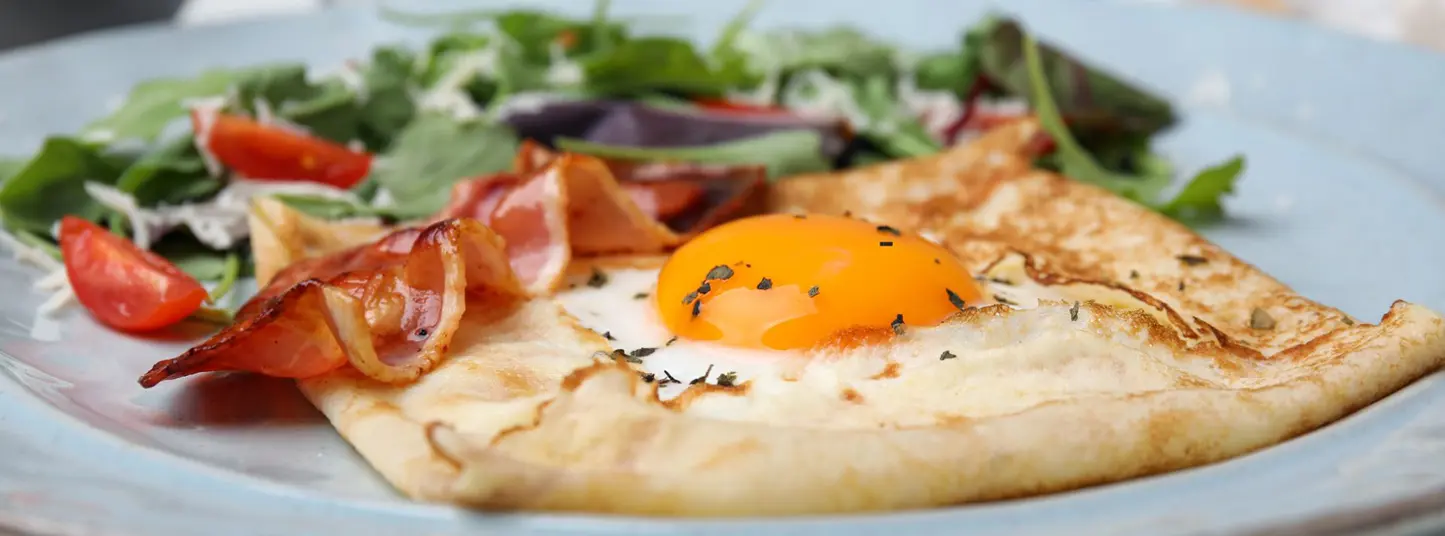
Galette bretonne, savoury crepe
Visit Brittany is famous for its picturesque landscapes, wild coastlines and delicious culinary specialties. These include.., the Breton galette takes pride of place. Thin, crispy and deliciously filling, it's a staple of Breton cuisine. In this article, we'll take an in-depth look at this traditional dish, from its definition to its variations, including the best-known brands.
What is a Galette Bretonne?
Definition of Galette Bretonne
The Breton galette is a savoury pancake made with buckwheat flour. It differs from the sweet crêpe, which is made with wheat flour. Traditionally, the galette is topped with savory ingredients such as ham, cheese, eggs and more.
Product description
Thin and slightly crispy around the edges, the galette bretonne offers a unique texture. Its taste is distinctive, thanks to buckwheat flour, which adds a slight bitterness and an incomparable depth of flavor. It is often baked on a "bilig" hotplatewhich gives it its perfect texture.
The Taste of the Galette Bretonne or savoury crêpe
A blend of simplicity and refinement
The taste of galette bretonne is both simple and refined. Buckwheat flour lends an earthy, slightly nutty flavor that blends perfectly with a variety of fillings. Galettes can be topped with local products such as goat's cheese, mushrooms, smoked salmon and many other tasty ingredients.
Different Galette Recipes in Brittany
Traditional recipes
La Galette Complète
The whole-wheat galette is undoubtedly the most emblematic. Filled with ham, cheese and egg, it's a classic that everyone loves.
La Galette de la Mer
Garnished with seafood such as scallops, shrimp or smoked salmon, this galette showcases Brittany's maritime riches.
Modern recipes
Vegetarian Galette
With seasonal vegetables, goat's cheese and fresh herbs, this galette is perfect for lovers of vegetarian cuisine.
La Galette Gourmande
For a more luxurious touch, the galette can be garnished with foie gras, onion confit and figs. A true gourmet delight.
Savoury or sweet galettes?
Savoury Galettes
Traditionally, Breton galettes are savory. They are perfect for lunch or dinner, and can be filled with a multitude of ingredients according to taste and season.
Sweet cakes
Although less common, it's quite possible to prepare sweet buckwheat pancakes. They can be topped with fruit, honey, chocolate or salted butter caramel for an original dessert version.
Galette bretonne - The different flours used
Buckwheat flour
It's the main ingredient in the traditional Breton galette. Gluten-free buckwheat flour gives the galette its dark color and distinctive taste.
Alternative flours
Some modern recipes incorporate other flours, such as wheat flour, for a softer texture. However, the true Breton galette remains faithful to buckwheat flour.
The best-known brands of Galettes à la Vente
Traditional Brands
Bertrand Larcher
This brand is well known for its quality galettes, made using traditional Breton methods.
Crêperie Josselin
Located in Paris but famous for its authentic Breton galettes, Crêperie Josselin offers high-quality takeaway products.
Modern Brands
Breizh Café
With restaurants around the world, Breizh Café also offers ready-to-bake galettes, so you can enjoy a Breton galette at home.
Ty Gwez
This brand offers organic galettes, prepared with quality ingredients and respecting Breton tradition.
Galette bretonne - Frequently Asked Questions (FAQ)
What are the differences between a crêpe and a galette bretonne?
The main difference lies in the flour used. Pancakes are made with wheat flour and are generally sweet, while galettes are prepared with buckwheat flour and are salty.
How to bake a galette bretonne at home?
It's best to use a non-stick frying pan or a baking tray (bilig). The patty should be thin and cooked over medium heat to obtain a crispy texture.
Can galettes bretonnes be frozen?
Yes, the patties can be frozen. Simply separate them with parchment paper to prevent them from sticking together.
What are the best fillings for a Breton galette?
Classic fillings include ham, cheese and eggs. However, you can get creative with ingredients like vegetables, seafood, or even sweet ingredients.
Is the Breton galette gluten-free?
The traditional galette made with buckwheat flour is naturally gluten-free. However, it is important to check the labels of commercial products to ensure there is no cross-contamination.
Where can I buy ready-to-bake Breton galettes?
Ready-to-bake galettes can be found in delicatessens, regional produce stores, and sometimes even supermarkets. Brands such as Breizh Café and Bertrand Larcher offer quality galettes.
Galette bretonne - Conclusion
The Breton galette is much more than just a regional dish; it's a true expression of the culture and culinary traditions of Brittany. Whether you prefer a galette completeWhether it's a vegetarian galette or a more gourmet version, there's a galette for every occasion and every taste. Try making your own galettes at home, or savor those from the best brands, and discover the authentic pleasure of this emblematic dish.
