
Meurthe et Moselle
The department of Meurthe et Mosellelocated in the heart of the region Great East at Franceis named after rivers Meurthe et Moselle who travel through it. It is rooted in the rich history and heritage Lorraine, offering a wide range of attractions for lovers of nature, history, art and gastronomy.
This article will guide you through the unmissable sites and activities in Meurthe et Moselle. You'll discover the historical depth of the département, reflecting its Lorraine, French and German heritage, as well as its unspoilt natural landscapes. Get ready for unique experiences that capture the essence of local know-how.
To discover other French departments, read our detailed article here.
The rich history of Meurthe et Moselle
The Meurthe et Moselle département, renowned for its diverse landscapes, is also an area rich in history. From the splendor of the 18th century, through the cultural influence of Lorraine, to the dark days of the First World War, this chapter guides you through Meurthe et Moselle's essential historical sites.
Nancy's Place Stanislas, a world heritage jewel
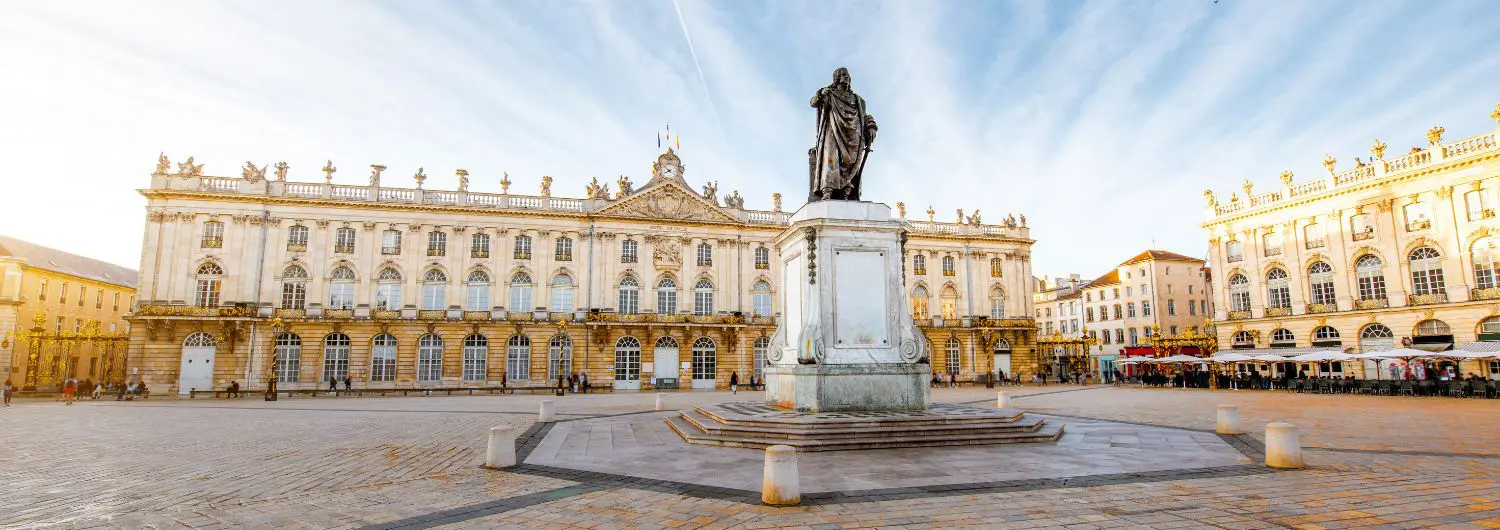
The Place Stanislas, emblem of Nancy and Meurthe et Moselle departments, is named after Stanislas Leszczynski, former King of Poland and last Duke of Lorraine. Built between 1752 and 1756, it was intended to honor King Louis XV, Stanislas' son-in-law. This masterpiece of classical architecture features gilded wrought-iron gates, fountains and statues.
It is framed by exceptional buildings such as the town hall, the opera house, the Musée des Beaux-Arts and the Grand Hôtel de la Reine. Listed as a UNESCO World Heritage Site since 1983, Place Stanislas, together with Place de la Carrière and Place d'Alliance, forms a remarkable monumental ensemble.
The center of many cultural events, it is illuminated every summer during the son et lumière show.
Traces of the Great War in and around Verdun

Meurthe et Moselle was the setting for one of the most devastating confrontations of the First World War: the Battle of Verdun, which lasted from February 21 to December 18, 1916, pitting the French and German armies against each other for control of the town and its forts. The conflict claimed more than 700,000 victims, including 163,000 French and 143,000 German soldiers.
Places of remembrance such as the Verdun Memorial, the Douaumont National Cemetery, the Douaumont Ossuary, the Douaumont and Vaux forts, the Bayonet Trench, the destroyed village of Fleury-devant-Douaumont and the World Peace Center bear witness to this tragedy. These sites also allow visitors to discover the landscapes marked by the fighting.
The Château de Lunéville, nicknamed the "little Versailles lorrain"

The Château de Lunéville has been the residence of the Dukes of Lorraine since the 13th century. Rebuilt between 1703 and 1720 for Duke Leopold I by Pierre Bourdict, Nicolas Dorbay and Germain Boffrand, it was inspired by the Château de Versailles, with its U-shaped layout around a main courtyard. The château features sumptuous apartments, a chapel, a Galerie des Cerfs and a theater, and is surrounded by formal and formal gardens.
Stanislas Leszczynski, who made it his main residence, established a brilliant court here, attracting renowned artists such as Voltaire, Émilie du Châtelet, Jean-Jacques Rousseau and Claude Joseph Vernet.
Classified as a historic monument in 1901 for its chapel and in 1998 for its entirety, the château has suffered several fires, the most recent in January 2003 leading to an extensive reconstruction campaign.
Natural highlights in Meurthe et Moselle
Meurthe et Moselle, a department rich in history, is also a veritable jewel case of nature. Visit forests From mysterious landscapes to winding rivers, lush green meadows and wetlands, this region is brimming with exceptional natural sites, home to remarkable biodiversity. Let's take a look at three of Meurthe et Moselle's natural gems, which will make you fall under the spell of Lorraine's natural heritage.
Parc Naturel Régional de Lorraine, escape to the heart of biodiversity
The Parc Naturel Régional de Lorraine, a haven of peace covering 205,000 hectares, encompasses 193 communes between Nancy and Metz, in the Meuse, Meurthe-et-Moselle and Moselle départements. The park, dedicated to the preservation of natural, cultural and landscape heritage, is a model of sustainable development. With over 340 ponds and lakes, including the famous Etang de Lindre, a RAMSAR site, the park is a sanctuary for flora and fauna, home to rare species such as the beaver, the mute swan and the gentian pneumonanthe. Hiking trails, cycling circuits, birdwatching observatories and educational activities are all on offer for a total immersion in nature.
Find out more about regional nature parks in France, read our detailed article here.
Gardens of the Prémontrés Abbey in Pont-à-Mousson
In the heart of Pont-à-Mousson, the Jardins de l'Abbaye des Prémontrés offer a haven of peace on the banks of the Moselle. This historic site, now a cultural center and 3-star hotel, boasts three distinct gardens: the cloister garden, or jardin des Senteurs, a French-style space with a collection of aromatic plants; the cour d'honneur garden, inspired by the classical style with its flower beds; and the Moselle garden, an English-style garden offering a magnificent view of the abbey and the town. Open all year round, these gardens host a variety of cultural events.
Find out more about abbeys in France, read our detailed article here.
The Étangs de Lachaussée walk, an unforgettable nature break
The Étangs de Lachaussée hike, an 11 km trail in the Parc Naturel Régional de Lorraine, immerses you in a landscape of man-made ponds created in the 13th century. This protected site is a haven for exceptional flora and fauna, with opportunities to observe various species of birds and mammals. The walk reveals the beauty of the surrounding forests, meadows and wetlands, and offers views of the Domaine du Vieux Moulin, a watermill transformed into a cultural and tourist center, enriching the visitor experience.
Find out more about lakes and ponds in France, read our detailed article here.
Unique experiences in Meurthe et Moselle
Meurthe et Moselle is much more than just a department: it's an invitation to enjoy unique experiences, to immerse yourself in local culture and gastronomy. Whether you're looking for magic, craftsmanship or exquisite flavors, Meurthe et Moselle has a lot to offer. Let's discover three unforgettable experiences that will immerse you in the region's traditions, crafts and culinary specialties.
St. Nicholas festivities: a magical event
Saint-Nicolas, the traditional celebration of the Lorraine region in honor of its patron saint, is a time of enchantment, particularly in Nancy and Saint-Nicolas-de-Port. Officially celebrated on December 6, the festivities extend over several weeks, starting in late November and ending in early January in Nancy.
The program includes Christmas markets, shows, concerts, exhibitions, workshops and games. The highlight of the festivities is the big St. Nicholas weekend, marked by a fairytale parade with floats, brass bands, street performers and fantastical creatures, followed by a sound and light show on the façade of the town hall. In Saint-Nicolas-de-Port, the festivities include a mass in the basilica, a folk parade and a spectacular fireworks display.
These celebrations are also an opportunity to sample regional culinary specialties such as manalas, gingerbread, macaroons and bergamots.
Discover local crafts: from earthenware to embroidery
Meurthe et Moselle boasts a rich heritage of craftsmanship, reflecting the know-how and creativity of its artisans. Visit workshops, stores and museums to discover earthenware, glassmaking, embroidery, marquetry and ironwork.
Admire works of earthenware in museums or visit the workshops directly for an insight into the artistic process. Glassmaking is another fascinating local art, with opportunities to visit dedicated workshops and museums. Embroidery, especially beadwork, offers a delicate insight into local craftsmanship, with workshops open to visitors.
Craft breweries, a journey of taste
The Meurthe et Moselle region is home to many craft breweries, producing quality beers with unique flavors. Discover the secrets of beer-making, from ingredients to brewing, by visiting these breweries or taking part in brewing workshops. Breweries such as Cheval à Toul, Champigneulles, Hoppy Road in Maxéville and many others offer unique taste experiences.
Conclusion
It is clear that Meurthe et Moselle is a rich destination and diverse, offering a multitude of attractions to suit all tastes. Whether your interest lies in history, nature, culture or even gastronomy, this department promises fascinating discoveries, unforgettable experiences and the opportunity to create memorable souvenirs in good company.
So don't put off a visit to Meurthe-et-Moselle, an experience you're sure to cherish!
FAQ
What's the name of department 54?
Department 54 is called Meurthe-et-Moselle. It was formed in 1871 from the Meurthe and Moselle regions, which remained French following the Treaty of Frankfurt.
Where is it good to live in Meurthe-et-Moselle?
According to the Association des Villes et Villages où il fait bon vivre, the most pleasant places to live in Meurthe-et-Moselle are Peltre, Saint-Julien-lès-Metz and Longeville-lès-Metz. These places stand out for their quality of life, safety, range of shops and services, access to transport, availability of healthcare, education, community solidarity, as well as sports and leisure options.
What do we call the inhabitants of Meurthe-et-Moselle?
Residents of Meurthe-et-Moselle are known as Meurthe-et-Mosellans or Meurthois. The inhabitants of Verdun, a town in the neighboring Meuse department, are known as Verdunois.
What is the largest city in Meurthe-et-Moselle?
The largest city in Meurthe-et-Moselle varies according to the criteria used: in terms of population, it's Nancy with 105,421 inhabitants. In terms of surface area, Val de Briey is the largest at 39 km².
