
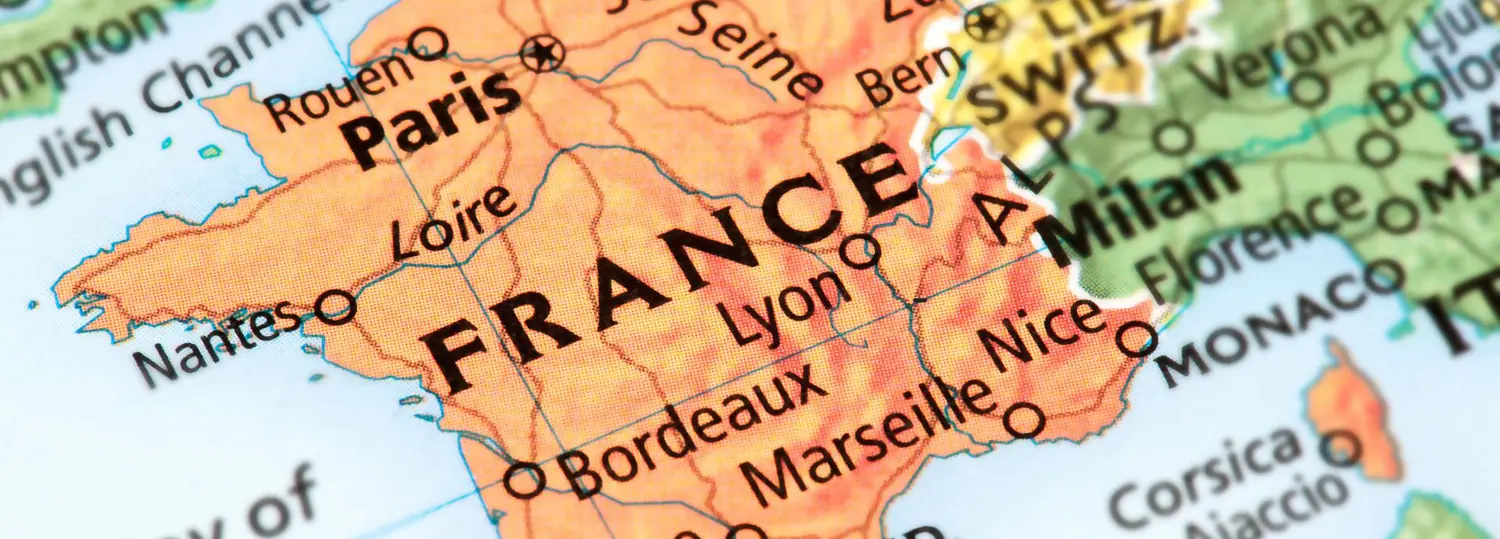
France department map

Map of French departments: organization and administrative divisions
Visit map of French departments represents the administrative division of the country into 101 departmentsincluding 96 in mainland France and 5 overseas. This organization, set up in 1790 during the French Revolution, aimed to simplify territorial management and ensure greater equality between regions.

Organization of French departments
Each department is identified by a numberused for license plates and postal codes. These departments are grouped into regionswhich usually have more than one. For example, the Auvergne-Rhône-Alpes includes departments such as Rhône (69)the Haute-Savoie (74) and the Drôme (26).
French overseas departments (DOM)
In addition to the metropolitan departments, the map of French departments includes DOM : Guadeloupe (971), Martinique (972), French Guiana (973), Reunion Island (974) and Mayotte (976). These territories follow the same administrative framework as the départements of mainland France, although they have their own local specificities.
The evolution of departments
Since 2015, a number of mergers have modified the administrative organization, such as the creation of the Great Eastwhich brings together the former départements of Alsace, Champagne-Ardenne and Lorraine. Despite these changes, the departmental structure remains essential for the management of public services, transport and regional planning.
Whether for the geography, history or administrationthe map of French departments remains an essential tool for understanding the country's organization. 🗺️🇫🇷
The diversity of landscapes France, across its departments
France is known for its incredible variety of landscapes, cultures, and heritages, thanks to its 101 departments, each with its own distinctive features and unique tourist attractions. Whether you're looking for nature, history, or gastronomy or even recreational activities, the French departments are sure to meet your expectations.
From the mountain By the Sea: A Journey Without Borders
Surrounded by the English Channel, the Atlantic Ocean, the Mediterranean Sea, and the North Sea, France offers a diverse range of coastal landscapes, from the steep cliffs of Normandy to the beaches the fine sandy beaches of the French Riviera, not to mention paradise islands like Corsica and Réunion. Lovers of water sportsWhether you're looking for adventure, relaxation or exploration, you'll find what you're looking for along France's magnificent coastlines.
France is also a mountainous country, with five major mountain ranges: the Alps, the Pyrenees, the Massif Central, the Jura, and the Vosges. These mountainous regions offer breathtaking views, snow-capped peaks, and lakes crystal-clear waters, lush forests, and picturesque villages. Whether you're a fan of hiking, ski, Whether it's hiking, biking, or paragliding, the French mountains offer a variety of activities for all skill levels.
Hidden natural treasures: national and regional parks
France is home to 11 national parks and 54 regional nature parks, covering around 15% of its territory. These parks aim to protect and enhance exceptional natural areas, rich in flora and fauna. They are havens for observing nature and learning about regional history, culture and traditions. Among the most remarkable parks, the Écrins National Park offers spectacular Alpine scenery, the Cévennes National Park features a wide diversity of natural environments, and the Verdon Regional Nature Park is famous for its gorges, Europe's largest canyon, where turquoise waters contrast with towering cliffs.
La France des petits villages: discovering rural charm
France is also home to many small villages that have managed to preserve their charm and authenticity over the centuries. Often ranked among the France's most beautiful villages, they reflect history, the’architecture and the way of life in their regions. These villages offer idyllic settings for relaxing, taking walks, admiring the heritage, and sampling local specialties. Among them, Rocamadour stands out for its religious sanctuary overlooking the Alzou Canyon; Saint-Cirq-Lapopie offers a breathtaking view of the Lot Valley; and Colmar charms visitors with its picturesque historic center, half-timbered houses, and flower-lined canals.
Culture and heritage: a heritage at the heart of regions and departments
France is distinguished by its exceptional history, culture and heritage. Each region, department and commune reveals unique treasures, inviting discovery, admiration and sharing.
Through the castles, museums, festivals, and fine dining—the diversity and richness of France’s cultural heritage are all yours to discover.
Castles and museums: guardians of history
With more than 10,000 castles, France’s departments tell the story of the country, its kings, its wars, and its revolutions. Many are designated as historic monuments. monuments historic sites, some of which are even listed as UNESCO World Heritage Sites.
These castles offer guided tours, events and exhibitions, transporting you back in time and revealing the secrets of these illustrious residences.
France's iconic châteaux include the Château de Versailles, symbol of Louis XIV; the Château de ChambordThe Château de Chenonceau, also known as the Château des Dames, and the Château de Carcassonne, a medieval fortress.
With over 1,200 museums, France's départements preserve and exhibit collections of art, history, science and civilization. These spaces of culture, education and entertainment allow you to discover the masterpieces of French and world heritage.
Must-see museums include the Louvre, the world's most visited museum; the Musée d'Orsay, with its Impressionist works; the Centre Pompidou, dedicated to modern and contemporary art; and the Musée du Quai Branly, showcasing the arts and civilizations of Africa, Asia, Oceania and the Americas.
Regional festivals: immersion in local culture
France also celebrates festivals, music, theater, film, dance and literature. Every year, thousands of festivals enliven the French departments, attracting millions of spectators and offering a window on local culture.
Renowned festivals include the Festival de CannesThe Festival d'Avignon, with its theatrical performances; the Festival de la BD d'Angoulême, dedicated to the ninth art; and the Festival Interceltique de Lorient, bringing together Celtic cultures.
Regional gastronomy: a unique culinary journey
Last but not least, France is renowned for its gastronomy, local produce and culinary savoir-faire. Each of the French departments offers its specialities, traditional products and recipes, often labelled and promoted, constituting a source of local pride.
These specialties are a real treat for the taste buds and an invitation to travel through the flavors of France's heritage.
Famous culinary specialties include foie gras from the South-West; sauerkraut from Alsace; bouillabaisse from Provence; and Roquefort cheese, matured in natural caves.
Activities and leisure: for a lively and diversified tourism in the French Departments
France, with its many facets, offers a vast choice of activities and leisure pursuits to suit all tastes and ages. Whether you're a sports enthusiast, an avid adventurer, curious about new discoveries or in search of relaxation, the French départements offer an exceptional playground for fun and enjoyment.
Let's take a look at a few suggestions for activities and leisure activities in the various regions of France.
Hiking and outdoor sports: nature as a playground
France abounds in hiking trails inviting you to explore nature in all its diversity. Whether in the mountains, forests, seaside or countryside, it's possible to walk, run, cycle or ride through sumptuous landscapes in every French department. Thrill-seekers can also indulge in outdoor sports such as skiing, rafting, paragliding, climbing or canoeing in all French departments, promising memorable experiences. Visit Upper Savoywith its various ski resorts, such as Les GetsAvoriaz, or Morzine is a good example.
Must-see hiking trails to discover the riches of France's départements include the GR 20 in Corsica, offering spectacular sea and mountain views; the Stevenson trail in the Cévennes and Gévaudan, following in the footsteps of the Scottish writer; and the Mont Blanc tour, covering Europe's highest peak through France, Italy and Switzerland.
Green tourism: ecotourism and environmental preservation
Green tourism is defined as an environmentally friendly approach aimed at protecting nature while promoting local development and the well-being of communities. This form of tourism emphasizes hostingeco-friendly experiences, activities in harmony with nature, local products, and authentic interactions with locals, in one of France’s 101 departments.
It's a responsible, supportive and sustainable way to travel.
The Bay of the Somme and its nature reserve, the Luberon regional nature park with its landscapes of garrigue and lavender, and the Dordogne, famous for its castles, caves and gastronomy, are among the top destinations for green tourism in the French départements.
The most beautiful tourist routes: on foot, by bike or by car
France is the perfect destination for sightseeing tours, allowing visitors to discover a multitude of points of interest along a itinerary predefined. Whether on foot, by bike, or by car, these routes wind through regions of undeniable charm, offering a rich glimpse into the heritage, culture, and natural beauty of France’s departments.
The Alsace wine route, with its vineyards and picturesque villages, the Loire à vélo, skirting the majestic river and its castles, or the Route Napoléon, retracing the Emperor's return from Elba, are just a few examples of the most remarkable tourist circuits for discovering France's 101 départements.
Where to stay on vacation in France's départements
Choose where to stay for vacations in France's départements is an essential step in organizing a stay that's just right for you, whether you're exploring coastal, rural or urban areas. Visit French departments offer an exceptional diversity of tourist accommodations, enabling everyone to find the ideal solution to suit their budget and travel style.
Choose from different types of tourist accommodation
Visit departments in France offer a wide range of tourist accommodations to suit every profile. You can easily find :
- Houses and villas by the sea in the French departments
- Downtown apartments in dynamic French departments
- Self-catering cottages in the heart of France's most natural departments
- B&Bs for local immersion
- Tourist residences with services
- From unusual accommodation in certain French departments
Every type of accommodation in the departments of France allows you to enjoy a different experience, depending on whether you prefer comfort, nature or proximity to tourist sites.
Each département has its own specific tourist attractions and accommodation offering: gîtes ruraux in Dordogne or in Ardèche, chalets in the Alps, campsites in the Vendée or seaside apartments in Brittany in Bouches-du-Rhône. This variety means that holidaymakers can choose accommodation to suit their desires, whether for nature, culture or relaxation.
France's départements play a key role in the organization of tourism, by promoting their local heritage and developing appropriate infrastructures. So, whether you prefer to stay in the countryside, in the mountains or on the coast, the tourist accommodation in France are an ideal way to discover the regions and take full advantage of the unique identity of each département.
Direct rentals in French départements
Visit direct vacation rentals is an increasingly popular option. It allows you to book a property directly with the owner, without an intermediary, which fosters a relationship of trust and often more attractive rates.
In the departments of France, This practice offers several advantages:
- Reduced prices with no commission charges
- Direct contact with local residents
- A better understanding of the area and nearby activities
This booking method is particularly popular with French rural departments, where authenticity and human contact enrich the travel experience.
Solutions for owners
In the French departments, Today, owners of vacation rentals have many tools at their disposal to optimize the management of their properties and maximize their online visibility.
Among the solutions most frequently used in departments in France :
- Visit OTA (Online Travel Agencies) like Airbnb or Booking, which offer international visibility
- Visit channel managers, essential for synchronizing calendars across multiple platforms
- Visit PMS (Property Management Systems), which facilitate global booking and customer management
- Visit private rental sites, ideal for direct bookings in France's départements
These tools have become essential for owners wishing to develop their business while optimizing their occupancy rate.
101 French Departments - Conclusion
It's clear that France abounds in opportunities for tourists, satisfying a wide range of preferences, desires and budgets. Each French department is unique, offering a wealth of attractions that highlight the diversity and splendor of France's heritage. Whether you're looking for natural escapades, cultural experiences, gastronomic delights or leisure activities, you're sure to find what makes you happy in one of France's départements.
So don't delay in exploring France's regional treasures. You won't regret it! To help you plan your trip, don't hesitate to consult the websites of the tourist offices in the départements that appeal to you, or visit the France Tourisme website for information, advice and offers to meet your expectations.
Have a good trip and see you soon!
FAQ
Which French departments are the most popular with tourists?
The French départements most popular with tourists, both local and international, are characterized by a high number of overnight stays in shared accommodation. According to 2010 statistics, the top five departments are :
- Paris (75), with 15.2 million arrivals and 35.8 million overnight stays.
- Seine-et-Marne (77), attracting 4.4 million visitors for 14.7 million overnight stays, largely thanks to Disneyland Paris.
- Alpes-Maritimes (06), with 3.7 million arrivals and 16.9 million overnight stays, favored by its Mediterranean climate and the Côte d'Azur.
- Bouches-du-Rhône (13), with 2.8 million visitor arrivals and 9.9 million overnight stays, is known for its diverse landscapes and cultural cities such as Marseille and Aix-en-Provence.
- Rhône (69), with 2.7 million visitors and 7.5 million overnight stays, driven by the dynamism of Lyon, its rich heritage, cuisine, and festive traditions.
Which regions are the most popular with tourists?
France's most popular tourist regions are Provence-Alpes-Côte d'Azur, Nouvelle-Aquitaine and Brittany. Their varied landscapes, cultural and gastronomic heritage, as well as their beaches and seaside resorts are alluring.
Corsica, Occitania and Auvergne-Rhône-Alpes are also among the favorite destinations for summer 2021, according to Protourisme. But all French départements are worth discovering.
Which are France's least touristy départements?
The French departments attracting the fewest tourists are generally far from the coast and sparsely populated. According to INSEE, in 2019, the 12 least-visited départements included Creuse, Territoire de Belfort, Haute-Saône, Meuse, Gers, Ariège, Cantal, Drôme, Haute-Marne, Nièvre, Cher and Lozère.
These departments nevertheless offer treasures cultural, natural and gastronomic discoveries, as highlighted in various articles.
Which French department is the most beautiful?
The choice of the most beautiful French département is subjective and varies according to personal preference. However, a Topito survey puts Finistère (29) in first place, followed by Morbihan (56) and Pyrénées-Atlantiques (64). These departments stand out for their diverse landscapes, combining sea and mountains, as well as their rich cultural and gastronomic heritage.
