Carcassonne
Carcassonne n’est pas simplement une ville ; c’est une invitation à voyager à travers le temps. Située dans le department de l’Audein the heart of the region OccitanieThis historic city opens the doors to its thousand-year-old past, highlighting its exceptional monuments, its many activities, and its delectable gastronomy.
Que votre passion réside dans l’art, la nature, le sport, ou la culture, Carcassonne saura vous captiver et vous divertir.
This article is your guide to exploring Carcassonne, highlighting its rich history, must-see sites, unique experiences and best addresses. Join us as we discover the city of Carcassonne. medieval city de Carcassonne, la plus vaste d’Europeand the bastide Saint-Louis, its vibrant town center.
Vous découvrirez que Carcassonne regorge d’activités et de sites à explorer, assurant que votre séjour sera tout sauf ennuyeux !
Plongée dans l’histoire millénaire de Carcassonne
Carcassonne est une ville riche en histoire, ayant traversé de multiples périodes depuis l’oppidum gaulois jusqu’à la cité médiévale fortifiée, sans oublier son passé de colonie romaine, la vicomté des Trencavel, la croisade contre les Albigeois et sa restauration au XIXe siècle. Elle a su conserver et mettre en valeur son heritage exceptionnel. Cette section vous emmène à la découverte des moments clés de l’histoire de Carcassonne, vous offrant une meilleure compréhension de sa beauté et de sa richesse.
The origins of the Cité
L’histoire de Carcassonne remonte au VIe siècle av. J.-C., avec l’établissement des Volques Tectosages, un peuple celte, sur un promontoire rocheux. Ils y érigent un oppidum, Carsac, préfiguration de la future cité. Au IIe siècle av. J.-C., les Romains prennent le contrôle de la région, transformant l’oppidum en une ville fortifiée nommée Carcaso. Sous leur égide, Carcassonne devient une colonie romaine prospère, au cœur de la Narbonnaise. Les vestiges de la muraille gallo-romaine, première enceinte de la cité, sont encore visibles aujourd’hui.
Medieval times and the walled city
Après la chute de l’Empire romain, Carcassonne connaît plusieurs dominations avant de devenir une vicomté au IXe siècle, s’enrichissant d’un château, le château comtal. Les Trencavel, vicomtes du XIe au XIIIe siècle, marquent la cité de leur empreinte, développant le catharisme et renforçant ses défenses avec une double enceinte dotée de cinquante-deux tours. Carcassonne devient ainsi la plus grande forteresse d’Europe.
L’impact de la croisade contre les Albigeois
La prospérité de Carcassonne est ébranlée par la croisade contre les Albigeois en 1209, visant à éliminer l’hérésie cathare. Raymond Roger Trencavel, protecteur des cathares, est vaincu par les croisés de Simon de Montfort. Après un siège de quinze jours, la cité capitule, Trencavel est emprisonné et décède peu après. Les terres sont confisquées puis intégrées au royaume de France en 1224, Carcassonne devenant une place forte royale.
Restoration in the 19th century and preservation of the heritage
Avec la perte de son importance stratégique, Carcassonne se dégrade jusqu’à être menacée de destruction. Heureusement, classée monument historique en 1849 grâce à Jean-Pierre Cros-Mayrevieille et Prosper Mérimée, une restauration est lancée sous Eugène Viollet-le-Duc et Paul Boeswillwald. Ces travaux, bien que controversés, ont permis de préserver la cité, qui est inscrite au patrimoine mondial de l’UNESCO en 1997, soulignant son importance universelle.
Discover Carcassonne's must-sees
Plongez dans l’histoire fascinante de Carcassonne et explorez ses emblématiques lieux chargés de patrimoine. Que votre passion soit l’architecture, la culture ou la nature, Carcassonne saura vous captiver et vous offrir des moments inoubliables.
Discover the must-see sites not to be missed during your visit.
The majestic medieval city
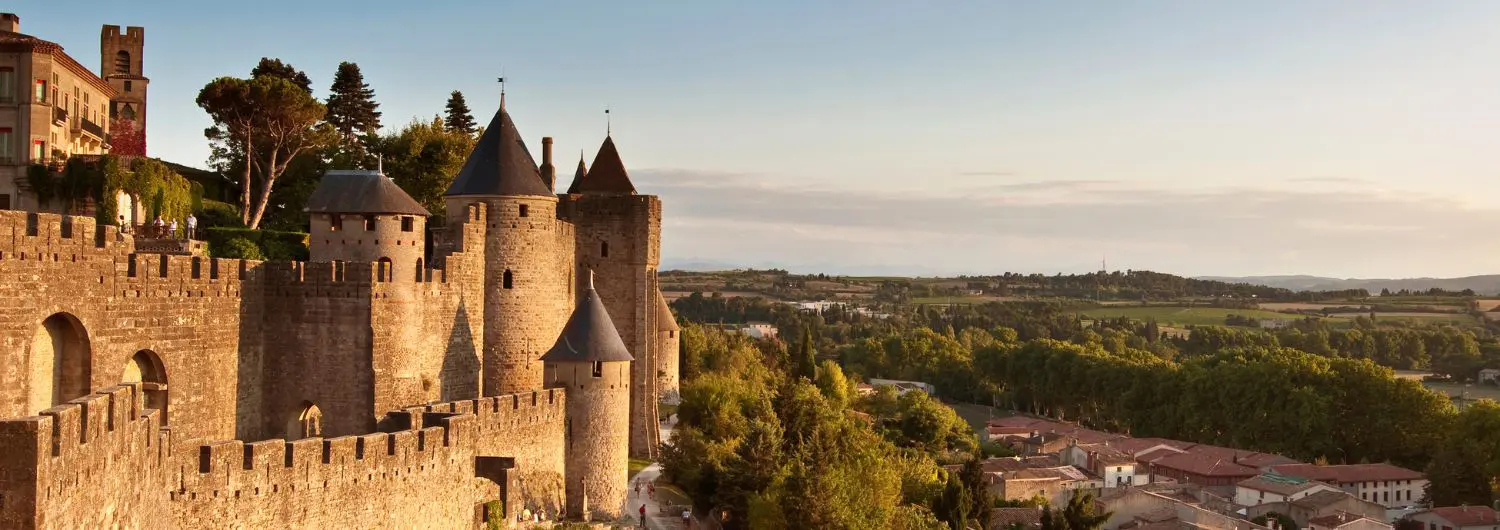
La Cité Médiévale, inscrite au patrimoine mondial de l’UNESCO, est le joyau de Carcassonne. Elle représente la plus grande forteresse d’Europe et se distingue par son excellente conservation. Ses remparts, tours, portes et ruelles vous transportent dans une autre époque. Ne manquez pas la basilique Saint-Nazaire, un chef-d’œuvre des styles roman et gothique, ainsi que le château comtal, ancienne demeure des vicomtes de Carcassonne, abritant un musée dédié à l’histoire de la cité. Une promenade sur les remparts vous offre une vue spectaculaire sur la ville et ses alentours.
The château comtal and its ramparts
The château comtal, built on a Gallo-Roman site as early as the 12th century, was the residence of the viscounts of Carcassonne and the kings of France. This impressive monument is protected by a double fortified enclosure of fifty-two towers, forming a formidable defense. Visit museum qu’il abrite retrace l’évolution de la cité depuis l’Antiquité jusqu’au XIXe siècle. La visite du château offre également l’accès à une promenade de trois kilomètres le long des remparts, d’où vous pouvez admirer des vues magnifiques sur la région.
The Pont Vieux and Bastide Saint-Louis
Le Pont Vieux, datant du XIVe siècle, est un passage historique reliant la cité médiévale à la Bastide Saint-Louis, le centre-ville historique fondé par le roi Saint-Louis au XIIIe siècle. Ce pont offre une vue pittoresque sur la cité et l’Aude, agrémentée de jardins et de bancs. La Bastide Saint-Louis se caractérise par son agencement en damier, ses rues perpendiculaires et est ponctuée de boulevards à la place des anciens remparts. La place Carnot, animée par un marché trois fois par semaine et ornée de la fontaine de Neptune, ainsi que la cathedral Saint-Michel, with its remarkable organ and 54-metre bell tower, is a must-see.
Le Canal du Midi : une œuvre d’art ingénieuse
Classé au patrimoine mondial de l’UNESCO, le Canal du Midi est une réalisation exceptionnelle du XVIIe siècle par l’ingénieur Pierre-Paul Riquet, reliant la Garonne à la Mediterranean. Ce chef-d’œuvre technique et artistique, avec ses écluses, ponts, aqueducs et tunnels, serpente sur 240 kilomètres à travers des paysages enchanteurs. Profitez-en en bateau, à vélo, en randonnée ou lors d’un pique-nique. Admirez l’écluse de Saint-Jean, proche de la cité médiévale, et explorez le port de Carcassonne, point de départ idéal pour des croisières et la location de bateaux.
Carcassonne, célèbre pour sa cité médiévale classée au patrimoine mondial de l’UNESCO, est également traversée par the Canal du Midianother World Heritage gem. Cette voie d’eau historique, conçue au XVIIe siècle par Pierre-Paul Riquet, relie Toulouse à la Méditerranée sur environ 240 km.
Late but strategic integration
Initially, the canal did not pass through Carcassonne due to financial disagreements between Riquet and the local authorities. Ce n’est qu’en 1810 que le canal fut dévié pour traverser la ville, entraînant la construction d’infrastructures majeures telles que le port fluvial et le pont-canal du Fresquel. This integration stimulated economic and urban development in the lower town.
A must for yachtsmen
Aujourd’hui, Carcassonne est une étape prisée des navigateurs. The marina, located close to the SNCF train station, offers services to boaters and is an ideal starting point for exploring the town. River cruises are also available to discover the canal and its surroundings.
Riverbanks for relaxation
The banks of the canal, lined with plane trees, offer a pleasant setting for walking or cycling. They provide an easy link between the town center and the medieval city, and offer picturesque views of the fortifications and surrounding countryside.
In short, the Canal du Midi enriches Carcassonne's heritage, offering visitors a unique experience combining history, culture and nature.
Unique activities and experiences in Carcassonne
La ville de Carcassonne est un lieu où l’histoire et la culture se mêlent à la vie et au plaisir. Peu importe ce que vous recherchez : sensations fortes, détente, délices culinaires ou moments conviviaux, Carcassonne a de quoi répondre à toutes vos attentes. Découvrez ci-dessous une sélection d’activités et d’expériences uniques qui feront de votre séjour à Carcassonne un souvenir inoubliable.
Festivities and cultural events
Tout au long de l’année, Carcassonne se transforme en une scène festive, accueillant des événements culturels de premier plan qui célèbrent son riche patrimoine et sa créativité. Le Festival de Carcassonne est un moment phare de l’été, proposant plus de 120 spectacles variés – musique, théâtre, danse, opéra, cirque – dans des cadres exceptionnels tels que la cité médiévale, le théâtre Jean-Deschamps ou le château comtal. Le 14 juillet, ne manquez pas l’Embrasement de la Cité, un feu d’artifice spectaculaire lancé depuis les remparts et attirant plus de 700 000 spectateurs. En automne, le Festival du Jeu de Carcassonne offre des animations ludiques pour tous, inspirées du célèbre jeu de société éponyme.
Tasting of local gastronomy
La ville de Carcassonne est également un paradis pour les gourmets, proposant une gastronomie locale riche et colorée. Ne partez pas sans avoir goûté au cassoulet, plat emblématique de la région, ou sans avoir découvert les vins du Languedoc, issus des vignobles locaux et réputés pour leur diversité. Les visites de domaines viticoles, les dégustations et les croisières œnologiques sur le canal du Midi sont autant d’occasions de savourer ces trésors. Pour les amateurs de sucré, le gâteau à la broche et la croustade, tarte aux pommes et à l’armagnac, promettent de doux moments de plaisir.
Nature walks and relaxation at Lac de la Cavayère
Just a few minutes from the city center, Carcassonne offers a haven of peace and nature in the heart of the French Alps. Lake de la Cavayère. Ce plan d’eau artificiel est l’endroit idéal pour nager, se détendre au soleil, se promener ou s’amuser grâce à ses trois plages aménagées, ses water activities (sailing, kayak, paddlepedal boats, water skiing) and leisure activities (children's playgrounds, picnic areas, hiking trails, etc.). hikingforest acrobatic park).
Fun and games with family and friends
Carcassonne est aussi un terrain de jeu exceptionnel pour des moments ludiques en famille ou entre amis. Plongez dans le Moyen Âge au Camp Médiéval, explorez l’art urbain avec le Street Art Tour ou testez votre esprit d’équipe dans des Escape Games captivants. Chaque activité offre une expérience unique, vous permettant de découvrir la ville sous un nouvel angle tout en vous amusant.
Conclusion
Carcassonne proves to be a captivating destinationThis is an unparalleled immersion in the past. During your visit, you'll be enchanted by its rich history, remarkable heritage, exquisite cuisine and diverse leisure activities.
Que votre quête soit culturelle, en pleine nature, pour un moment de relaxation ou de fun, Carcassonne saura répondre à toutes vos attentes, en vous offrant des moments d’émerveillement uniques. Ne tardez pas, planifiez dès à présent votre voyage à Carcassonne et laissez-vous charmer par son authenticité et sa magie !
FAQ
What's the best day to visit Carcassonne?
Le moment idéal pour découvrir Carcassonne est en semaine, de juin à août. Durant cette période, le climat est agréable et la ville s’anime de diverses activités culturelles. Il est conseillé d’éviter les weekends, où l’affluence est à son comble et les prix grimpent.
Where to go for a walk in Carcassonne?
In Carcassonne, walking options are varied. Here are two recommendations:
- Explore the medieval city, listed on the UNESCO World Heritage Siteto admire its ramparts, castle and basilica, and stroll through its charming alleyways.
- Opt for a cruise on the Canal du Midi, which winds its way through the town, to enjoy the scenery, nature and river heritage.
Pourquoi la ville de Carcassonne s’appelle comme ça ?
Le nom de Carcassonne trouve son origine dans une légende. Selon celle-ci, Dame Carcas aurait sauvé la ville du siège de Charlemagne en leurrant les assiégeants avec de faux signes de richesse. À leur départ, elle fit sonner les cloches, d’où l’exclamation « Carcas sonne ! ». Toutefois, cette version est remise en question par les historiens qui suggèrent une étymologie gauloise « kar cassi », signifiant « le rocher du guerrier ».
Est-ce que l’entrée de la Cité de Carcassonne est payante ?
L’accès à la majorité des sites de la Cité de Carcassonne est gratuit. Seul le Château Comtal et les remparts adjacents requièrent un droit d’entrée. Les tarifs sont de 9,50€ pour les adultes, 7,50€ à tarif réduit, et l’entrée est gratuite pour les moins de 18 ans, les jeunes Européens de moins de 25 ans, les demandeurs d’emploi, et les personnes en situation de handicap.
This article was written by Alex Arts, photographer, content creatorand level 5 local guide on Google Maps

Alex Arts
Photographer, content creator, and local guide